






Budget 2026 Is Betting On AI - But Are You Ready Or About To Be Left Behind?
Prime Minister Lawrence Wong’s speech about AI during Budget 2026 definitely caught my attention. That’s when I knew the term wasn’t just another “future economy” buzzword moment.
This time, it felt… real. With initiatives like six months’ free access to premium AI tools for Singaporeans taking selected courses, plus a broader push for companies to adopt AI at scale, the message was clear. Will Smith’s 2004 film “I, Robot” is no longer a product of Hollywood fiction.
Naturally, that sparked the usual reactions. I remember turning to my 65-year-old retired dad during the broadcast and seeing him shaking his head and lamenting the loss of jobs for my future kids. Looking at the discourse online, I see the usual talking points:
Will AI take our jobs?
Will only tech workers benefit?
Are we all supposed to suddenly become prompt engineers overnight?
As someone who has written previously about surviving AI as a full-time writer (mind you, this was 2 years ago, when ChatGPT was the only game in town), and have since transitioned into a fintech, very pro-AI environment, here’s my honest take on the topic:
AI isn’t replacing most people anytime soon (cues sigh of relief).
But people who know how to use AI will absolutely replace people who don’t.
What AI actually looks like at work (not the sci-fi version)
Let’s get one thing out of the way.
AI at work doesn’t look like robots taking over your job.
If I could use a different analogy… think of it as a very smart, yet slightly inconsistent intern.
In my role as a content lead, AI is already embedded into how I think, plan, and execute.
Not in a flashy way. But in small, practical ways that compound over time. For example, my bread and butter would be to use it for copy vetting and efficiency. I also train the LLN (Large Language Model) on tone of voice by feeding examples on how my company’s brand speaks. I also use AI as a sounding board to structure campaign ideas or brainstorm sessions for content pieces.
It doesn’t replace my thinking. But helps to make sense of the chaos in my head.
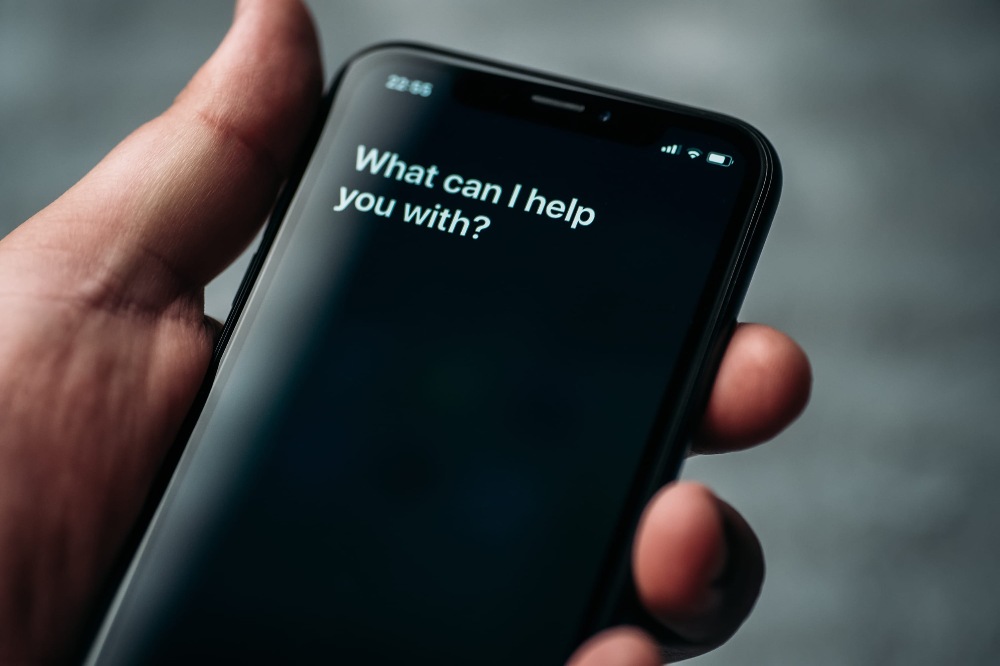 IMAGE: 123RF
My honest take on the AI tools everyone’s talking about
There’s no shortage of AI tools right now. If anything, it’s overwhelming.
So here’s my very honest, non-sponsored breakdown based on actual daily use:
Gemini (My current go-to)
I feel like it has the best balance of speed and usability. I use it heavily for drafting and refining copy, training tone of voice across all content touchpoints, and heck, even transcribing meetings, especially since my workflow is already on Google. As a “brand guardian” in my company, this has been a game-changer. Once trained properly, it helps maintain consistency across everything we publish. Well, most of the time.
ChatGPT (The OG)
Still incredibly solid and versatile. But if I’m being honest — I don’t use it as much these days. It’s powerful, but my workflow has shifted elsewhere. Also, the free version feels pretty limited in its features. For example, I can only generate a capped amount of images per day.
Claude (The deep thinker)
In my opinion, my pick for deep thinking and research.
Say, if you need structured analysis, source-backed insights or long-form breakdowns, Claude tends to perform better. It feels more… thoughtful, less rushed. I would have loved having this AI during my university days! The only drawback would be it takes a longer time to set up the prompts and it has to be very detailed.
My go-to AI tools as a creative
AI isn’t just for tech bros. As a creative myself, I have found it handy in a way that doesn’t compromise on my artistic integrity. For example Opus Clips is a great AI software for podcasters like me to turn long-form video into short-form content. It’s not perfect — you still need human editing to clean things up. Capcut’s auto-caption function saves me hours in subtitling my videos while Canva AI is great for non-graphic designers like me to create visual assets. Even non-marketing roles (like my partner in healthcare) are using AI chatbots for FAQs and appointment scheduling.
 IMAGE: 123RF
The reality: not every workplace is ready
Here’s where things get tricky.
While some companies like mine are going all-in on AI — investing in infrastructure, training, and systems — others are… not there yet. They might not see value in retraining their staff or are not willing to pour finances into integrating AI tools. Perhaps their industry is seen as blue-collar or labour intensive, hence there is no automation required.
And that’s where inequality can creep in. Despite the perceived industry landscape, if your company doesn’t prioritise AI, you might not get the exposure and it’s inevitable you will fall behind, especially if you’re an older employee in the workforce who could benefit from upskilling.
That’s why Budget 2026’s move to offer free access to premium AI tools through SkillsFuture-linked courses is such a big deal. Because it removes one key barrier: access.
So how can regular Singaporeans actually benefit?
If you strip away the headlines, here’s what the Budget is really saying: “We’ll give you the tools. You still need to do the work.” Here’s how to take advantage of that:
1. Start small — don’t overthink it
You don’t need to “master AI”. Start with simple tasks like summarising articles, drafting emails or organising notes. Use it daily. That’s how you build instinct.
2. Treat AI like a collaborator, not a threat
If you see AI as competition, you’ll resist it. If you see it as a partner, you’ll learn faster. The goal isn’t to outsource your brain. It’s to extend it.
3. Learn your use case (not just the tool)
A marketer, a teacher, and a finance analyst will all use AI differently. Focus on: “How can this make my job easier or better?” Not:“What’s the best AI tool overall?”
4. Take advantage of government support
If you’ve been putting off learning AI, this is literally the best time. Free access + structured courses = low risk, high upside.
 IMAGE: 123RF
The part that still makes me uncomfortable
For all the excitement, I’ll still be honest: AI still makes me uneasy sometimes. As a former musician, I’ve seen AI-generated songs chart globally. As a writer, I’ve come across books that feel human… until you realise they weren’t written by one.
It raises uncomfortable questions: What happens to originality? Who owns creative work? Are we building tools that empower — or replace — human expression? Will our future generation have any ounce of original thought in them? Bleak, I know.
I guess there is a fine line between AI as a tool and AI as a crutch. At the end of the day, if we’re not careful, we risk raising a generation that relies on AI to think for them, instead of with them.
So…. should we be worried?
A little.
But more importantly, we should be curious. Singapore isn’t trying to avoid AI. We’re trying to win with it. If I had to see the big-picture reason why there is this big pivot towards embracing this nascent technology, it’s clear the government has utmost belief that Singaporeans can adapt — not by resisting change, but by learning how to use it.
Personally? I don’t think AI will replace us. But it will definitely reshape what being “good at your job” looks like.
And the sooner we accept that, the better positioned we’ll be. If you’re still unsure where to start, here’s a simple rule: Don’t wait until AI becomes mandatory. Start using it while it’s still optional.
That’s where the real advantage is.
For the latest updates on Wonderwall.sg, be sure to follow us on TikTok, Telegram, Instagram, and Facebook. If you have a story idea for us, email us at [email protected].