




These Singaporean Siblings Make Bags. Their Biggest Lesson? Stop Trying To Do Everything
There’s a particular kind of consumerism that makes you feel as though your perfectly functional belongings are somehow inadequate. Your backpack carries your laptop, water bottle and gym clothes just fine, but does it have military-grade fabric? A suspended laptop compartment? Materials so technical they sound as though they belong on a spacecraft?
Enter Rework, a bag brand founded by Singaporean siblings Goh Jiaying, 29, and Goh Zhiyu, 25, who would rather ask what a bag actually needs to do than how many impressive-sounding features they can cram into it.
Based in San Francisco, the duo have built a business around a deceptively simple idea: design for a purpose, then choose the materials and construction that best serve it. No need to pay for features simply because they look good on a product page.
“We don’t approach our designs from that perspective,” says Jiaying, who handles the business side of Rework, drawing on her background in data analytics. “It’s not about ‘premium-ness’. It’s about finding what the intention of the product is, and really being very clear about who are we designing this for.”
It’s a refreshingly unsexy proposition in an industry that can make buying a backpack feel like revising for an engineering exam. But as the siblings have learnt, sometimes the smartest move is to rethink the entire approach.
The bag industry has a “premium“ problem
Rework’s founders aren’t claiming that expensive materials are useless. The problem, in their view, is treating premium specifications as selling points in themselves, rather than asking whether they make a meaningful difference to the person carrying the bag.
Zhiyu, a mechanical engineering graduate who leads product design, is particularly wary of marketing language – like “premium” and “military-grade” – that sounds impressive but says very little. “We try not to use ‘filler words’,” he explains. “We don’t say our bag is the most comfortable bag or use words that don’t have any real meaning behind them.”
Even features that feel luxurious deserve scrutiny. Take the soft, fuzzy microfibre lining found in some laptop and sunglasses compartments: it promises protection against scratches, but can also trap dirt and make a bag harder to clean. “Although it’s a good ‘marketing’ material, I think,” Zhiyu adds.
The deadpan honesty is rather the point. If a feature has genuine utility, it deserves consideration. If it merely sounds good in a product description, perhaps your money is better spent elsewhere.
Their first big idea didn’t quite work
Rework didn’t begin with the restrained, function-first approach it has today. Its original product was the Reset Modular Backpack System, a backpack that let users customise their carry setup.
Zhiyu developed an interest in bags during his two years of National Service (NS), when he was an Air Warfare Officer at Chong Pang Camp, located within Sembawang Air Base. Commuting to and from the air base every day, messenger bag in tow, gave him a reason to think more carefully about what he carried and how he carried it.
NS turned out to be an unexpectedly formative period: not just a chapter of life to get through, but one that helped spark an interest he would eventually turn into a business. “I guess if I hadn't gone back to Singapore for NS, and I hadn't really needed a bag on a day-to-day basis, then perhaps I wouldn't have started this brand,” he says.
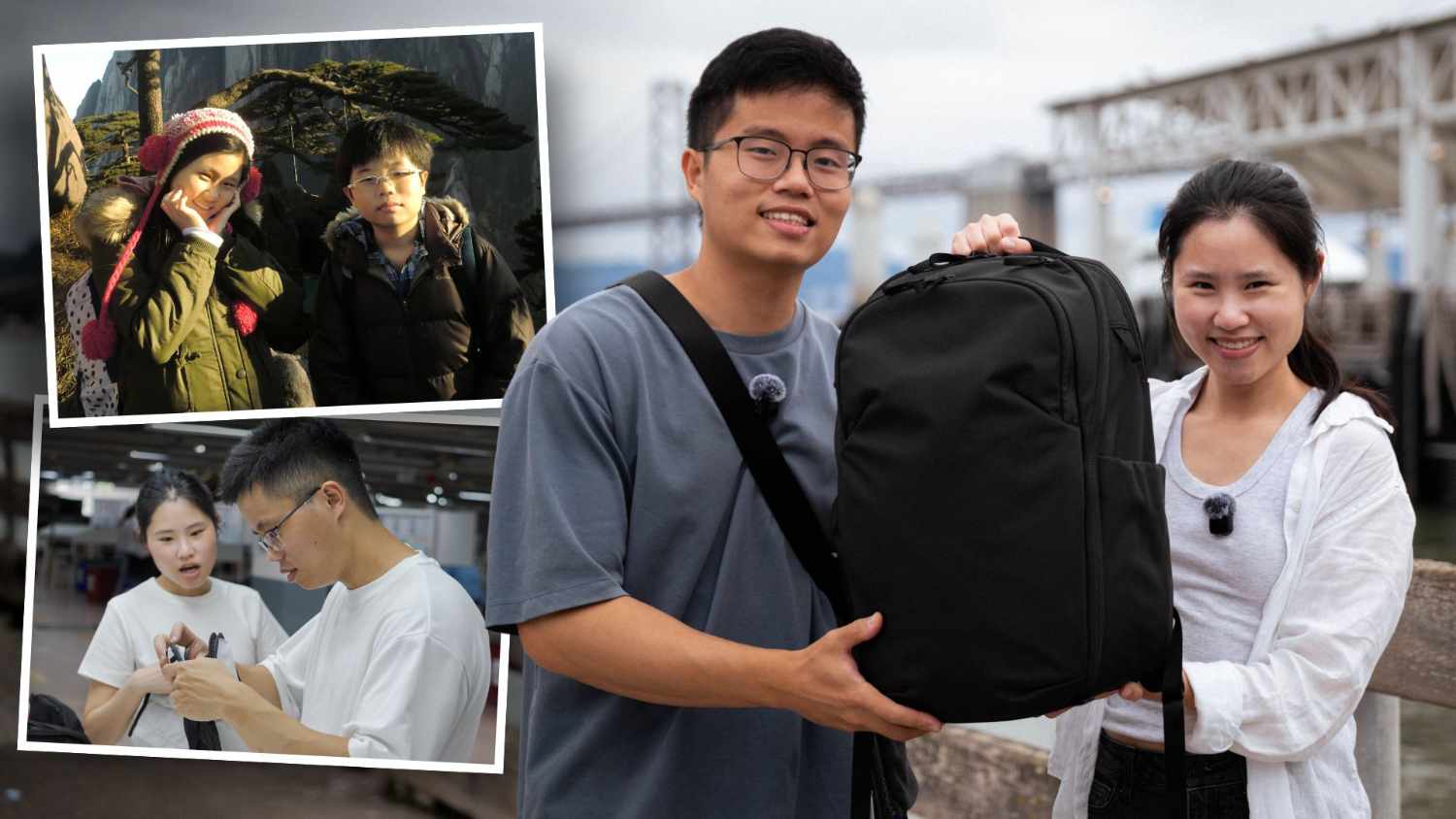
 Jiaying (left) and Zhiyu with their original product, the Reset Modular Backpack System, released on Kickstarted in 2023. | IMAGE: REWORK
Back in the United States for university, he wasn’t particularly keen on a conventional corporate career. His four undergraduate years seemed like a reasonable window in which to try building something of his own.
His sister was already working her first full-time job when he approached her with the idea. Jiaying had also been thinking about doing something independently, so she agreed to help. “Because if I didn’t help him, then I don’t know who else would,” she recalls.
The siblings spent around two years developing the modular backpack. It hit its Kickstarter funding goal, and they fulfilled orders for their backers. Then came the harder part: selling it beyond crowdfunding.
“We kind of knew that with a modular product, you’re not creating a product that excels in any one key area,” Zhiyu says. “It’s very much like a ’Jack of all trades, master of none’-type of product.”
The concept was clever, but cleverness alone wasn’t enough. The broader market wasn’t necessarily looking for a backpack that could do everything; customers wanted products that did particular things well.
For Jiaying, the process was a cycle of hope followed by another manufacturing headache. Every time Zhiyu found a solution to one problem, another seemed to appear.
“I gain a little bit of hope again,” she recalls. “But then you’ll be like, another issue. And I’m like, maybe not.”
It’s a wonderfully unvarnished account of entrepreneurship: not every setback becomes an inspiring montage accompanied by an uplifting soundtrack. Sometimes it’s just another few months waiting for a factory revision.
Sometimes the smartest move is to do less
The siblings eventually pivoted away from modularity as the main selling point, turning instead to more focused, purpose-built products. The Toshi Sling helped redefine Rework’s identity.
The shift also changed how the pair approached design. Rather than starting with a feature they wanted to include, they began by identifying what a product needed to do – and making decisions accordingly.
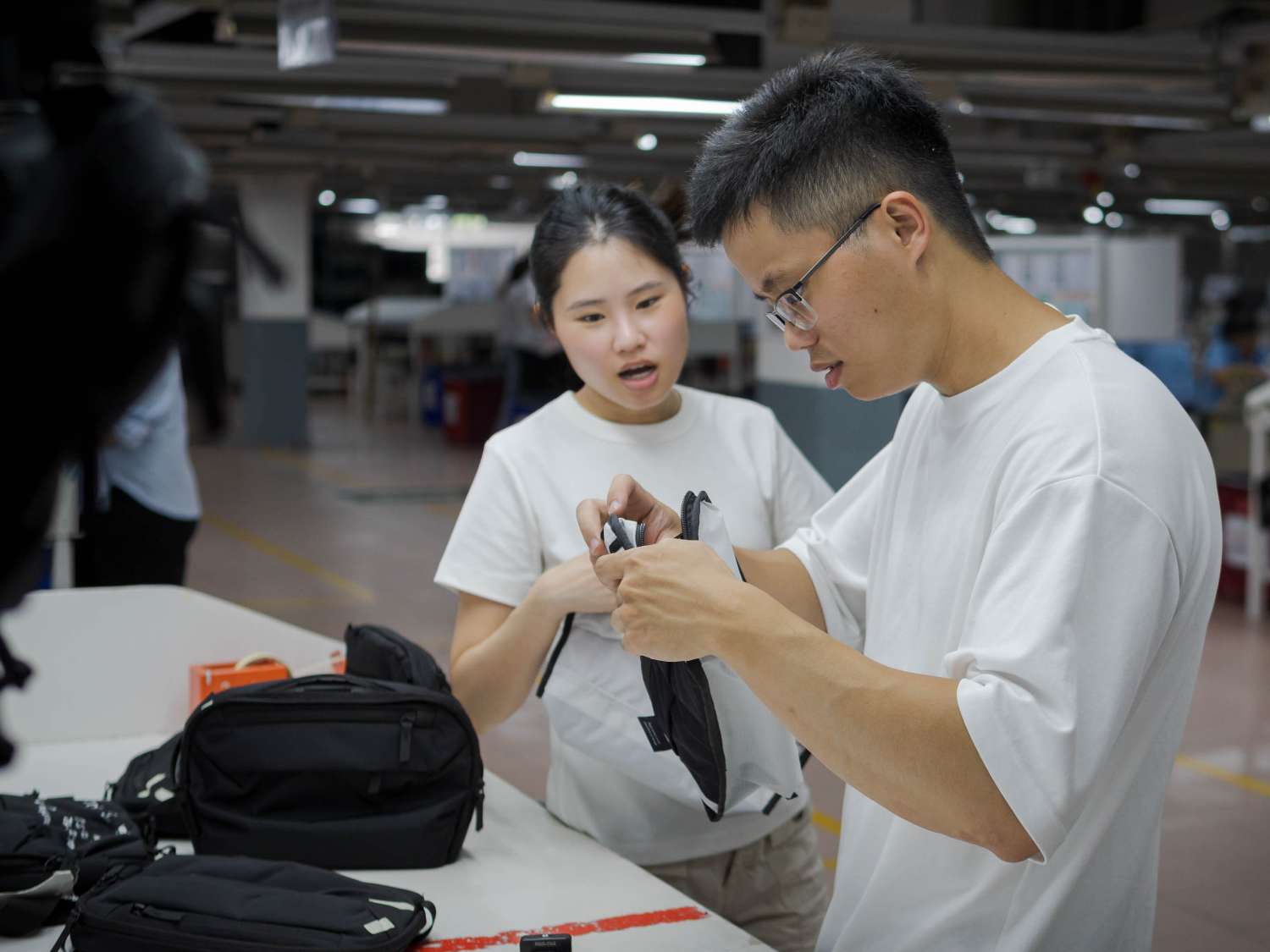 The siblings examining the Toshi Sling. | IMAGE: REWORK
Not every customer suggestion makes a bag objectively better, Zhiyu explains. Some features add cost and complexity without enough benefit to justify them; others come down to personal preference.
The challenge is finding the right balance, not winning a feature-counting contest.
It’s a useful lesson beyond bags, too. Whether you’re buying a phone, a pair of headphones or yet another gadget you saw on TikTok, more features don’t automatically mean more value. Sometimes, they just mean more things to pay for.
“Why should I pay more than $30 for a bag?”
Here’s where Rework’s philosophy gets particularly interesting. For all their attention to construction and design, the siblings aren’t interested in persuading everyone that a more expensive bag is necessarily the better choice.
Asked what they’d say to someone who wonders why they should pay more when a $30 bag is available, Zhiyu doesn’t launch into a sales pitch. “If the $30 bag completely suits your needs and you do not notice anything that is lacking, then by all means, go for the $30 bag!” he says.
Read that again. A bag company founder is telling you that you don’t necessarily need to buy his kind of bag.
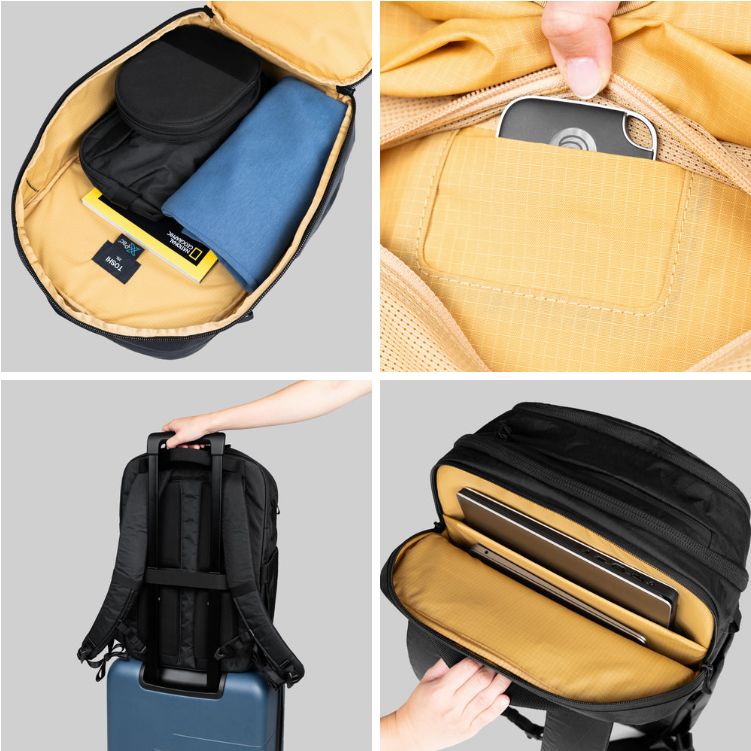
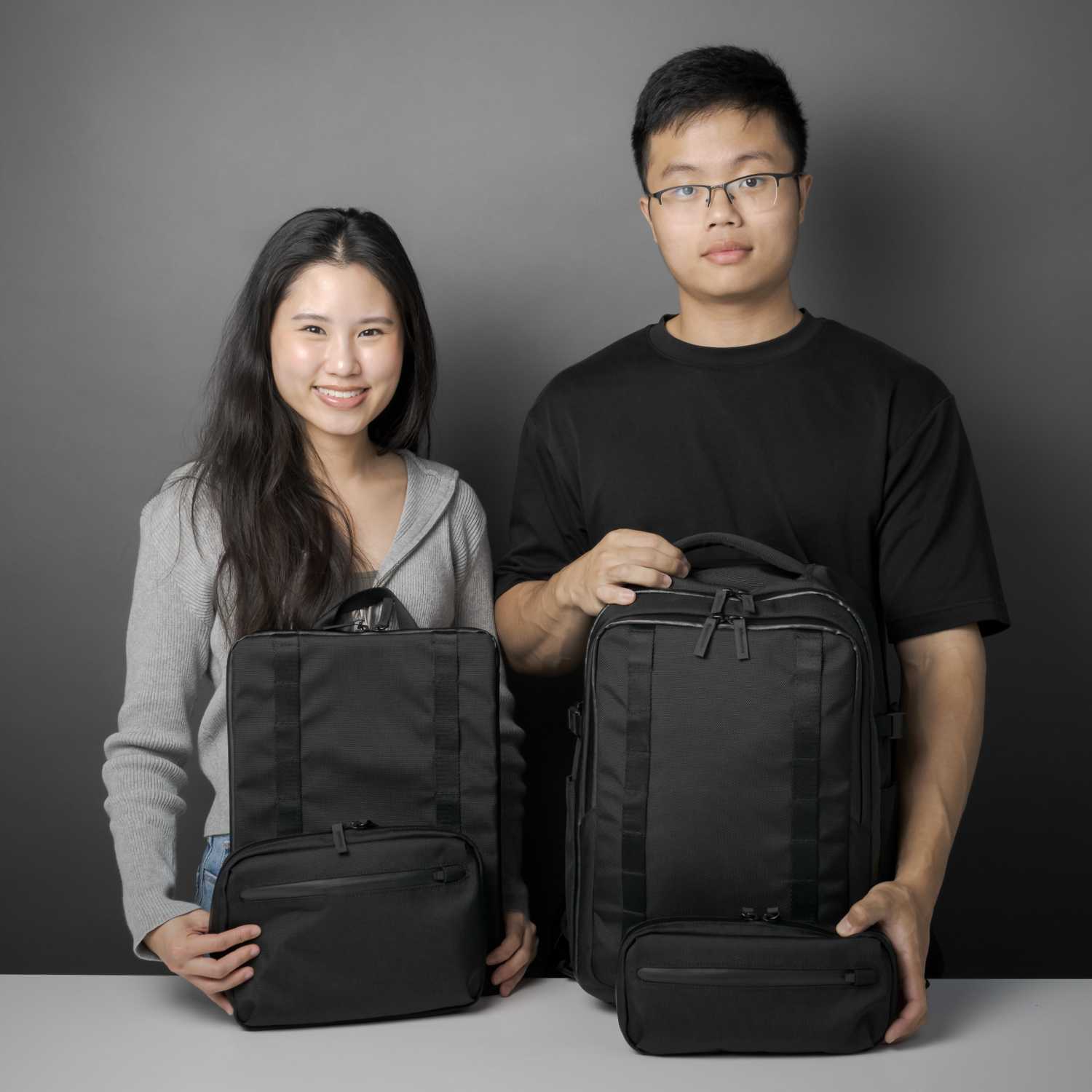
Details of the Toshi Pack 25L V2. | IMAGES: REWORK
Zhiyu personally cares about materials, quality and how a backpack is laid out, so he probably wouldn’t be satisfied with a cheaper option. But he recognises that not everyone shares his priorities.
Jiaying points to comfort and the attention paid to a bag’s harness system as possible differences between cheaper and more expensive options, while acknowledging that lower-priced bags can have their own useful features.
The takeaway isn’t that everyone should buy a premium backpack. It’s that you should know what you’re paying for. If your current bag does the job without irritating you, congrats: you’ve already solved the problem.
If it leaves your shoulders aching, your belongings awkwardly arranged or your daily routine more cumbersome than it needs to be, perhaps there’s a case for upgrading.
Two siblings, two very different jobs
Zhiyu focuses on product design, while Jiaying handles business and financial decisions. Their complementary strengths help keep the business grounded. But don’t mistake professional compatibility for effortless sibling harmony.
Asked whether they would have started a business together if they weren’t related, Jiaying doesn’t hesitate to roast her younger brother.
“Oh my god, I think if we weren’t siblings, his personality would have turned me off!” she says. “His personality would have been so dry that I was like, no, way could I work with such a person!”
Zhiyu’s response is more measured: “I think for me it’s like, I don’t know, maybe 50-50.”
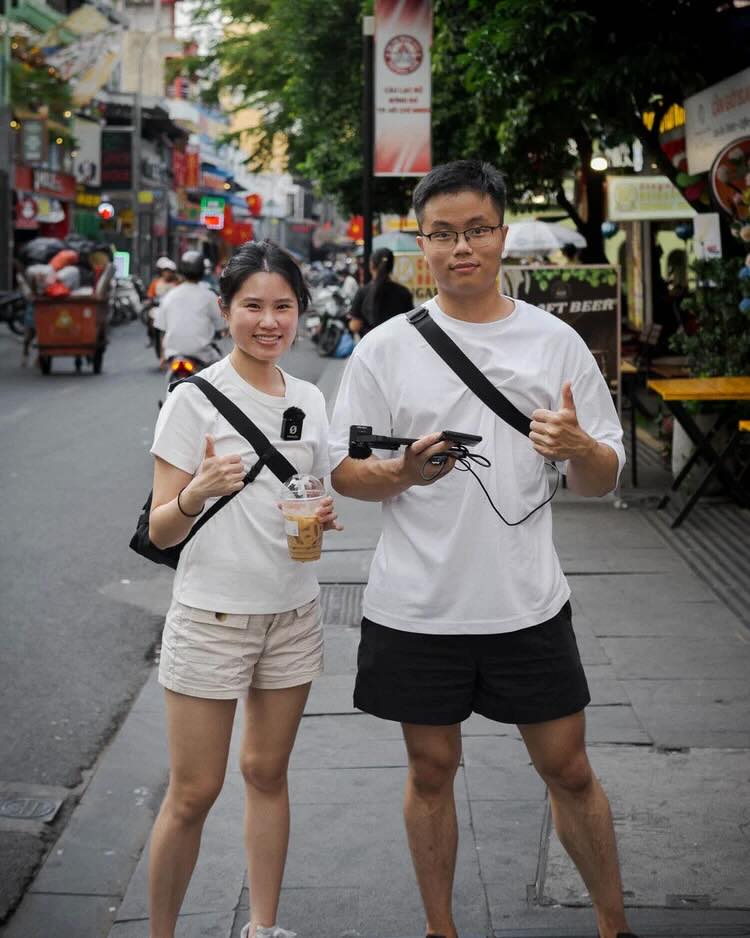
While Jiaying (left) handles business and financial decisions, Zhiyu focuses on product design. | IMAGE: REWORK
Sibling diplomacy, apparently, is a work in progress.
Their disagreements do have a practical upside. When Zhiyu wanted to revise the harness system on the Toshi Pack V2 to improve comfort, Jiaying initially questioned whether a change was necessary when customers weren’t complaining. The revisions went ahead, and customers subsequently noticed the improvement.
Jiaying now credits her brother with a stronger instinct for understanding what consumers actually want. “That’s probably why he wins most arguments,” she admits.
The arrangement works because neither sibling has to be good at everything. Zhiyu can obsess over product details; Jiaying can focus on the numbers. Their strengths don’t need to overlap to complement each other.
A little Singaporean pragmatism goes a long way
Although Rework is based in the San Francisco Bay Area, the siblings see their Singaporean upbringing as part of the brand’s identity.
Some of Zhiyu’s design decisions are personal, too. A left-hander himself, he tries to make Rework’s bags as ambidextrous as possible, so that lefties aren’t left fumbling around with features designed primarily for right-handed users. “I always try to make things easier for my fellow left-handed brothers!” he says.
It’s a small detail, but a telling one: good design isn’t necessarily about adding more features. Sometimes, it’s about making the ones you have work for more people.
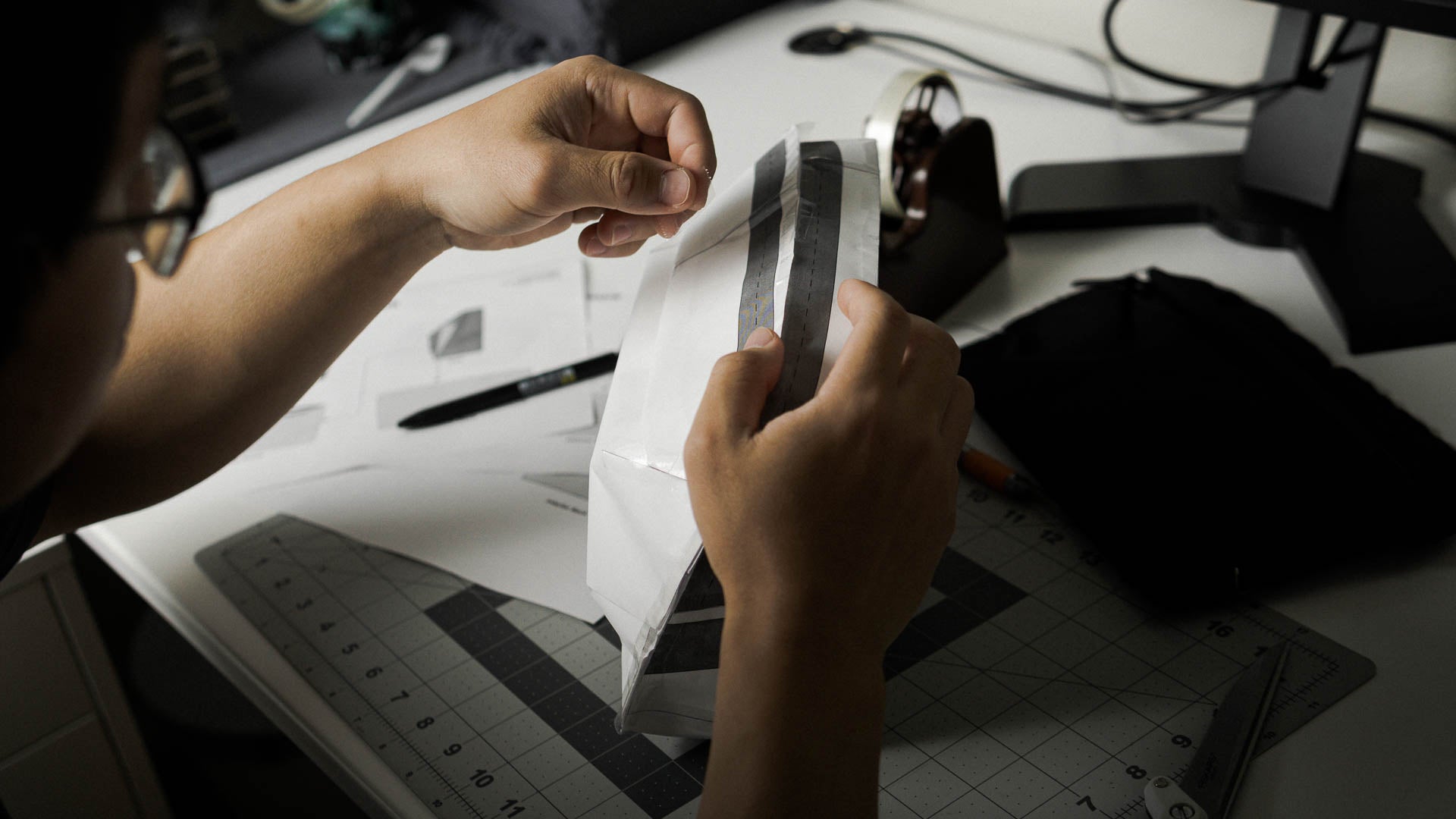 Zhiyu, a left-hander, tries to make his product designs ambidextrous. | IMAGE: REWORK
“I think a lot of people would consider Singaporeans to be pretty pragmatic,” Zhiyu says. “And I think that, to a certain degree, shows in the way that we design our backpacks as well.”
Jiaying agrees that their designs reflect the character shaped by their time in Singapore. The fact that customers, particularly in the United States, have embraced this approach has been encouraging. Asked what it feels like putting Singapore on the map, she says: “That’s very flattering! I hope we are doing it justice.”
The siblings would eventually like to establish a greater presence in Singapore, although opening a physical store isn’t an immediate priority. (In Singapore, Rework products are currently sold only at local bag retailer Karri.) For now, the small team is focused on developing new products, keeping existing ones in stock and growing the business.
Their advice to aspiring founders reflects the lessons they’ve learnt along the way. “You really do not know what you don’t know until you just start whatever business and whatever niche you are in,” says Zhiyu. Meanwhile, Jiaying offers a more hard-won reminder: “I wish someone had told me that, not all novel ideas are profitable ideas.”
An idea can be interesting without being useful. A product can be clever without being desirable. And something that looks impressive on paper might not survive contact with reality.
Rework’s story isn’t really about making the most technically advanced bag on the market. It’s about learning to distinguish what looks good from what works, and having the courage to change course when the two don’t line up.
Sometimes, the most useful thing you can do is rework the plan.
For the latest updates on Wonderwall.sg, be sure to follow us on TikTok, Telegram, Instagram, and Facebook. If you have a story idea for us, email us at [email protected].