



This 140-Year-Old National Monument Now Has Michelin-Starred Dining, Cocktails And A Heritage Gallery
The House of Tan Yeok Nee near Dhoby Ghaut is one of those places I've passed by plenty of times on the bus. For the longest time, it was just a building with an elaborate roof that would catch my eye, and I’d think, “wow, cool old building”, then carry on with my journey. Turns out, there’s now a lot more going on inside.
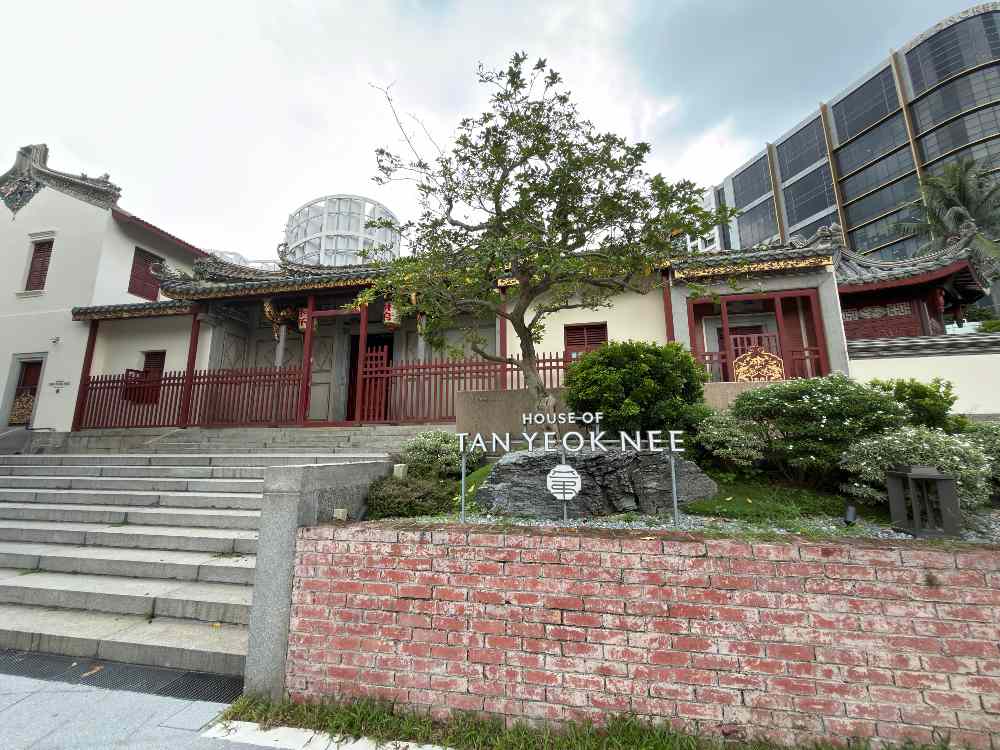
Singapore’s last surviving traditional Chinese courtyard mansion has reopened as a “living heritage” space, where you can sip Chinese tea, drink cocktails, join a guided heritage tour – and even end the day with dinner at a newly minted one Michelin-starred restaurant.
And before anyone calls it another “hidden gem” – because apparently everything is one nowadays – this National Monument has been sitting very prominently along Penang Road for more than 140 years.
The House of Tan Yeok Nee was never really hidden. We just weren’t looking closely enough.
Overview
- Name: House of Tan Yeok Nee
- Address: 101 Penang Road, Singapore 238466
- Built: 1882-1885
- Original owner: Teochew businessman Tan Yeok Nee
- Year gazetted as a National Monument: 1974
- Current use: Heritage gallery, F&B, offices, events and cultural programmes
- Nearest MRT: Dhoby Ghaut
- Admission: Free
 IMAGES: NG KAI
Why the House of Tan Yeok Nee deserves another look
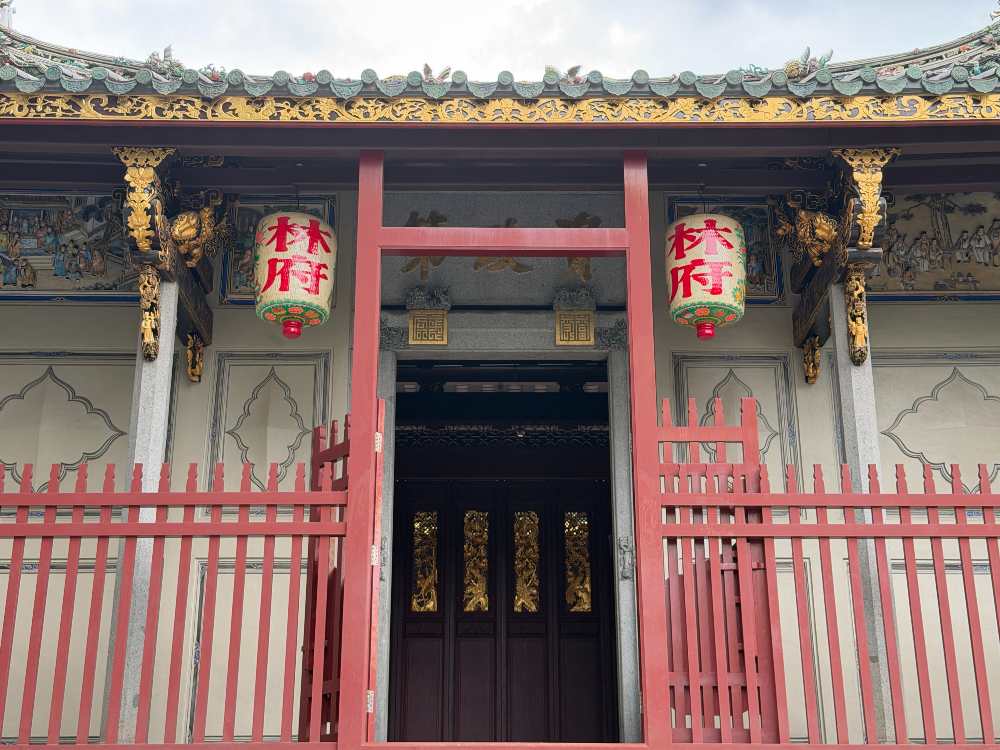
Dramatically different from everything around it, The House of Tan Yeok Nee is the last surviving one of Singapore’s “Four Grand Mansions”, four large residences built by wealthy Teochew businessmen during the late 19th century.
Amidst the office blocks, condos and Orchard Road traffic, this sprawling Chinese mansion with colourful roof mosaics stood out in contrast to me.
What makes this a particularly good time to revisit? The House has been restored and reopened under the stewardship of the Karim Family Foundation as what it calls a “living heritage space” – not simply somewhere to preserve the past, but somewhere people can actually eat, drink, learn and gather today.
And right now, there’s an extra reason to step through those doors.
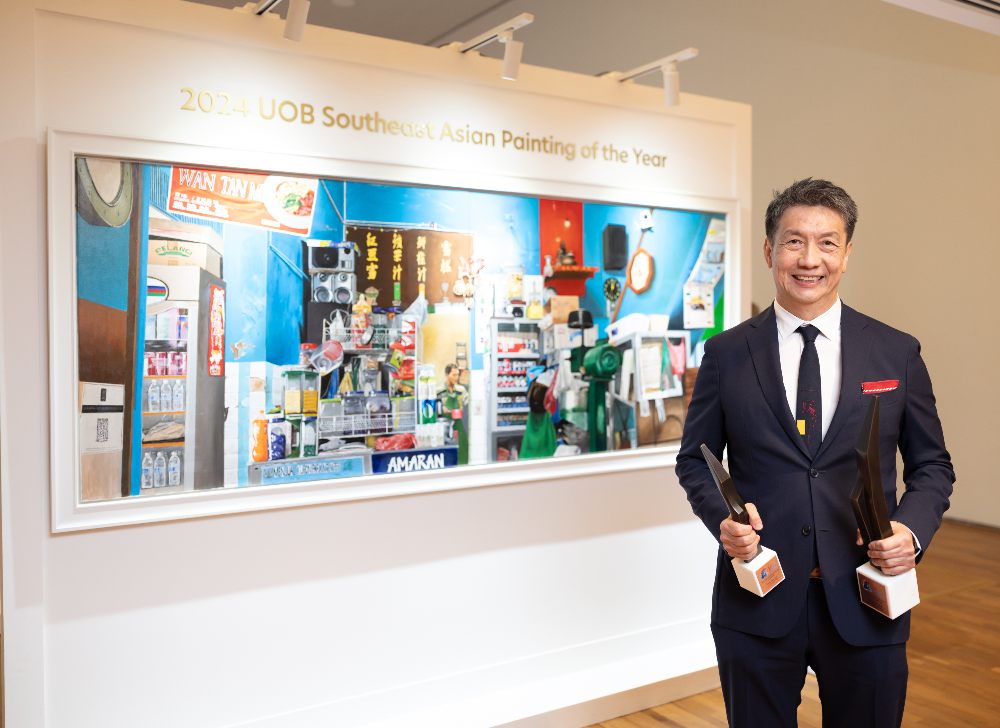 In 2024, Yong Wee Loon became the first Singaporean artist in a decade to claim the regional UOB Southeast Asian Painting of the Year title with his artwork "A Sip Through Time". | IMAGE: UOB
There’s a free art exhibition happening
Running from 13 Nov 2026 to 31 Jan 2027, TERRAINS is a free exhibition by Singapore artist Yong Wee Loon, winner of the 2024 UOB Southeast Asian Painting of the Year.
Around 40 paintings, studies and works on paper are spread across the exhibition, tracing how Yong’s practice evolved before, during and after a two-month artist residency in Paris earlier this year.
The show is divided into three sections:
- Terra Firma looks at familiar streets, architecture and everyday scenes from Singapore and Southeast Asia.
- Terra Incognita brings together work from Yong’s Paris residency, where unfamiliar surroundings pushed him towards new ways of painting.
- Terra Nova moves towards bolder colour and more distilled compositions, including works influenced by Matisse-style paper cut-outs.
Honestly, an exhibition about looking at familiar places differently feels particularly fitting here; I'd known the House of Tan Yeok Nee existed, but I didn’t know there was this much to discover inside.
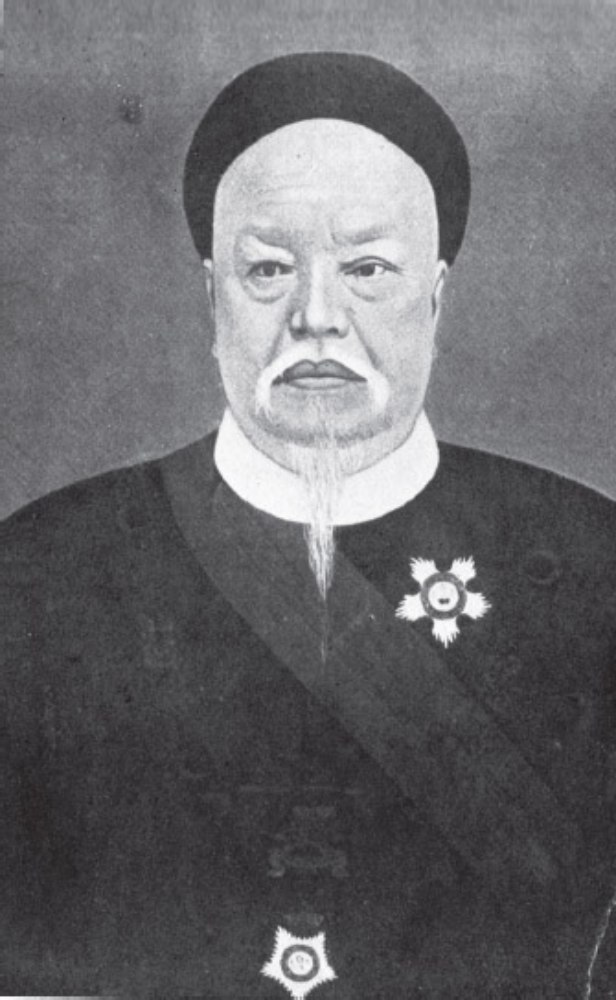
IMAGE: WIKIMEDIA COMMONS/@SONG ONG SIANG
Who was Tan Yeok Nee?
Before it housed cocktails and Michelin-starred food, it was somebody’s home.
Tan Yeok Nee (陈毓宜), also known as Tan Hiok Nee (陈旭年), was an affluent businessman from Chaozhou (潮州) in Guangdong Province. He began his chapter in Singapore as a textile vendor before expanding into the pepper and gambier (used as a brown dye and tanning agent then) trade, and later, opium and spirit (alcohol) farms. Not long after, Tan became one of the richest Teochew merchants in Singapore.
From 1882 to 1885, Tan built his private residence on a plot with exceptional fengshui (Chinese geomantic) qualities: the house was backed by Oxley Hill that had a stream (present-day Stamford Canal) flowing in front of it, and stretched across Dhoby Ghaut's low-lying grounds. This configuration was believed to fend off evil and bring wealth to the homeowner.
I guess it worked, because it's been over 140 years and the place is still thriving.
It was inspired by another mansion in China
Tan drew inspiration for the design of his house in Singapore from Cong Xi Gong Ci (从熙公祠), a cluster house he had begun constructing in his hometown of Jin Sha Xiang (金砂乡) in Chaozhou. Cong Xi Gong Ci was finished in 1884 - only a year before the Singapore house was completed.
The result here was a traditional Teochew courtyard mansion organised around a central axis, with symmetrical halls, courtyards and rooms.
 IMAGES: NG KAI
Look up: the roof is where things get serious
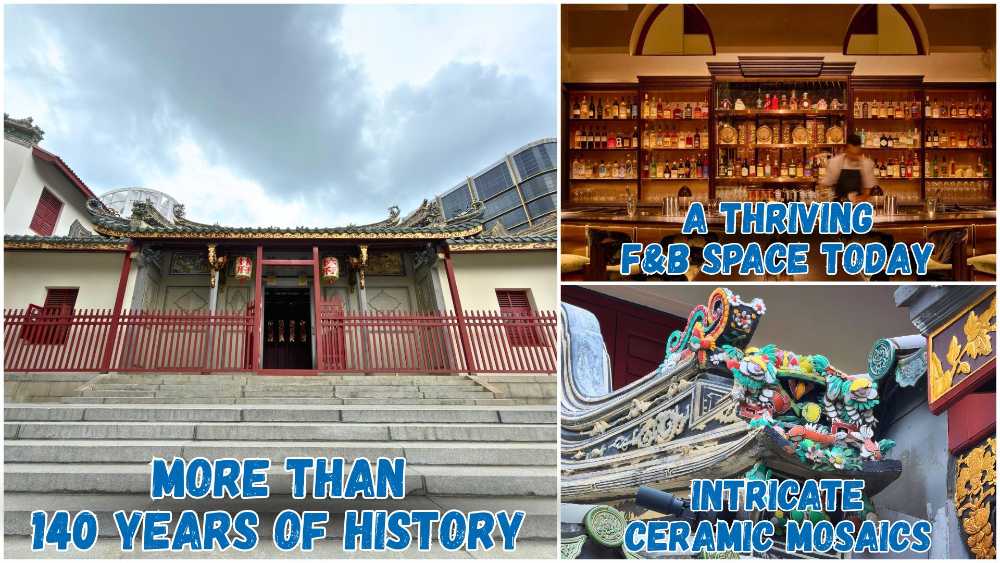
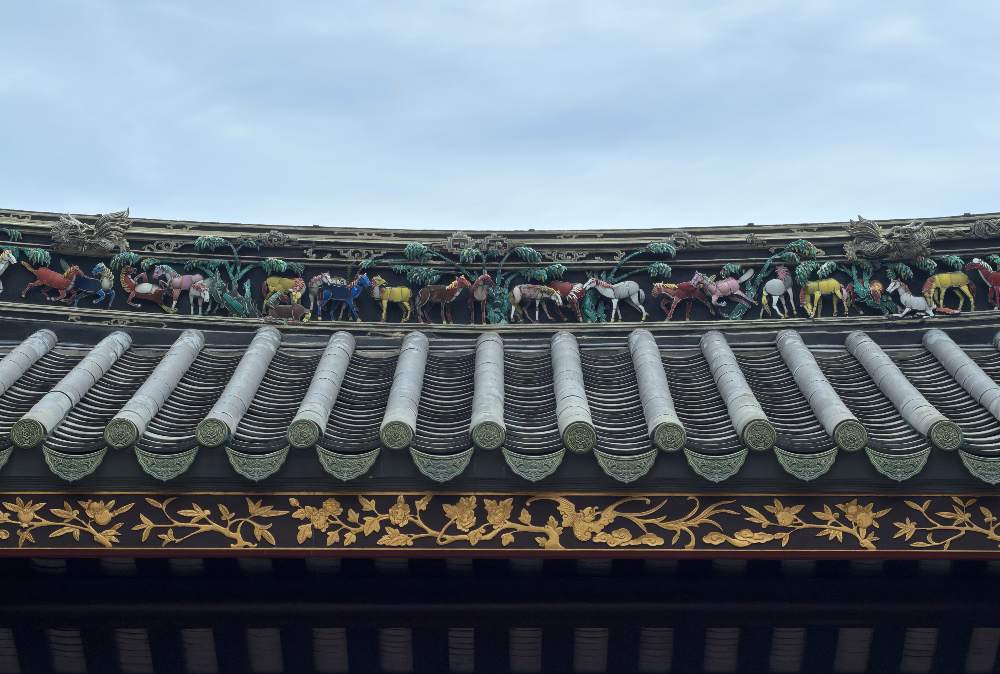
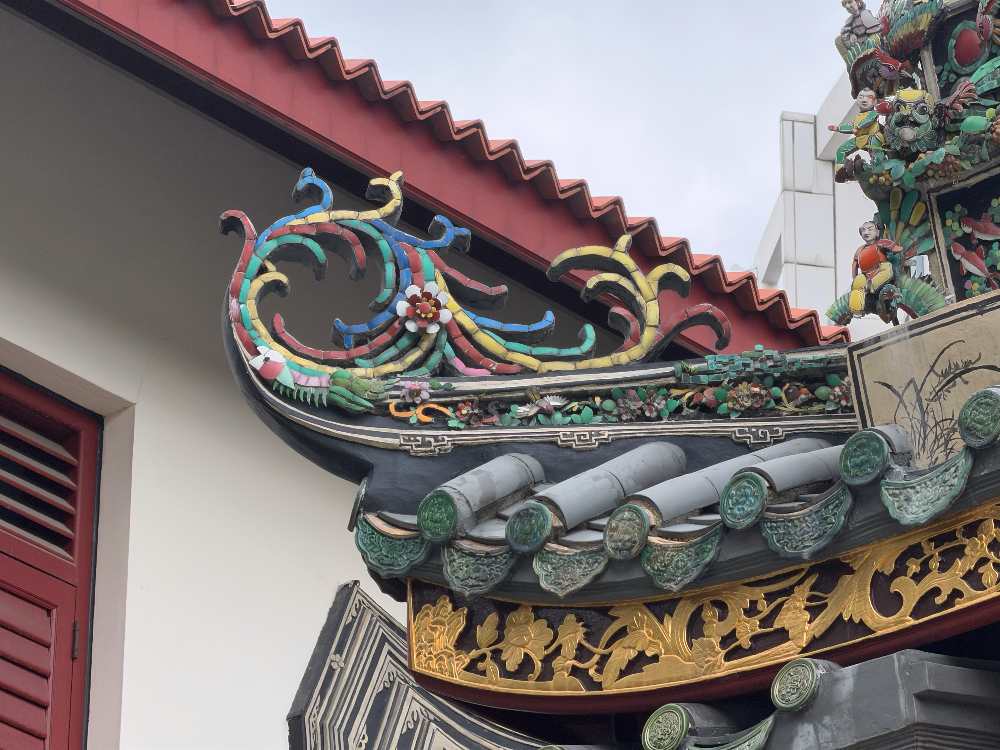
There's a lot happening above eye level. Traditional Teochew architecture is known for its relatively straight roof ridges; the House of Tan Yeok Nee takes those roofs and absolutely goes to town on the decoration. There are carvings, paintings, calligraphy and colourful ceramic mosaics covering them.
The roof’s miniatures were crafted using a unique method called qian ci (嵌瓷, “inlaying porcelain”), or jian nian (剪粘, “cut and paste”) in Hokkien architecture. This technique details cutting colourful ceramics into smaller pieces and arranging them into intricate mosaic designs.
If that sounds familiar, you can spot similar craftsmanship at other National Monuments like Yueh Hai Ching temple, Thian Hock Keng, and Hong San See.
There’s one motif that appears repeatedly here: horses. That isn’t random either; construction began in 1882 – the Year of the Horse in the Chinese zodiac.
 IMAGES: NG KAI
Yes, those koi-shaped spouts are actually functional
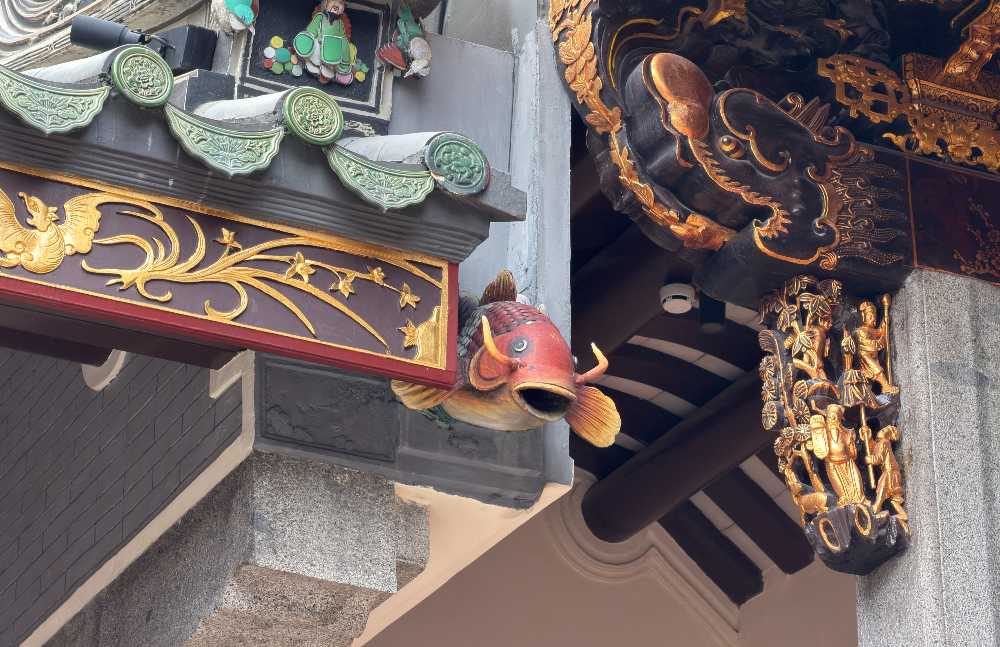
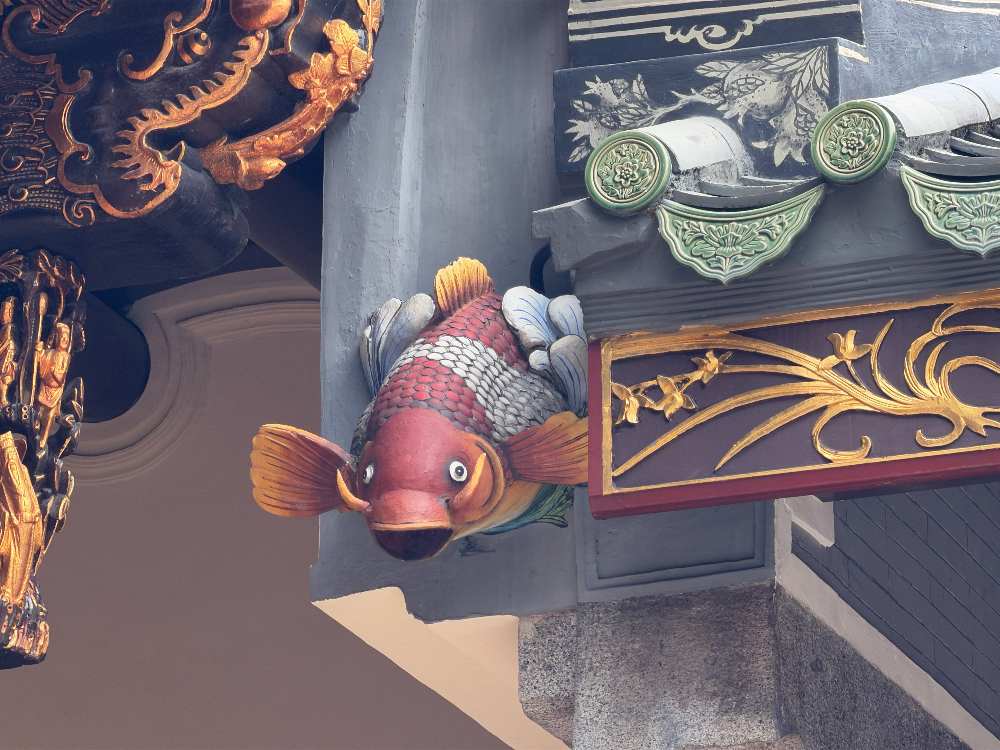
One of my favourite architectural details is much easier to miss. Look around the junctions where two sections of roof meet and you may spot koi-shaped sculptures.
It's easy to mistake them for cute decorative fish; but they're actually also drainage pipes. Rainwater from the roofs flows through the koi and comes out through their open mouths. How endearing is that?
This house has had many lives
 Tank Road Railway Station between circa 1902 and circa 1922. | IMAGE: WIKIMEDIA COMMONS
Tan Yeok Nee's family eventually vacated the property around the turn of the 20th century as construction of the nearby Tank Road Railway Station brought dust and noise to the area. The British Administration acquired the estate, and the railway station master subsequently lived here.
Then came a long succession of very different occupants.
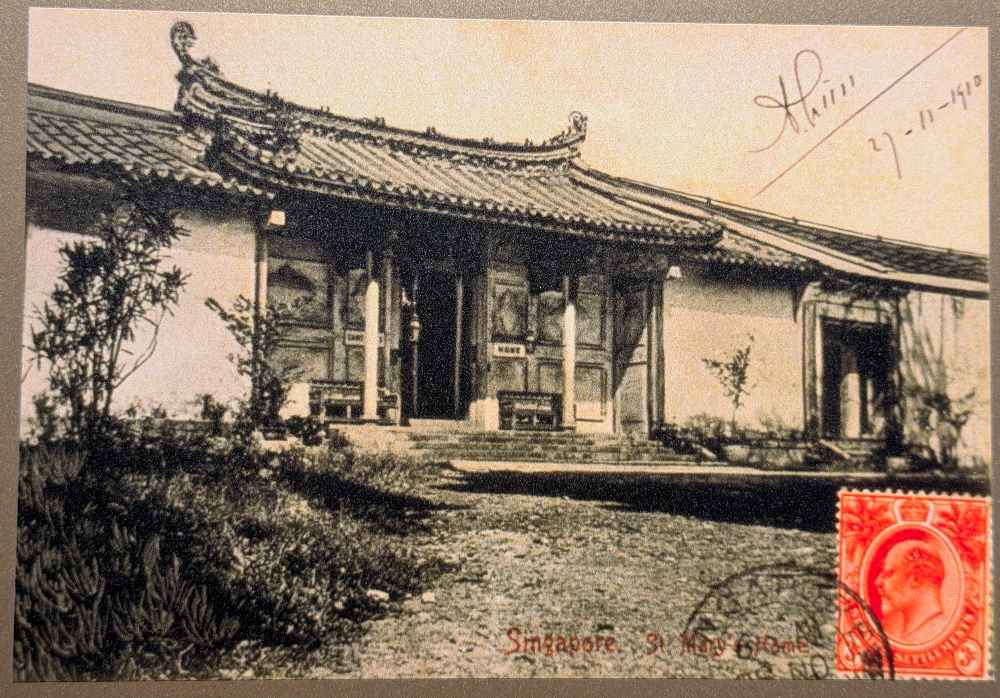 IMAGE: TAKEN AT THE HERITAGE GALLERY
In 1912, it became Saint Mary’s Home and School, which accommodated Eurasian girls.
 In 1938, the Salvation Army acquired the property and made it the headquarters of its Malayan division. | IMAGE: FACEBOOK/@SALVATIONARMYSINGAPORE
During the Japanese Occupation, the Salvation Army was evicted and Japanese forces took over the House. It suffered substantial damage and looting during the war. The Salvation Army later returned, restored the building and officially reopened it as its Command Headquarters in 1951, remaining here until 1991.
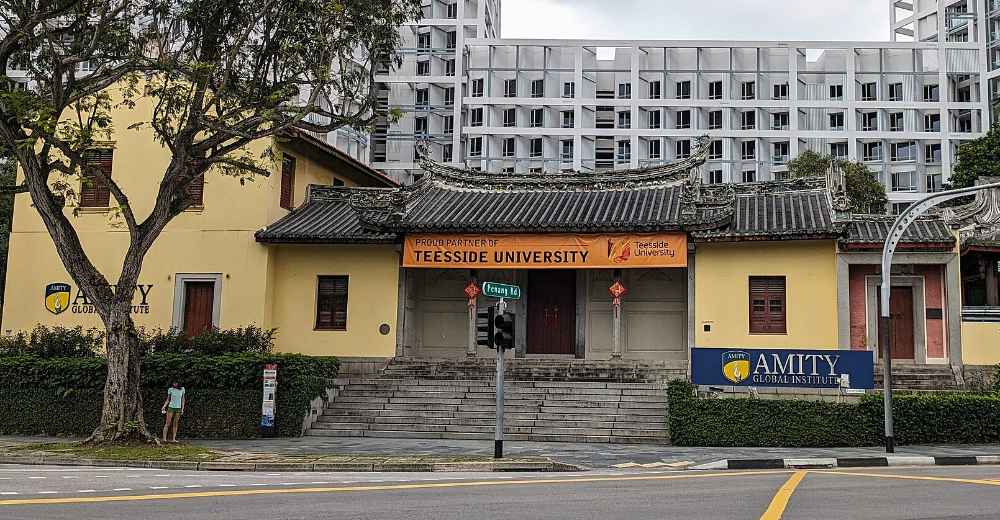 IMAGE: WIKIMEDIA COMMONS/@ROBERT SIM
The House subsequently became the Asia campus of the University of Chicago Booth School of Business, later housed Ming Yi Guan and, from 2019, Amity Global Institute.
And now? Visitors arrive for tea, cocktails, art and Michelin-starred dining. All that good feng shui genuinely putting in the work.
You can basically spend an entire day here
When we hear “National Monument”, we tend to imagine somewhere we’re supposed to admire respectfully, read a plaque, take a photo and leave. But what I find most interesting about the House of Tan Yeok Nee is that it's not just for history buffs.
The Karim Family Foundation acquired the House in 2022 and has since restored and repositioned it as a destination centred on arts, culture, architecture and community. Recent conservation work has focused on retaining original materials and architectural integrity while adapting the House for contemporary use.
And it's now a serious contender for your next must-visit food spot.
Start with Chinese tea at Jing Studio
Jing Studio is currently open daily from 10am to 7pm. Sip on tea, take in the architecture, then walk around the Heritage Gallery.
Explore the Heritage Gallery – for free
The House now has its own Heritage Gallery, open to the public for the first time. It traces more than 140 years of the building’s history, architecture and conservation, including its changing uses over the decades.
Regular admission is free, and the gallery currently opens daily from 10am to midnight.
Until 31 Jan 2027, you can catch TERRAINS here from 10am to 10pm daily.
Switch gears with cocktails at Bar KAP
When daytime turns into evening, Bar KAP opens daily from 5pm to midnight. So yes, having cocktails inside Singapore’s last surviving traditional Chinese courtyard mansion is now a thing you can do.
End fancy at Loca Niru
If you're feeling fancy, make a reservation at Loca Niru. The restaurant was newly awarded one Michelin star in the Michelin Guide Singapore 2026.
Set inside the restored heritage building, its tasting menu combines Japanese technique with regional flavours – such as abalone chawanmushi and isaki (a Japanese fish) served with Nyonya beurre blanc.
Loca Niru currently opens Tuesday to Saturday from 6.30pm to 11pm.
Want history without dinner? Join a free docent-led tour
If you're keen to have someone explain what you’re looking at instead of repeatedly Googling architectural terms while wandering around, there are free guided tours, too.
The House currently runs them monthly, with English tours from 10am to 11am and Mandarin tours from 11am to noon. All you have to do is reserve your spot in advance through the website.
The tour digs deeper into the House’s history, architecture and cultural heritage – useful when so many of its best details are quite literally above your head.
Wait, what makes something a National Monument?
In Singapore, National Monuments are buildings, structures or sites recognised for their national significance and value to our built heritage. They are gazetted by the Preservation of Sites and Monuments, a division of the National Heritage Board, which is why the title is reserved for places that carry especially important historical, architectural, social or cultural meaning.
As of 2026, Singapore has 77 National Monuments. Some are obvious landmarks, like the Padang, St Andrew’s Cathedral and Fort Siloso. Others are places you may have walked past without a second thought, which is exactly why this series exists.
One National Monument at a time, we’re here to uncover the stories hiding in plain sight.
For the latest updates on Wonderwall.sg, be sure to follow us on TikTok, Telegram, Instagram, and Facebook. If you have a story idea for us, email us at [email protected].