


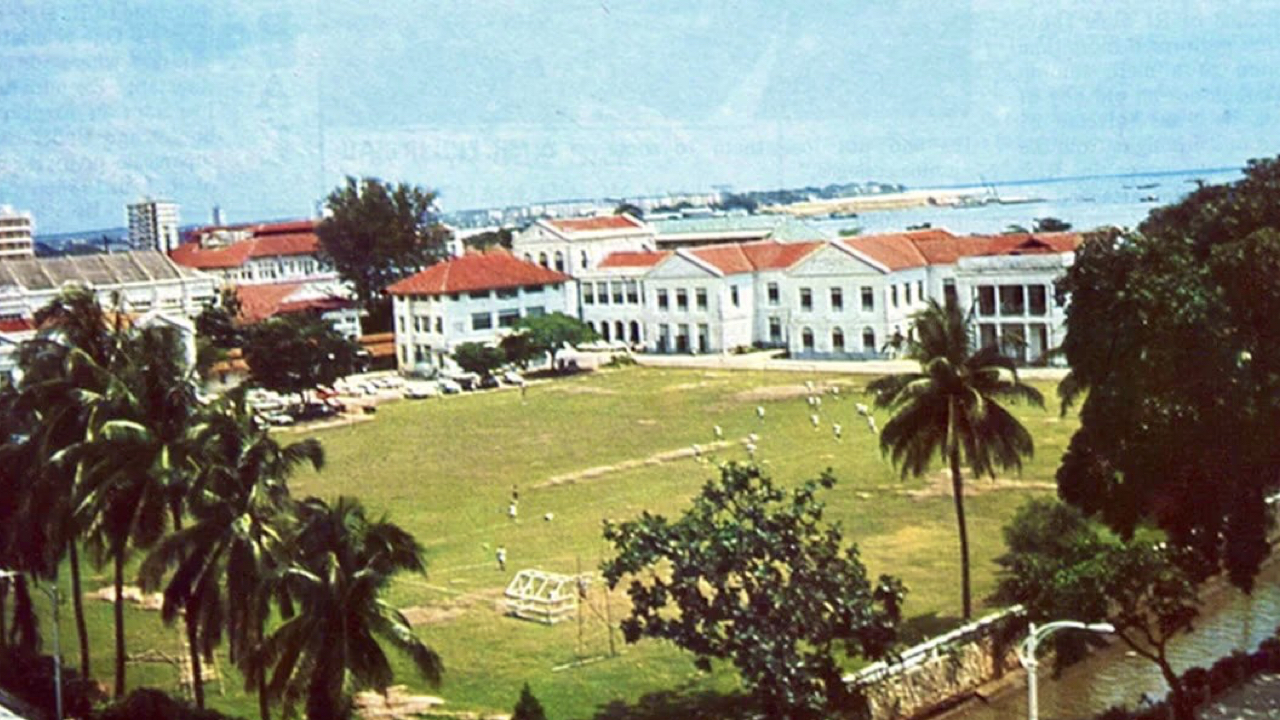
The National Museum Started At Raffles Institution: What You Didn't Know About The School
Question: What do former Prime Ministers Lee Kuan Yew and Goh Chok Tong, writer/poet Alfian Sa’at, billionaires Robert Kuok and Peter Lim, war hero Lim Bo Seng, former Singapore presidents Yusof Ishak and Benjamin Sheares, and Malaysia’s second prime minister Abdul Razak Hussein have in common?
Answer: They were all graduates of Raffles Institution (RI), which celebrates the anniversary of its founding today (5 June).
Founded in 1823 by Sir Stamford Raffles, mere days before he left Singapore for the last time, it’s the oldest school here.
Raffles had wanted to establish a college that would educate the sons of the local chiefs; teach local languages to officers of the East India Company; and facilitate research in the history, culture and resources of Asian countries.
The campus would be situated on a plot of land bordered by Bras Basah, Stamford, Beach, and North Bridge Roads (where Raffles City Shopping Centre now stands). Construction, expected to last 12 months, began.
However, to paraphrase the old saying, even the best laid plans often go awry, and so it was with the school. Here are some fun facts you may not know about RI’s Bras Basah campus.
It took more than a decade for the school to be fully operational
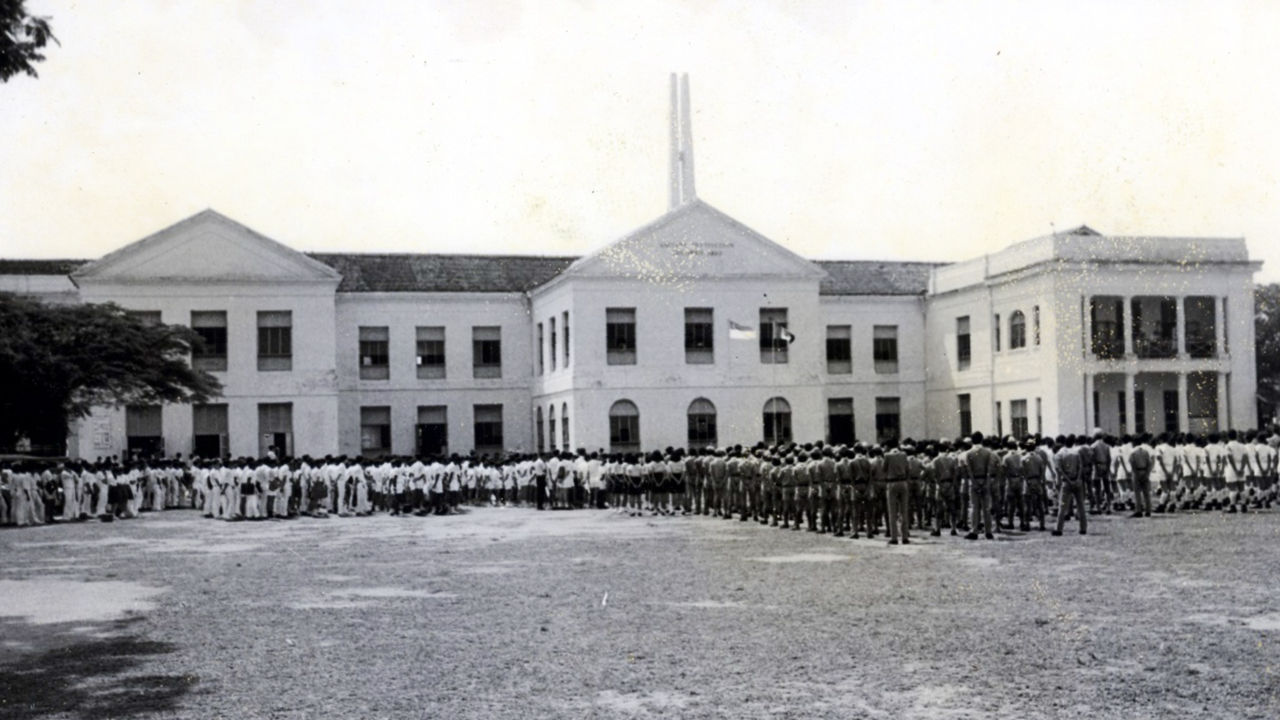 IMAGE: RAFFLES INSTITUTION
Funding issues and disagreements about the school’s direction meant that no classes were held between 1823 and 1834. The Singapore Free Press newspaper described the unfinished and uninhabited building as “an eye-sore to the inhabitants of the Settlement” and “a convenient shelter for thieves”. Classes started from 1834, but it wasn't until 1837 that the school was fully operational.
RI wasn’t even called RI
It was originally referred to simply as “the Institution”. Sometime in 1837, it became the Singapore Free School, then the Institution Free School, and was later renamed Singapore Institution in 1854. It was only in the school’s annual report in 1868 that it was referred to as the “Raffles Institution”.
RI had female students (for a while)
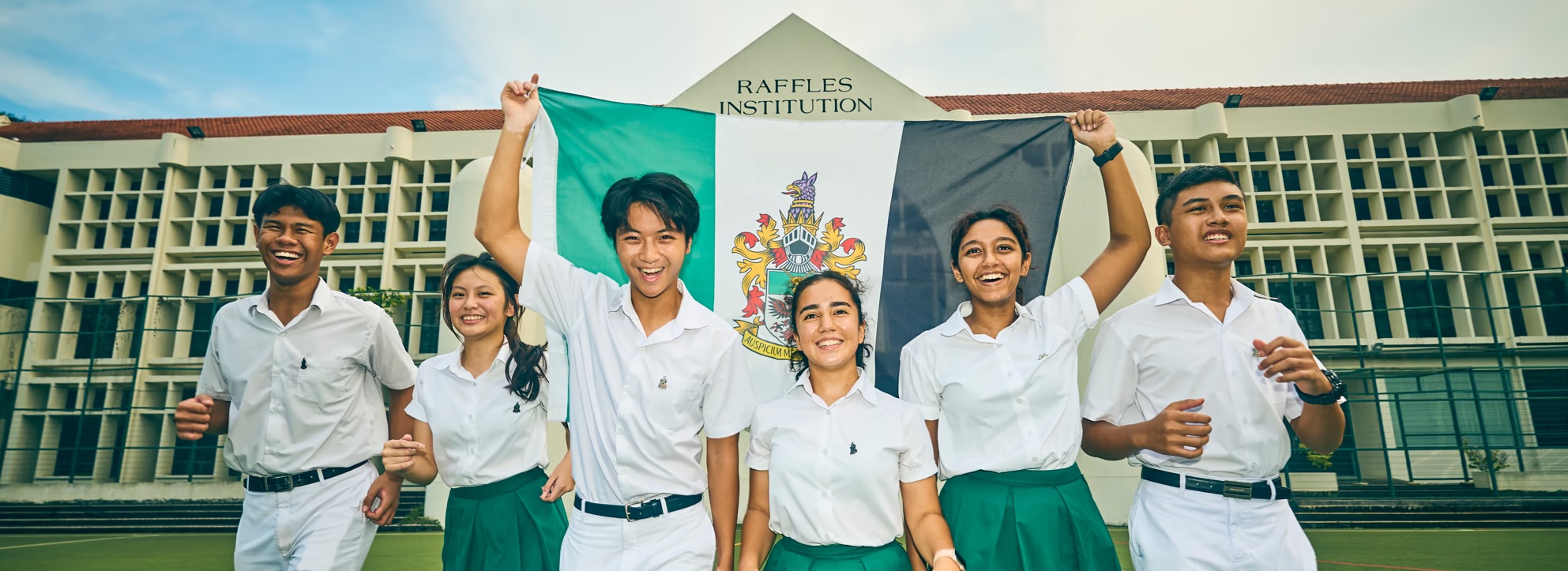 IMAGE: RAFFLES INSTITUTION
It's known as a boys school, but in 1844, RI started admitting female students into its cohort, and continued to do so for about 35 years, until Raffles Girls School became its own entity in 1879. In 1886, it started offering pre-university classes until Raffles Junior College was established – in 1982.
Not happy with canteen food? Never mind...
No lunchbox machines here. Students could makan at the two canteens on campus. But if that wasn't enough, they could also buy food from public food vendors, who would enter school grounds during recess and breaks.
It had unusual methods to cool down
Forget fans and aircon. Some of the school’s blocks were built on stilts. This was not only to prevent floodwaters from damaging the upper levels of the building, but on hot days, the openings between the stilts also cooled the blocks as air flowed through the rooms via the timber floorboards. However, the floorboards would get mouldy and creak a lot, and sometimes give way.
Not just a teaching place
IMAGE: NATIONAL HERITAGE BOARD
RI not only had dorms to house students. It also housed a post office, a bible house, and at one point, Swiss Cottage Secondary School. It was also home to the National Museum and the National Library (known then as the Raffles Museum and Library) before they moved out.
From school to camp (then back to school)
In World War II, the British used RI as a military hospital. When the Japanese military took over, they turned it into an army camp. They burned the furniture for firewood and buried the typewriters (because they could only produce English letters). They also ploughed the school field to farm tapioca and other vegetables. After the war ended in 1945, classes were temporarily held at the nearby St Joseph’s Institution and at Monk’s Hill School before students returned to RI in October 1946.
It was in such a state of disrepair that it even made the news
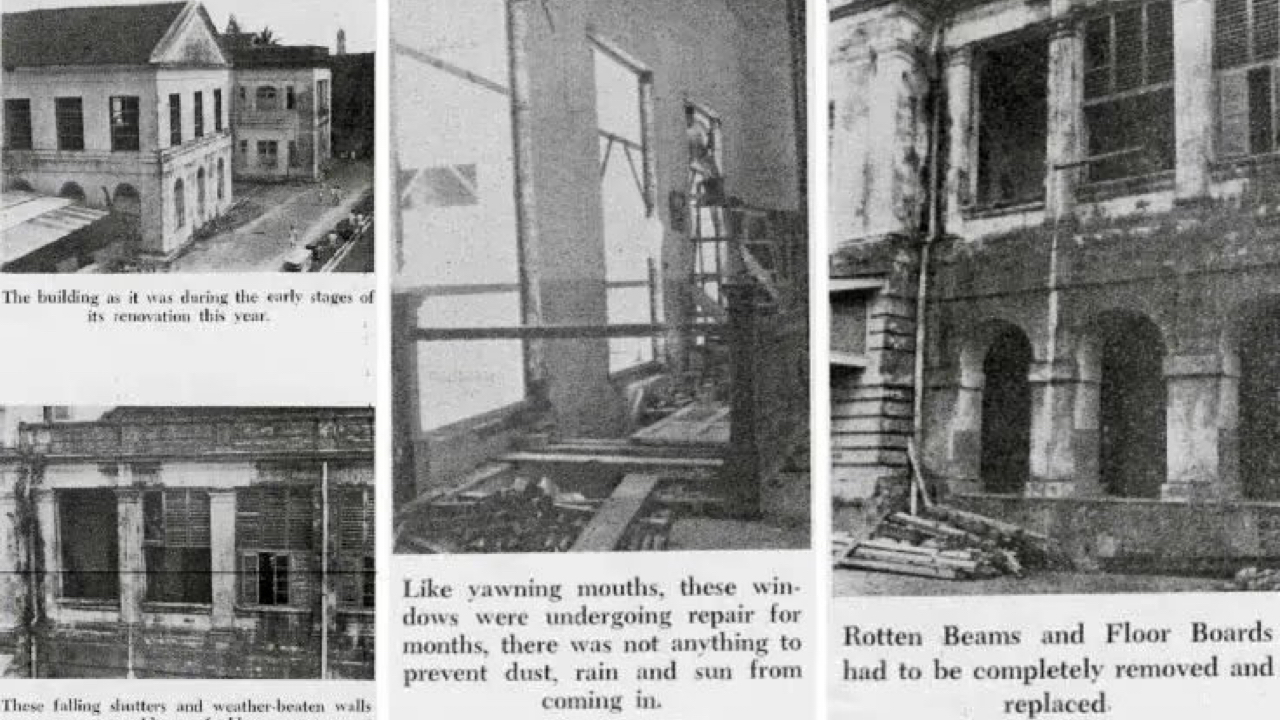 IMAGE: RAFFLES INSTITUTION
In 1967, The Straits Times published an article titled ‘RI Building Declared Unsafe by Public Works Department’. Students had to use buckets to collect dripping water whenever it rained, and they lived in constant terror of “windows hanging precariously from their hinges ready to fall”, alumni who studied there from 1961 to 1964 recalled in the book, Under The Banyan Tree. “I’m sure we got our school colours from our buildings: its ancient whitewash, the black grime and the green of the fungi.”
Moving on to better things
RI officially moved to its Grange Road campus on 10 March 1972, with a farewell ceremony held at Bras Basah that same day. The new campus was the first in the country at the time to have sports facilities such as a gymnasium, sports complex and squash and tennis courts. The old school building was demolished in late 1972.
The Bras Basah campus may be gone...
... but it lives on in a detailed 1:100 scale model at the Raffles Archives & Museum, and the building can be seen on the back of the $2 note we use today.
For the latest updates on Wonderwall.sg, be sure to follow us on TikTok, Telegram, Instagram, and Facebook. If you have a story idea for us, email us at [email protected].