

Comic Book Artist Hana Yaacob Uses Her Webtoons To Explore Her Identity
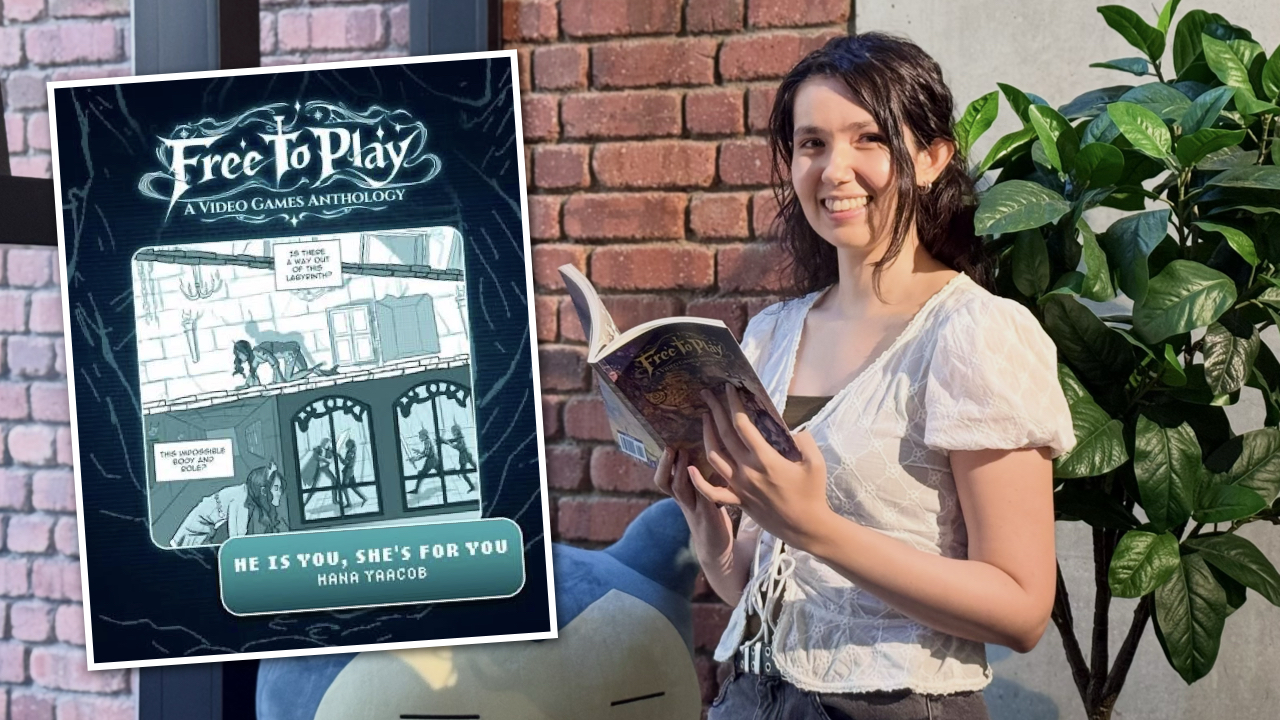
What defines who we are? That's what young Singaporean comic book and webtoon illustrator Hana Yaacob asks in her contribution to Free To Play: A Video Game Anthology (2026).
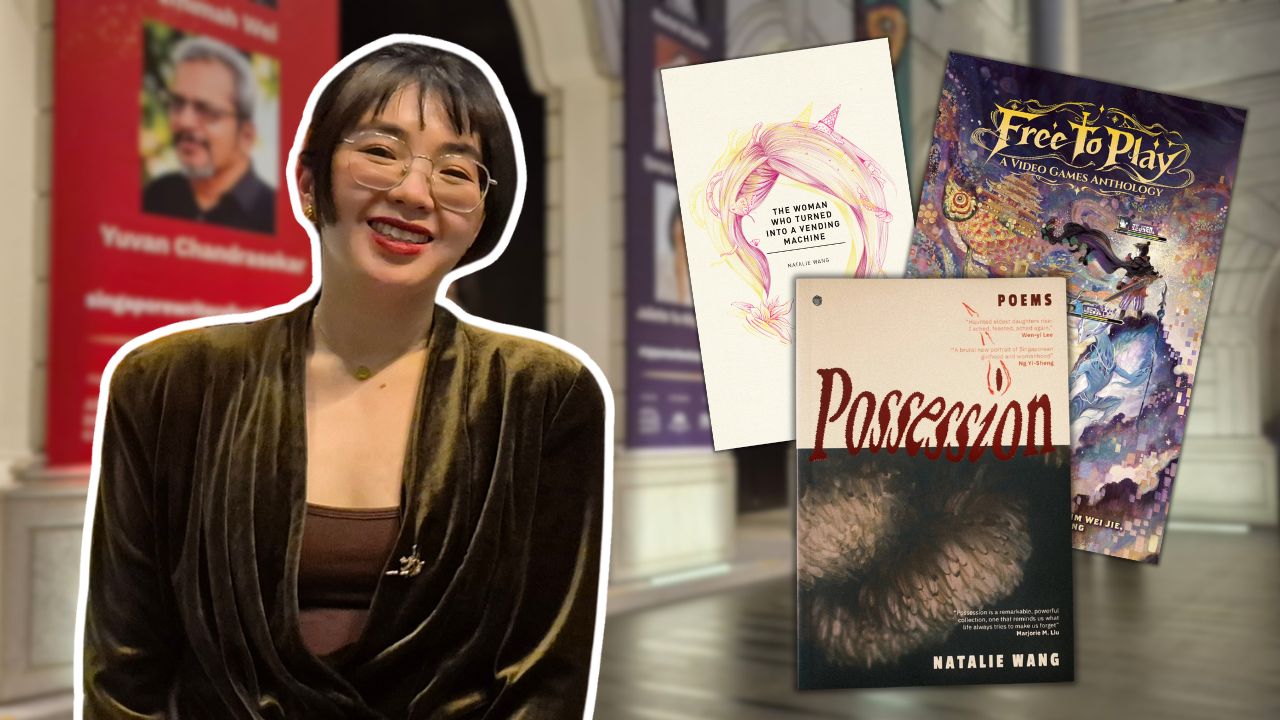
Edited by some of the key names in Singapore’s literary scene – award-winning authors Adan Jimenez (the Sherlock Sam series) and Daryl Lim Wei Jie, and acclaimed poets Joses Ho and Natalie Wang – Free To Play features comics, short stories and poetry (and even an online component) that give an alternative view of the world of video games.
The list of contributors is equally noteworthy, including award-winning authors like Meihan Boey (“Dawn Of Clarandera”), Alvin Pang (“The Writer As A Gamer”) and Nuraliah Norasid (“All The Times I Was Dragonborn”).
Hana's work, “He Is You, She’s For You”, challenges the gender roles and stereotypes that are often seen in video games. In an age when “diversity” and “inclusivity” have become the buzzwords du jour, she finds it interesting that video games have often been rigid in their gender stereotypes.
“In the course of researching for this story, I found that when these games were pitched to investors, there's still this assumption that the target audience is guys,” Hana says.
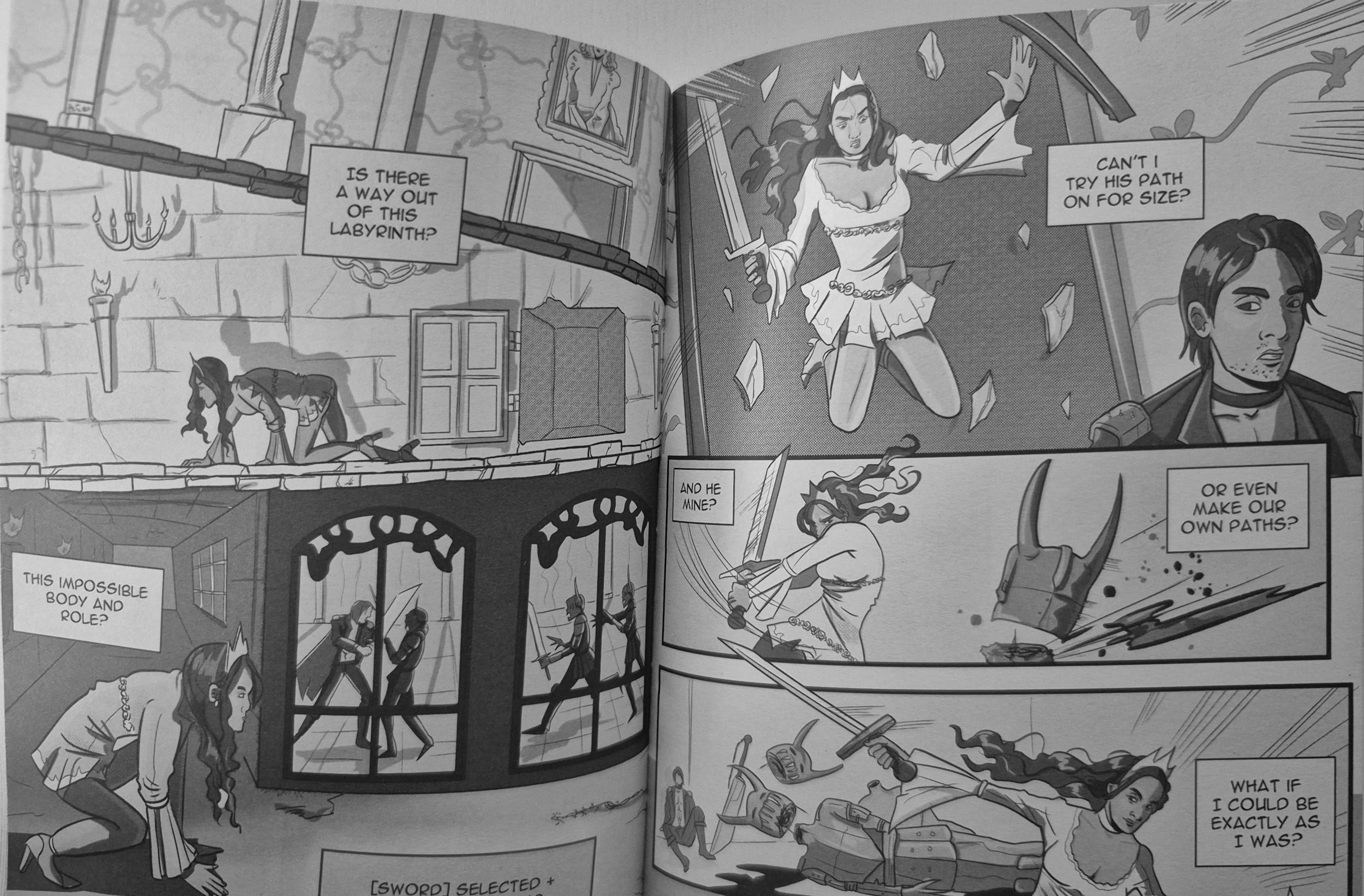
Hana explores gender stereotypes in video games with her story, "He Is You, She's For You". | IMAGE FROM FREE TO PLAY: A VIDEO GAMES ANTHOLOGY
For example, male game characters have skill sets female characters won't have, and their power levels and power moves are usually higher, too.
“I thought it was very interesting the way that games encouraged empathy for gender difference, but at the same time, also set these barriers to who you are," she says.
“So that's kind of where the title of my piece came from. Like he is you – this buff, powerful male character is you, and he's your fantasy. But she is for you. She's also your fantasy, but she's there to be looked at as you play rather than to be empathised with, as you."
“Speaking from personal experience, identity and being the 'other' in society has always been very interesting to me – how you are perceived and how you want others to perceive you,” she explains.
Hana Yaacob on drawing from real life
This questioning of gender roles and identity is partly due to Hana being of mixed heritage – her dad is Malay; her mum is Puerto Rican. From a young age, she had to deal with figuring out who she was.
“When I was a kid, I used to go over to my cousin's house a lot, and we would play The Sims together," she says. "I remember once, when choosing the character models, my cousin was like, ‘Here's this white family; this is you’. And I was like, ‘No!’"
Thanks to her fair complexion, she has had to deal with what she calls "double-othering".
“I suppose it’s rooted in the experience that I had growing up, because to my Chinese friends, I am their quirky-looking Malay friend, but to a lot of Malay classmates, they were like, 'You're not Malay'."
"You're a minority to the majority, but the minority group you're part of also doesn't see you as one of them. So, I always found this sort of tension of identity to be a very interesting aspect that I always want to explore in my works,” she adds.
Indeed, the idea of identity later shows up in her comics and webtoon series like Malay Witches, The Sun Is The Moon’s Dream and The Colours Of Light.
Speaking of which, Hana’s next work is doing the artwork for a story in the anthology Civil Disobedience, but another idea she has been toying with is converting her webtoons to print, if only because she loves the physical medium.
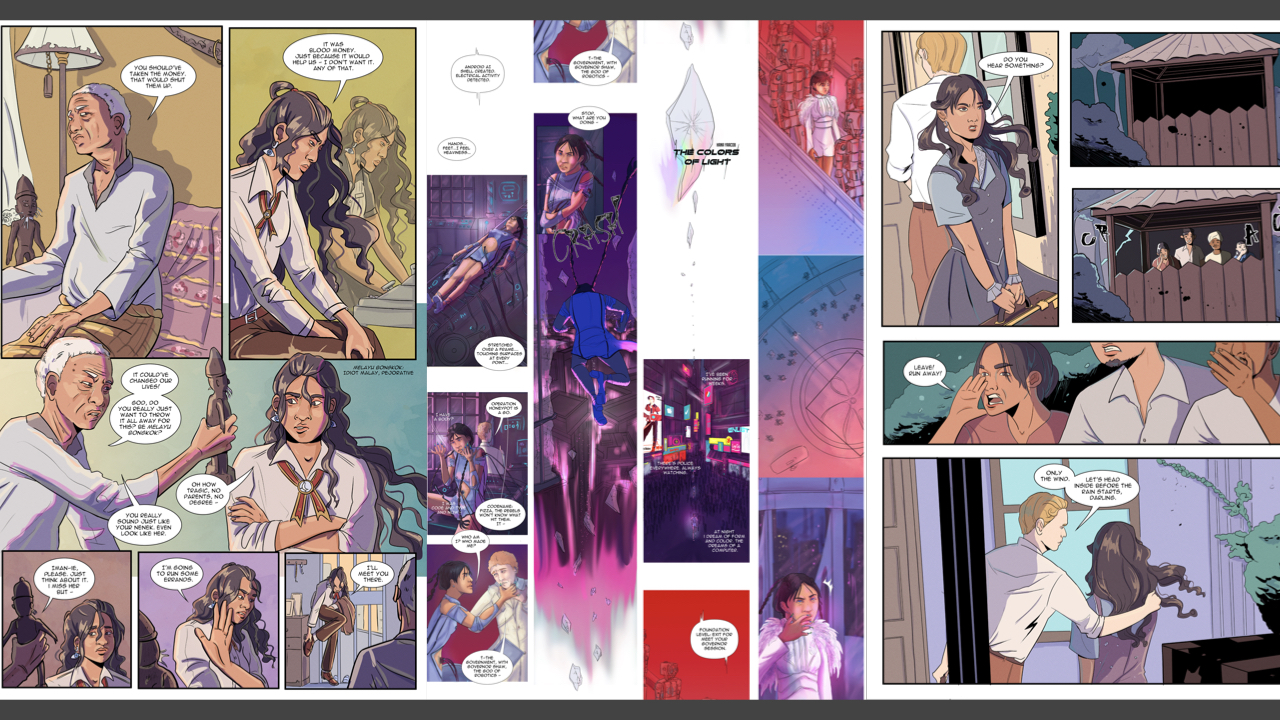
The theme of identity often shows up in Hana's comics and webtoons. | IMAGES: HANA YAACOB WEBSITE
“Nowadays, I feel like I much prefer to read an actual book. I do prefer the interaction with the page and all that. So I’d love to print out my webtoon, whether it's funded by a Kickstarter or whether someone wants to pick it up and publish it as a book."
“I think that would be really cool. I mean, as long as people are still interested in what I have to offer, you know?”
How to be a comic book artist: The Hana Way
But what if you, after reading this, get inspired to become a comic book illustrator? Well, Hana has some nuggets of advice for you.
1. Try creating something for younger audiences. Generally, the adult reading audience is small, and adults who read comic books make up a fraction of that. Writing for tweens and teens allows for a larger audience.
“The scene is going very much in the direction of young adult and children's comics. Those are still the biggest markets for comics in Singapore,” she says.
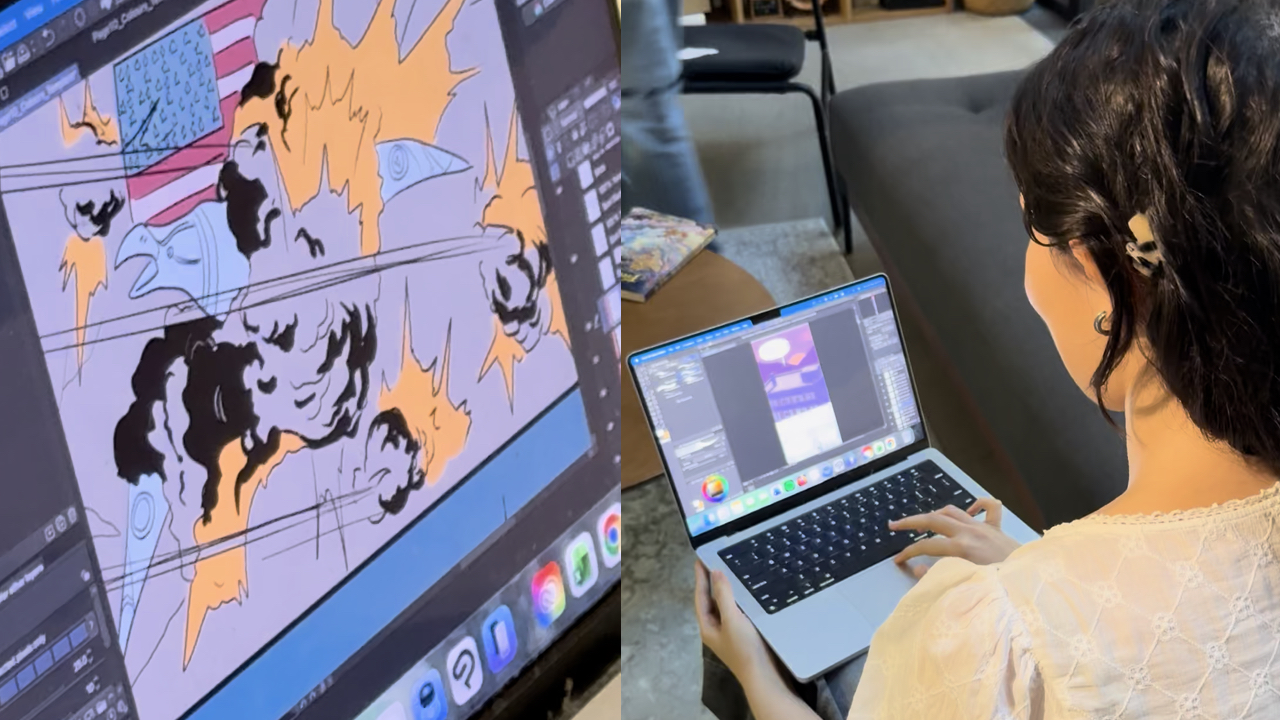
Hana says she has loads of webtoon and comic ideas in her hard drive that haven't seen the light of day. | IMAGE: NICHOLAS YONG
2. If you really want to create comics, just do it. “Even if it's s***," Hana says. "Make the comic, show it to people, see what they think, then do another comic. You just have to keep going and going because it is a process.”
Interested in art as a young girl, she drew pictures of her family and cat. She still has a hard drive of ideas she came up with through the years that haven't yet seen the light of day. Perhaps someday.
3. Don't be afraid to chase your dream. Even though her parents eventually supported her choice to study art in university – the idea to follow her dad into politics didn't cross her mind – it took them a long while to come to terms with it. But Hana kept at it.
“When I made the decision to go off and study art, my dad was like, ‘You know, I'm very proud of you and all of that, but you could have been a lawyer’,” Hana laughs. “And I was like, ‘Okay, thank you, Papa. Good to know’."
“Now my dad tells people, ‘My daughter's an illustrator, she's great!’ I don't know if he necessarily believes that, but (I had to show) I was serious, that I wasn't just a hobbyist. It was a long process for sure.”
4. Don't be afraid to try new things. While Hana had read webtoons and webcomics, she hadn't considered doing that as a career until her teacher suggested she give it a try.
"He said, 'I think webtoons could be an interesting platform for you. You have an art style that brushes against what is the trendy art style on webtoons," she said. "So I thought, sure, why not?"
Her first effort was a three-episode webtoon based on Macbeth. That got her going, and she put out her first full webtoon, The Colours Of Light, in 2023. And that, as they say, was that.
5. Make sure you have thick skin. We all know art is a subjective space. After all, one man's masterpiece is another man's doodle. But it's also a business and an industry, and so the way your work is perceived and valued can be heightened.
“You're gonna meet people who are going to look at your stuff and say, ‘This is amazing!’ And you're going to meet people who are gonna be like, ‘This is the ugliest thing I have ever seen – you can't draw'," she says.
“But you have to roll with that and take the feedback that you feel is offered from an honest place," she continues, "and be able to brush off the ones that come from… a more subjective reaction.”
Free To Play: A Video Games Anthology is available at the Singapore Writers Festival 2026 and other bookshops.
For the latest updates on Wonderwall.sg, be sure to follow us on TikTok, Telegram, Instagram, and Facebook. If you have a story idea for us, email us at [email protected].