


HDB Estates Are Great For Horror Stories, Says Acclaimed Poet Natalie Wang
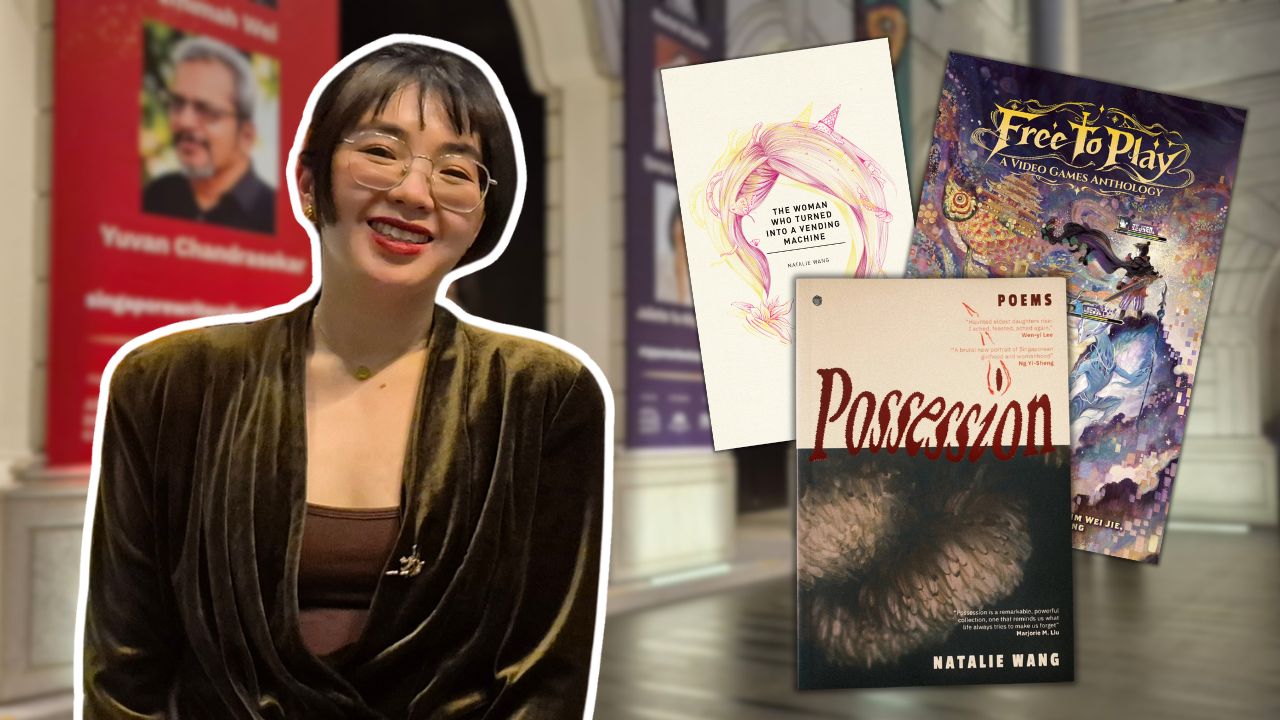
Most horror stories are set in creepy mansions or deserted houses, but what about HDB blocks? That’s what acclaimed poet and short story writer Natalie Wang is offering in her latest book, Possession, a collection of poems she describes as “HDB Gothic or Singapore Gothic”.
2026 has been a bit of a bumper year for Natalie. Earlier this year, her debut collection of poetry, The Woman Who Turned Into A Vending Machine, a collection of poems about “metamorphosis and change and womanhood”, first published in 2018, was reissued in a new format.
She also co-edited Free To Play, a comics/short story/poetry anthology themed around gaming, which was published in July. And last month, she dropped Possession (“just in time for the Singapore Writers Festival!” she jokes).
Not only that, but Natalie will also speak on two panels during the SWF. So yes, she has been busy.
Of course, Natalie isn’t a stranger to Singapore’s literary scene. She has contributed speculative fiction and poetry to various anthologies for more than a decade, including several SingPoWriMo anthologies, LONTAR and Best New Singaporean Short Stories, as well as publications such as the Quarterly Literary Review Singapore.
HDB Gothic: How Singapore's housing estates inspired "Possession"
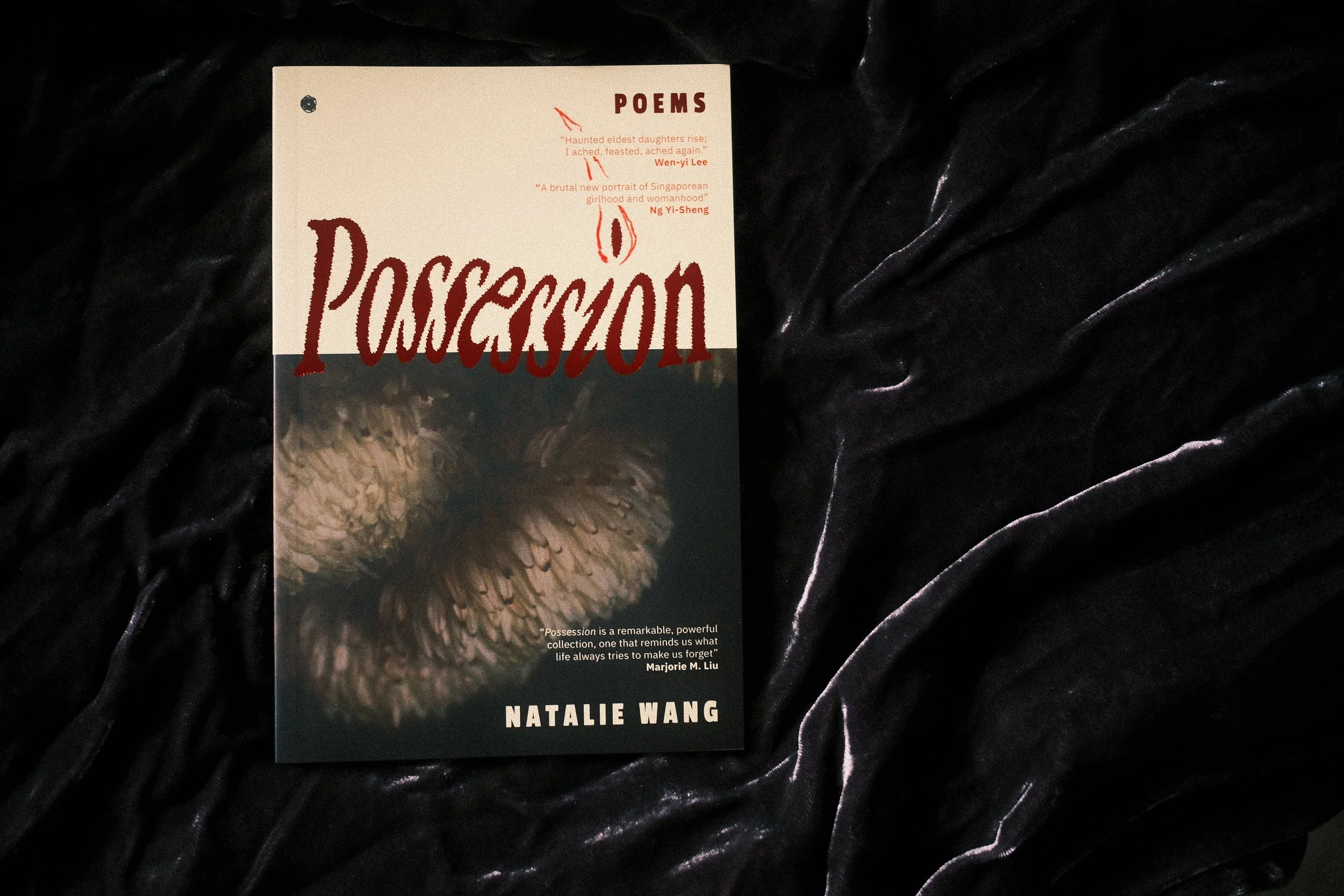
Possession, Natalie Wang's newest book, is filled with tales of what she calls "HDB Gothic". | IMAGE: NATALIE WANG
Even for Natalie's speculative fiction, Possession comes across as a bit darker and has “a lot more ghosts and blood and horror”, says Natalie. “I call this one my ghost book.”
That's where HDB Gothic comes in. “Gothic literature is not confined just to 20th- or 19th century-type crumbling-castles-within-Europe, like Dracula and Frankenstein. The genre is much broader than that,” she says.
She cites American Gothic, which adapts traditional European horror elements – such as mystery, the macabre, and the supernatural – to explore the unique history, social anxieties, and psychological landscapes of the United States. It focuses more on internal psychological terror, madness, guilt, and the dark side of human nature rather than just external monsters.
Taken in that perspective, Natalie says our HDB estates are the perfect setting for such stories.
Indeed, the poems feature characters who, by their actions (or inaction), are haunted, both within and without. For example, titles like “Hungry Ghost”, “Sad Girl Funeral Song”, and yes, “HDB Gothic”, mean this book isn’t one happy, chirpy excursion.
But Possession isn’t so much about ghouls out to jump scare you like at Halloween Horror Nights.
“The true horror in a lot of literature does not lie in the supernatural; it lies in the very ordinary daily thing. I think horror is a great medium for revealing cultural anxieties and fears, and generally what scares you is very much a reflection of your own or maybe a societal kind of psyche,” Natalie explains.
“Think about how many of your neighbours you actually know well,” she says, reflecting on how, despite our physical closeness in an HDB block, we’re still isolated from one another. “Just look at the number of articles about somebody dying (in their flat) and then, only weeks later, or months later, someone notices a strange smell. And it turns out the neighbour upstairs had passed away.”
She also draws on our secretive attitudes for inspiration. “Sometimes even our parents or grandparents are quite reticent to talk about their past, like, ‘Why is there a family member that nobody talks about? Did something happen to them?’”
Natalie Wang's poetry: Womanhood, transformation and Asian mythology
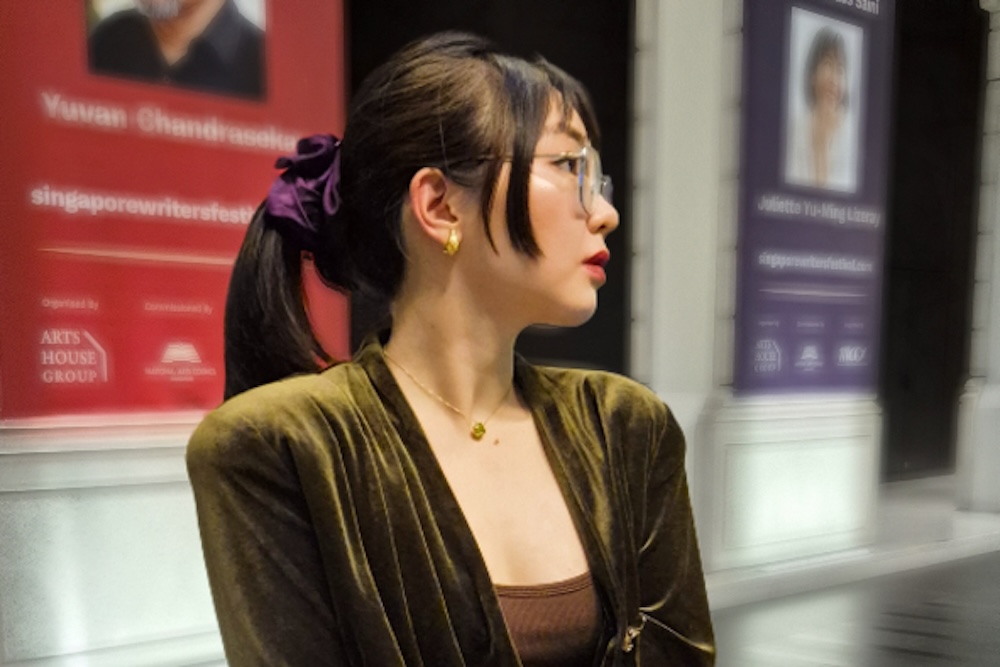
Natalie feels that poetry can say a lot with very little. | IMAGE: CHRISTOPHER TOH
Natalie has come a long way, considering she didn’t even think much of poetry until she was studying literature for her A-levels, covering the works of award-winning Scottish poet Carol Ann Duffy.
“If you’ve only experienced poetry through Shakespeare or John Donne, when you experience Carol Ann Duffy's poetry, I think a lot of people will be like, ‘Hah, can write like that?’” Natalie says. “It really opened a whole new way of thinking about and seeing the world (for me)."
“After that, I fell down the rabbit hole of finding more poets in Singapore (and) around the world, and things that speak to and resonate much more closely (for me) than (the writings of) dead white men!"
The Woman Who Turned Into A Vending Machine, written when she was in her “early to mid 20s”, turned out to be another key moment for Natalie. “Looking back now, it was basically me trying to put into words all the confusing, contradictory experiences of being a woman,” she reflects.
“The titular poem itself is about a housewife who realises that it is easier to do all those acts of service for her family members as a vending machine… Whether you take it as a literal or metaphorical transformation, it is basically the same thing. You exist essentially to provide that service for other people.”
The book also ventures into Southeast Asian and Asian mythology. “I write about Hua Pi (a supernatural entity from Chinese folklore); I've got a Pontianak poem, I've got a Malayan poem, I've got all these mythological and supernatural figures that I put into this book,” she says, adding that all the poems are meant to “sum up the confusion of feelings that I was having at that point”.
Natalie Wang at the Singapore Writers Festival
That book, along with Possession and Free To Play, will be available at the Singapore Writers Festival 2026, where Natalie will speak at two panels.
The first, The Weight We Carry Into Words, looks at how we put into words the emotions that feel impossible to explain to anybody – a thread that is prevalent in The Woman Who Turned Into A Vending Machine.
Her second is Speculative Architecture: The City, Its Hosts And Its Dreams, which she says is about “architecture and the secrets that lie behind a city”, something she also explores in Possession.
Why writing and reading poetry take time
But while many might want to strike while the iron is hot and build on that streak, Natalie prefers to take things as they come and not rush it.
“Right now, I'm in harvest season – three books came out this year,” she says. “But sometimes you do need to take that time (to) produce something better as a result, something that you are more willing to birth to the world."
“Less out of FOMO, but more because you want this to be something when you're really ready to show the world what you’ve thought about very carefully.”
Besides, time can also help us appreciate poetry better, she adds. “Sometimes you come back to a poem 10 years after you first read it in school, when you're in a different stage in life, and then you realise that there's a new rhythm within the poem that speaks to you."
“Every line is justified, every word is justified or has some sort of new meaning to it. I think that's just the beauty of poetry – that there will always be something new to be discovered.”
Discovering Singapore literature - give local writers a chance
If she has any advice for those who want to get into literature, it’s this: Just start reading.
“Singaporeans need to give reading – and reading Singaporean literature – a chance. I'm not saying you should read Sing Lit because, you know, this is a patriotic thing to do."
"I'm saying you should read Sing Lit because we have some really good writers in Singapore, and I find it quite sad when international authors talk about how incredible the Singapore Writers Festival is (and) how talented our local writers are and … I wish other Singaporeans would give them that chance!"
“Pop down to NLB (National Library Board), go visit your local indie bookstore, go visit Kinokuniya, and flip a book, and maybe you'll be surprised by what you find!”
For the latest updates on Wonderwall.sg, be sure to follow us on TikTok, Telegram, Instagram, and Facebook. If you have a story idea for us, email us at [email protected].