



Beyond The Gopuram: This National Monument Has Free Yoga Classes, A Library And More
You’ve probably noticed Sri Thendayuthapani Temple – a National Monument of Singapore – even if you didn’t know its name.
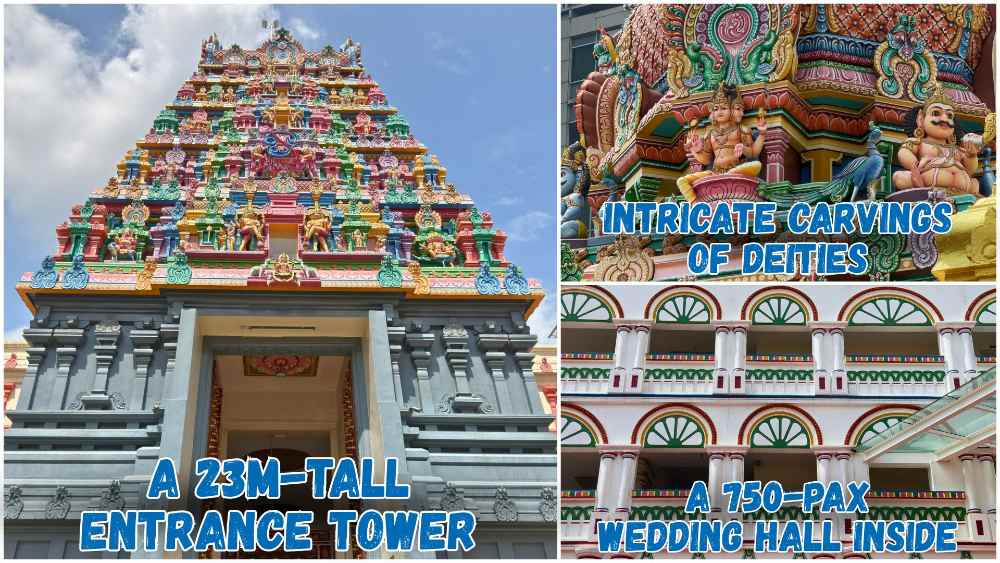
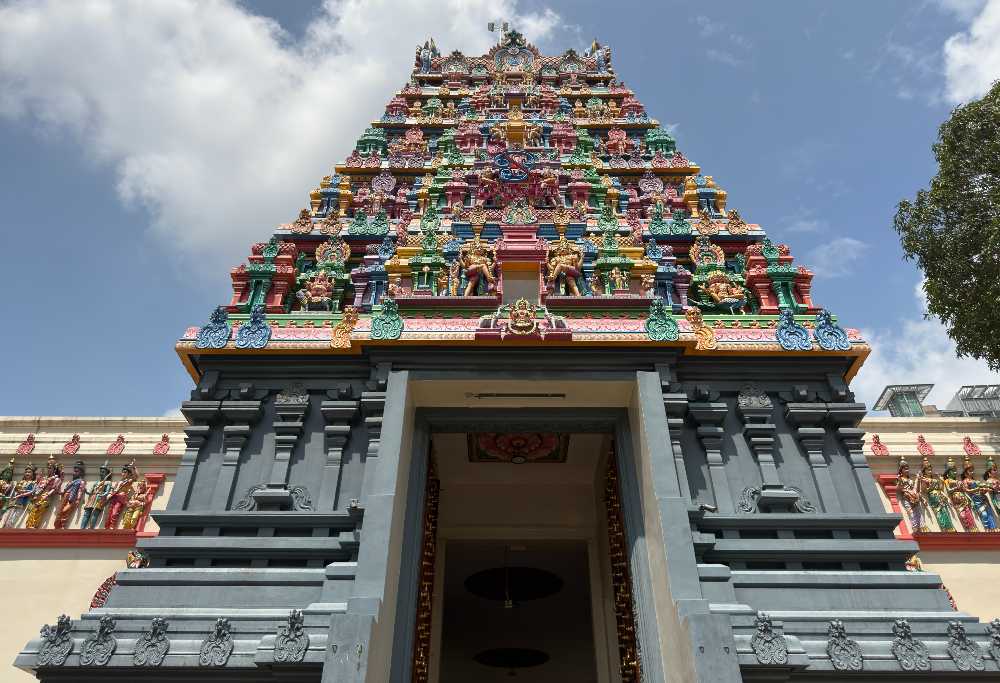
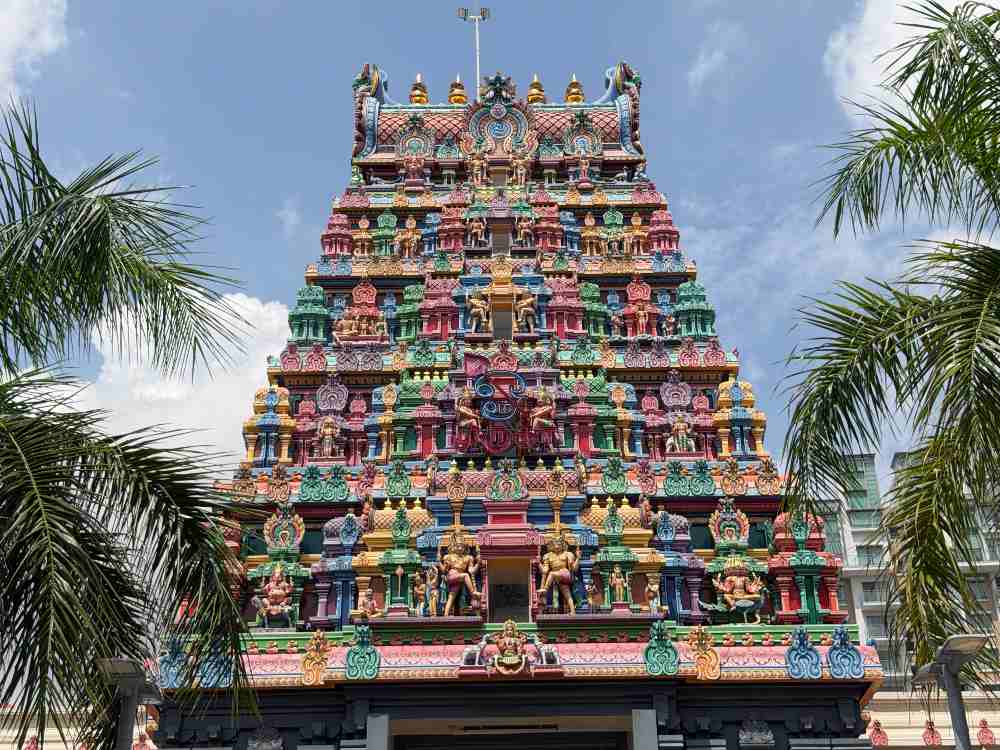
It’s quite hard not to. Rising above Tank Road (opposite Fort Canning Park) is the temple's colourful, five-tiered gopuram (monumental entrance tower), covered in statues of Hindu deities. When it was completed, the tower was considered one of the tallest and most magnificent of its kind in Southeast Asia. But what caught my attention wasn’t just how grand it looked.
The gopuram was deliberately built high enough for devotees to see the temple from afar and offer their prayers even if they couldn’t physically visit it. Suddenly, something I’d previously clocked as a very elaborate entrance had a much deeper purpose.
Once you step inside, there’s plenty you may not expect – from 48 glass panels depicting Hindu deities to a library with books collected over some 120 years, and even free yoga classes held within the temple grounds.
With Deepavali coming up on 8 Nov 2026, consider this your cue to take a closer look at one of Singapore’s oldest Hindu temples.
Overview
- Official name: Sri Thendayuthapani Temple
- Also known as: Chettiars’ Temple
- Address: 15 Tank Road, Singapore 238065
- Established: 1859
- Current building: Reconstructed and consecrated in 1983
- Year gazetted as a National Monument: 20 Oct 2014
- Main deity: Murugan, also known here as Sri Thendayuthapani
- Current use: Hindu temple and community hub
- Nearest MRT: Fort Canning and Dhoby Ghaut
- Admission: Free
 IMAGES: NG KAI
Why Sri Thendayuthapani Temple deserves a closer look
Let’s start with the most obvious feature – the gopuram. That towering entrance is a monumental gateway commonly associated with South Indian temple architecture.
Sri Thendayuthapani Temple’s gopuram is five tiers high (23m to be exact) and decorated with figures of Hindu deities, including different manifestations of Shiva and Murugan. When the present temple was completed in 1983, the gopuram was among the tallest and most magnificent in Southeast Asia.
I always thought the height of these entrance towers was just for aesthetic purposes, but turns out, there's a very functional purpose. Essentially, the gopuram allows devotees to identify and view the temple from a distance, meaning those unable to pay a visit can still direct their prayers towards it.
So the taller, the better, because a devotee living in Jurong or Changi could potentially look out their window and offer prayers from the comfort of their home if the temple's gopuram tripled in height.
 IMAGES: NG KAI
Step inside – then look up
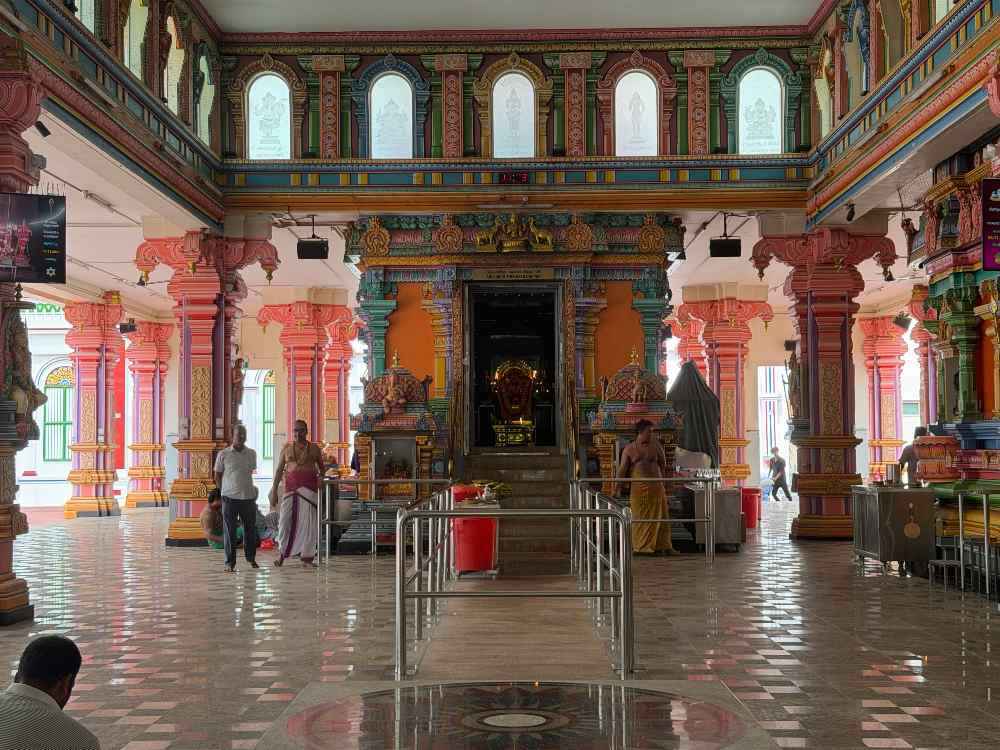
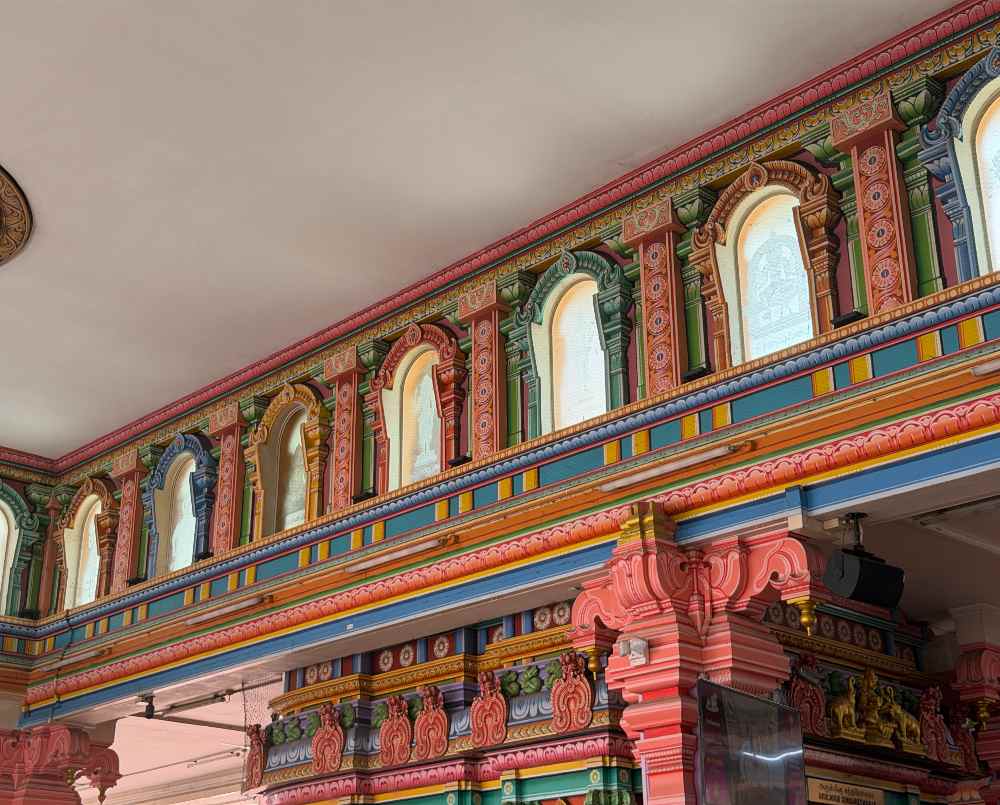
Along the clerestory of the mandapam, or prayer hall, are 48 glass panels depicting Hindu deities. Among them are different forms of Shiva performing his mystical dance as Nataraja, the Lord of the Dance, as well as various forms of Ganesha.
They’re not just decorative either. The panels are one of several details that point back to the temple’s Chettiar roots.
Sri Thendayuthapani Temple was founded by the Nattukottai Chettiars (also known as Nagarathars) from the Chettinad region of Tamil Nadu, and elements of traditional Chettiar architecture can be found throughout the building.
At the entrance, for example, are raised thinnais – platforms traditionally built outside Chettinad homes as seating areas for family members and visitors. Glass panels featuring Hindu deities are also a common feature in Chettiar temples.
So some of the temple’s most striking details aren’t just there to look beautiful, they’re also little clues to the community that built it.
Who were the Chettiars?
They were among the first immigrants to settle in Singapore. Arriving in Singapore in the early 19th century, the Chettiars were traders, merchant bankers, and financiers. A large majority of them often based their economic and religious activities around the South-Indian-style Sri Thendayuthapani Temple, which, by the way, is also known as Chettiars' Temple.
 A traditional Chettiar "kittangi" comprising a father and son duo, circa 1920. | IMAGE: WIKIMEDIA COMMONS/@ HARI147
Once the Chettiars had established themselves as the main Indian merchant-banking community in the city, many of them operated moneylending businesses, known as kittangis, along Market Street and Tank Road.
Traditionally, the Chettiars are followers of Shaivism, the Hindu sect that venerates Shiva (the father of Murugan) as the supreme deity. Even after leaving Chettinad for various parts of Asia in the 19th century, they maintained their tradition of building temples dedicated to Murugan in their new settlements.
 The gopuram (entrance tower) in 1995. | IMAGE: WIKIMEDIA COMMONS/@MIKELYNCH.
In 1859, the Chettiar community constructed the Sri Thendayuthapani Temple on Tank Road. The Chettiar community had purchased the land for the current temple from the estate of Thomas Oxley, Singapore's first Surgeon General. Initially, the temple was a simple structure.
At the entrance, there were two raised platforms typical of Chettiar households in Tamil Nadu, India. It featured an alangara mandapam and an artha mandapam. The alangara mandapam was used to display decorated deities during special occasions, while the artha mandapam served as the central hall leading to the main sanctum.
While primarily serving as a religious institution, the Sri Thendayuthapani Temple also functioned as a social and commercial hub for the Chettiar community. Each Chettiar firm voluntarily contributed to the temple. In 1928, the Nattukottai Chettiars’ Chamber of Commerce was established within the temple grounds. Historically, business transactions were conducted before the statue of Murugan, seeking his blessings and presence to witness the deals.
Over 60 years later, in 1925, the Chettiars established the Sri Layan Sithi Vinayagar Temple on Keong Saik Road in Chinatown, where Ganesha, Murugan’s brother, is the main deity. Today, both temples are overseen by the Chettiars’ Temple Society (CTS).
This is where Singapore’s Thaipusam procession ends
Sri Thendayuthapani Temple has been closely linked with Thaipusam, a major festival celebrated by Tamil Hindus, especially the Chettiars, to honour Murugan for his victory over evil. Murugan symbolises youth, power, and virtue, and is revered as the clan deity of the Chettiars, the patron deity of Tamils, and the Hindu god of righteousness.
The annual Thaipusam celebration is marked by grand processions. On the eve of Thaipusam, Murugan’s statue is placed in a silver chariot and taken on a procession through the city to Sri Layan Sithi Vinayagar Temple, then returned to Sri Thendayuthapani Temple in the evening. This procession, known as Punar Pusam or Chetty Pusam, attracts a crowd comprising mostly the Chettiar community.
A bigger, more extravagant procession occurs on the festival day. Thousands of Hindu and non-Hindu devotees gather at Sri Srinivasa Perumal Temple on Serangoon Road to participate in a 3km procession ending at Sri Thendayuthapani Temple, where the devotees are warmly received.
During the procession, many men carry kavadis, elaborately decorated steel structures, as acts of penance or in gratitude for answered prayers. The kavadis are adorned with peacock feathers as the peacock is symbolic of Murugan’s vahana (divine vehicle).
Other devotees carry paal kudams (milk pots) on their heads. Before World War II, the event would end with grand fireworks display at the Padang.
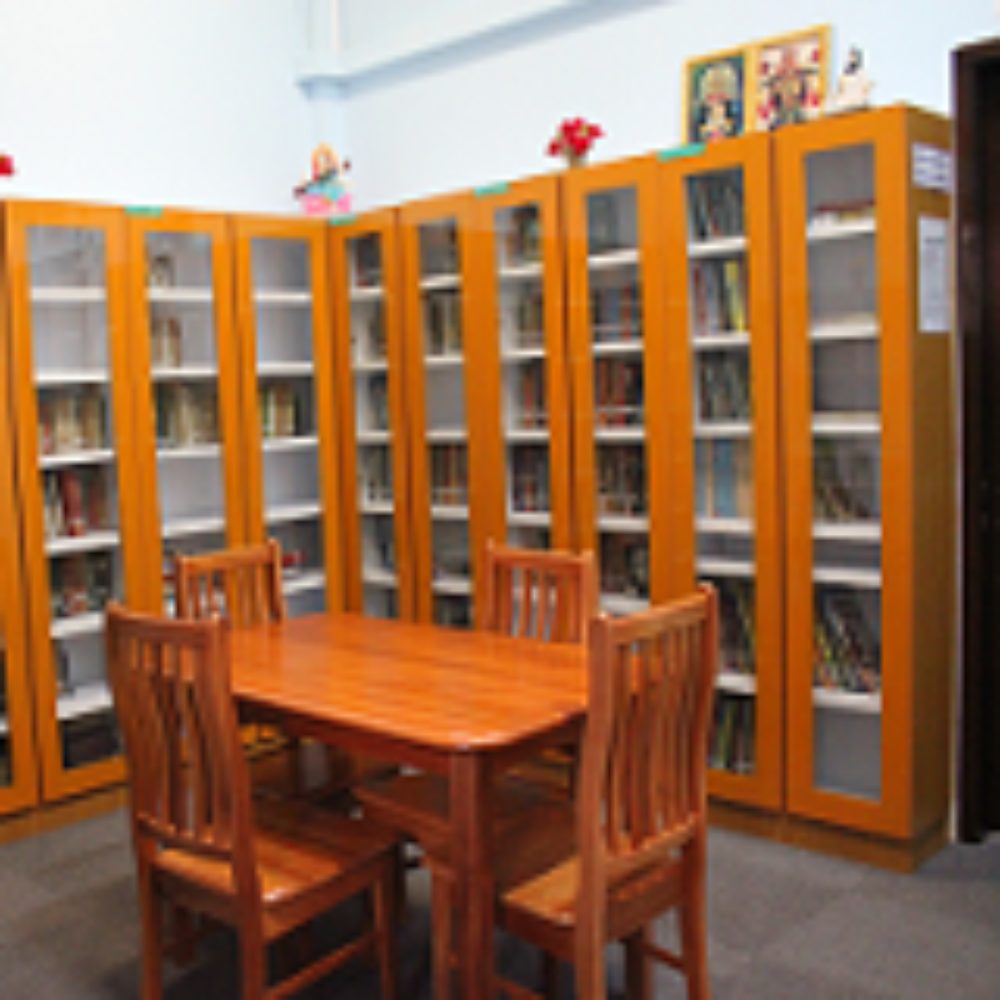 IMAGE: STTEMPLE.COM
Plot twist: there’s a library here
This is one of the things I wouldn’t have associated with a temple visit: Sri Thendayuthapani Temple has had a library for generations.
According to the temple, its collection stretches across roughly 120 years and includes about 2,000 books covering various historical subjects. The library was refurbished in 2017 and is located in the Annex Building, opposite the lift lobby.
So if the architecture gets you through the door, there’s plenty to read once you’re inside, too.
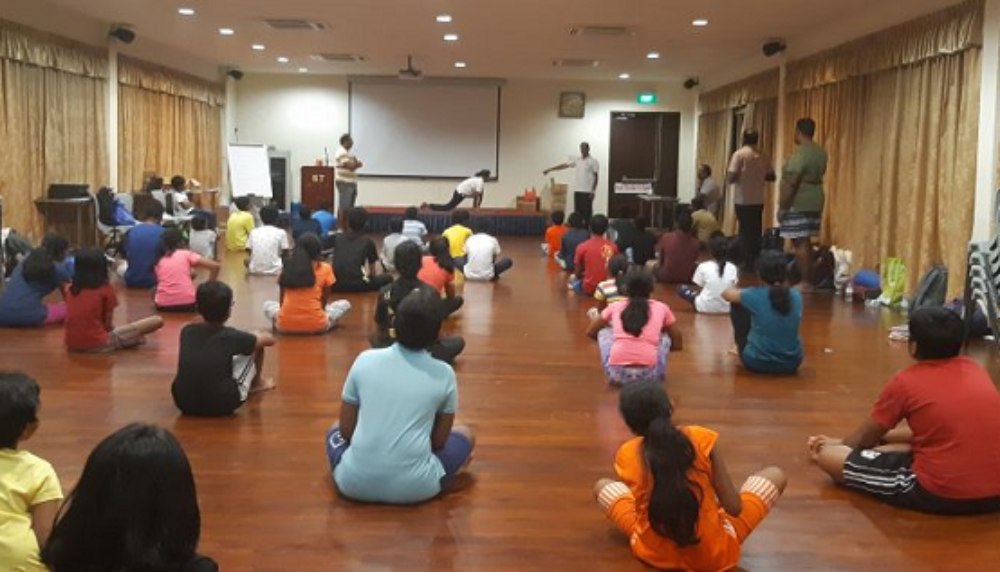 IMAGE: STTEMPLE.COM
You can even attend free yoga classes
The temple’s community role hasn’t disappeared with time. Since 2010, CTS has facilitated basic yoga classes on the Sri Thendayuthapani Temple premises.
It’s part of a much wider programme of community activities run by the society, which has also organised walk-a-jogs, and the tradition of providing annathaanam (free food) during special occasions for all attendees.
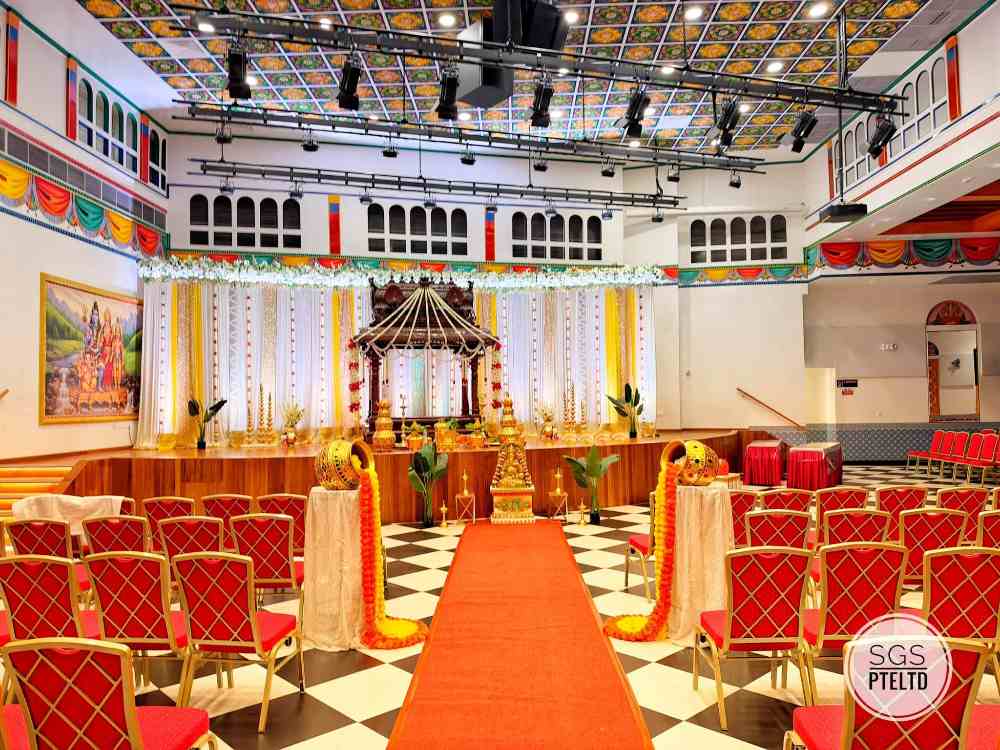 The wedding hall interior when it is set up for a wedding. | IMAGE: FACEBOOK/@ SIVA GANESH SERVICES PTE LTD
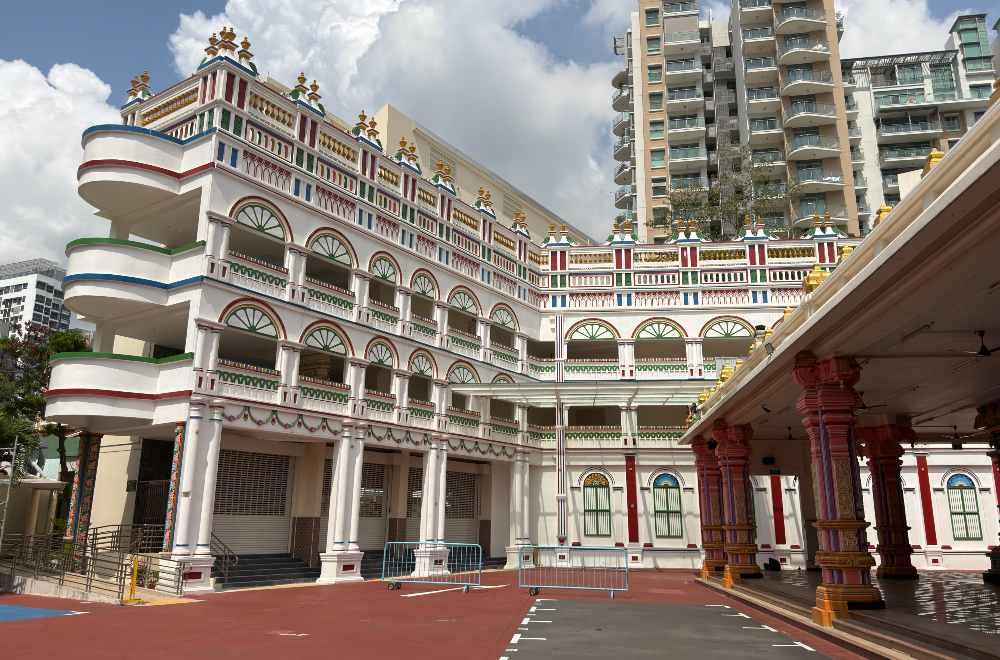
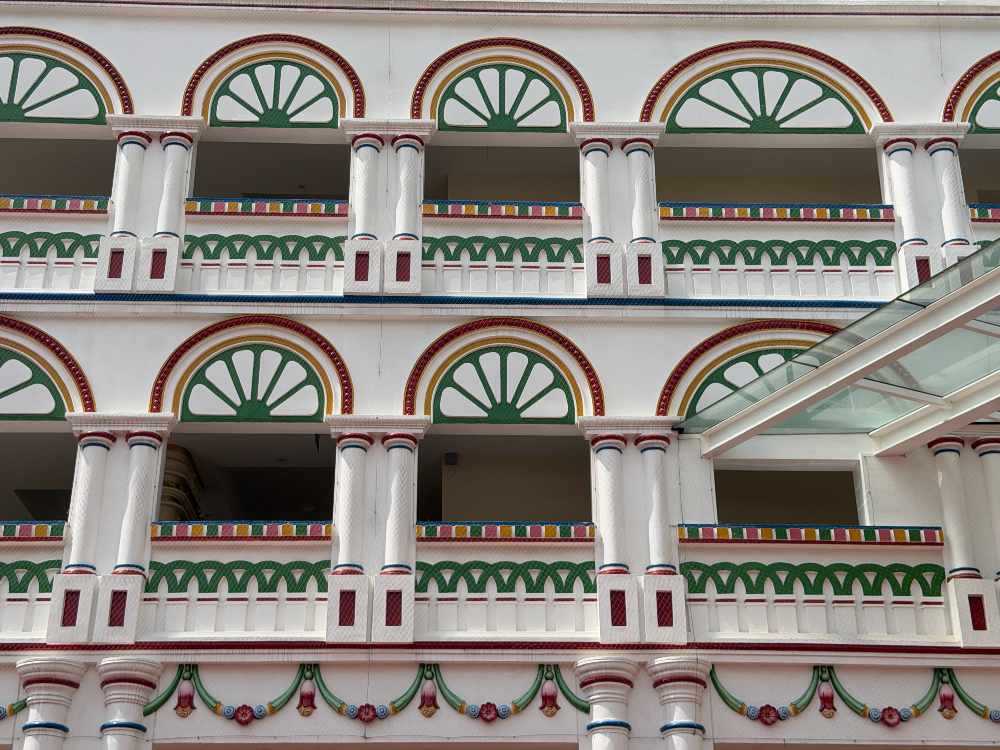 The exterior of the building in which the wedding hall is located. | IMAGES: NG KAI
Weddings are held here, too
There’s also a sizeable Chettiars’ Wedding Hall beside the temple. The hall was redeveloped and reopened in October 2025, with a capacity of around 750 people and facilities for traditional Hindu wedding ceremonies, cultural performances and other community events.
Visiting around Deepavali?
This year, Deepavali falls on 8 Nov (Sunday), and Sri Thendayuthapani Temple has a special Deeparathanai (a sacred Hindu ritual of waving lighted lamps before a deity as a form of worship) scheduled to take place at 7.15am that morning.
Just remember that this is first and foremost an active place of worship, so dress appropriately, remove your shoes before entering, keep your voice down and avoid entering or approaching the sanctum. Photography is permitted within the temple, including the statues on its pillars. Do not disturb devotees while they are praying.
Wait, what makes something a National Monument?
In Singapore, National Monuments are buildings, structures or sites recognised for their national significance and value to our built heritage. They are gazetted by the Preservation of Sites and Monuments, a division of the National Heritage Board, which is why the title is reserved for places that carry especially important historical, architectural, social or cultural meaning.
As of 2026, Singapore has 77 National Monuments. Some are obvious landmarks, like the Padang, St Andrew’s Cathedral and Fort Siloso. Others are places you may have walked past without a second thought, which is exactly why this series exists.
One National Monument at a time, we’re here to uncover the stories hiding in plain sight.
For the latest updates on Wonderwall.sg, be sure to follow us on TikTok, Telegram, Instagram, and Facebook. If you have a story idea for us, email us at [email protected].