



What Does The Sea Have To Do With Our Regular Cup Of Chagee? A Lot, Actually
A dead whale isn't what we'd expect to see bobbing around Singapore’s waters. Yet that’s exactly what happened on 6 Sep 2025, when a male Omura’s whale measuring about 10.6m was found floating near Tanjong Pagar.
As a little-known baleen whale species that was only formally described in 2003, the discovery was particularly significant for scientists. Examination found injuries consistent with a ship strike, as evidence suggested the whale may have been hit more than once.
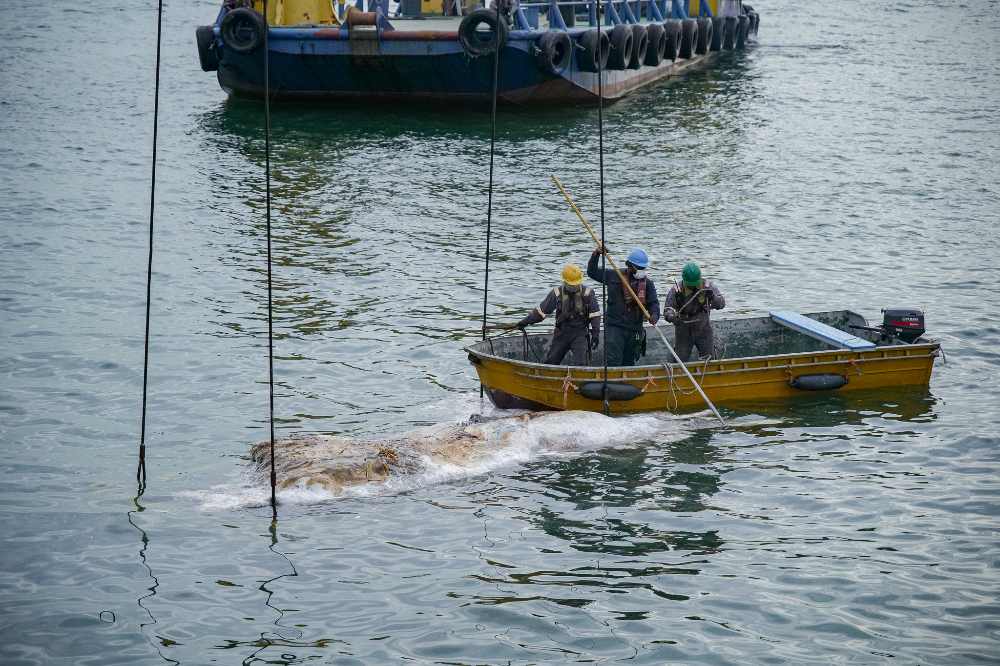 A baleen whale carcass was found in the waters off Tanjong Pagar on 6 Sep 2025. | IMAGE: FACEBOOK/@LKCNHM
A whale turning up in one of the world's busiest bits of ocean? That’s a pretty good place to start thinking about Singapore and the sea.
Strangely, despite being islanders, most of us barely think about the sea at all. Maybe we think about it when East Coast Park is crowded. When we’re going to Sentosa. When there’s a cruise to catch.
Or when there’s a whale suddenly floating off Tanjong Pagar.
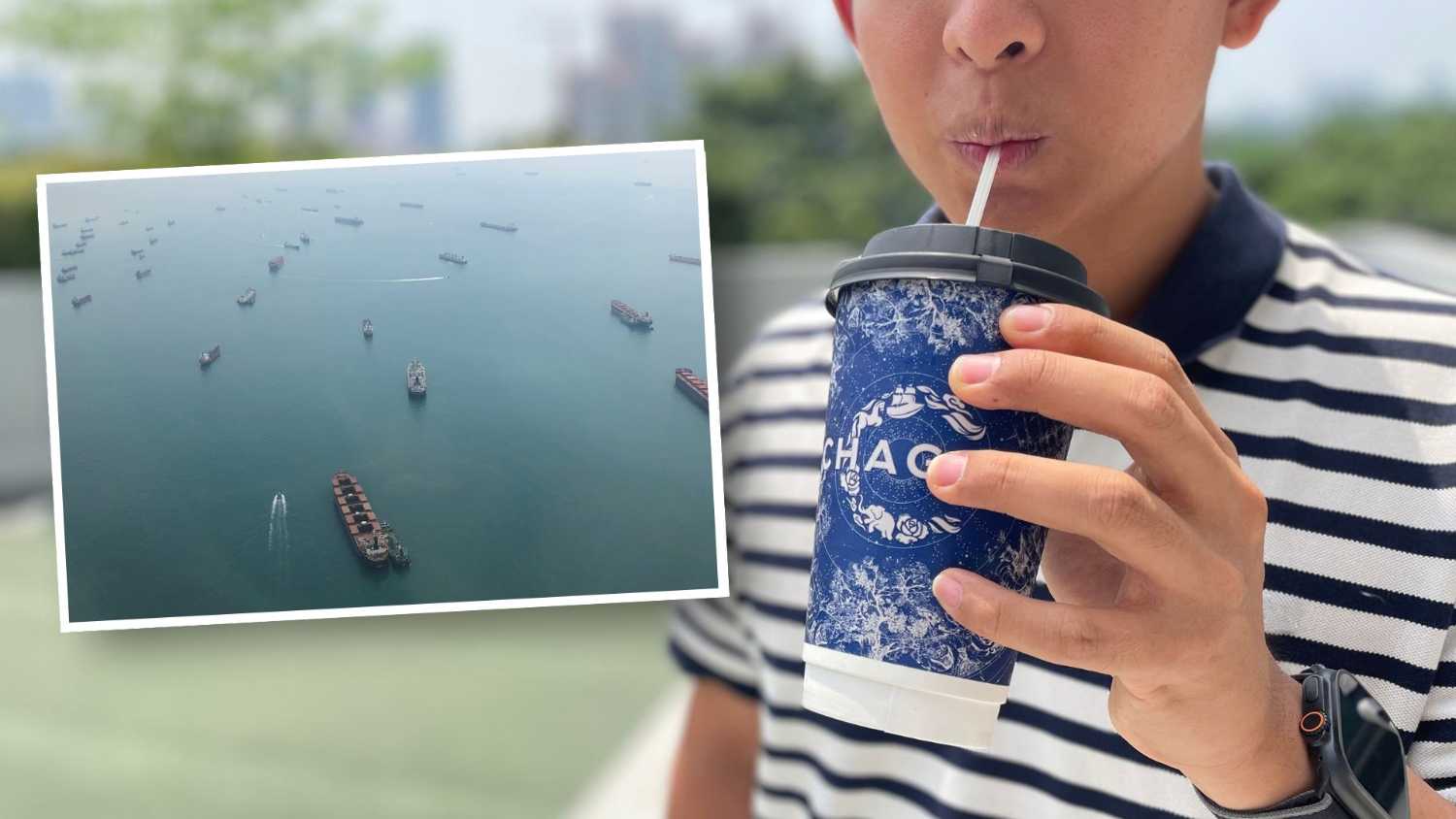
Otherwise, the sea is mostly just... there. Which is odd, because an enormous amount of our daily life depends on it. Including that Chagee you drink on a daily basis.
 IMAGE: SIM DING EN
What does a cup of Chagee have to do with the sea?
Think about what’s actually involved in getting a drink like that into our hands. There are tea leaves and other ingredients. There is packaging. There are cups, lids and that tiny (but impressive) bit of plastic engineering whose entire job is to make sure our drink arrives as a drink, rather than a slushy bag of sadness.
Then there’s everything behind the scenes: machinery, raw materials, fuel, spare parts and countless other components moving through international supply chains. A lot of that movement happens by sea.
The International Maritime Organization says more than 80 per cent of global trade is transported by sea. And Singapore is very, very plugged into that system. Our port handled a record 44.66 million twenty-foot equivalent units (TEUs) of containers in 2025, alongside 3.22 billion gross tonnes of vessel arrivals.
So, when we pick up a drink, order something online, replace a phone or buy a packet of snacks made somewhere else in the world, the sea is often part of the backstory. We just don’t get to see that.
There is no notification saying: “Your Chagee ingredients have successfully completed their maritime journey.” (Which is probably for the best.)
The sea has borders – yes, really
(Okay, this is where things get a bit nerdy.)
The ocean looks like one giant, uninterrupted blue expanse. But the United Nations Convention on the Law of the Sea (UNCLOS) says otherwise.
Under UNCLOS, the sea is divided into different maritime zones, each with its own rules: a coastal State’s territorial sea can extend up to 12 nautical miles from its baselines; the contiguous zone up to 24 nautical miles; and an exclusive economic zone (EEZ) up to 200 nautical miles, where the coastal State has specific sovereign rights over natural resources.
This doesn't mean a country gets to slap a giant “KEEP OUT” sign across 200 nautical miles of ocean.
Other States retain important rights, including freedom of navigation and overflight in the EEZ, subject to UNCLOS. This matters when that water happens to sit next to one of the world’s busiest shipping routes.
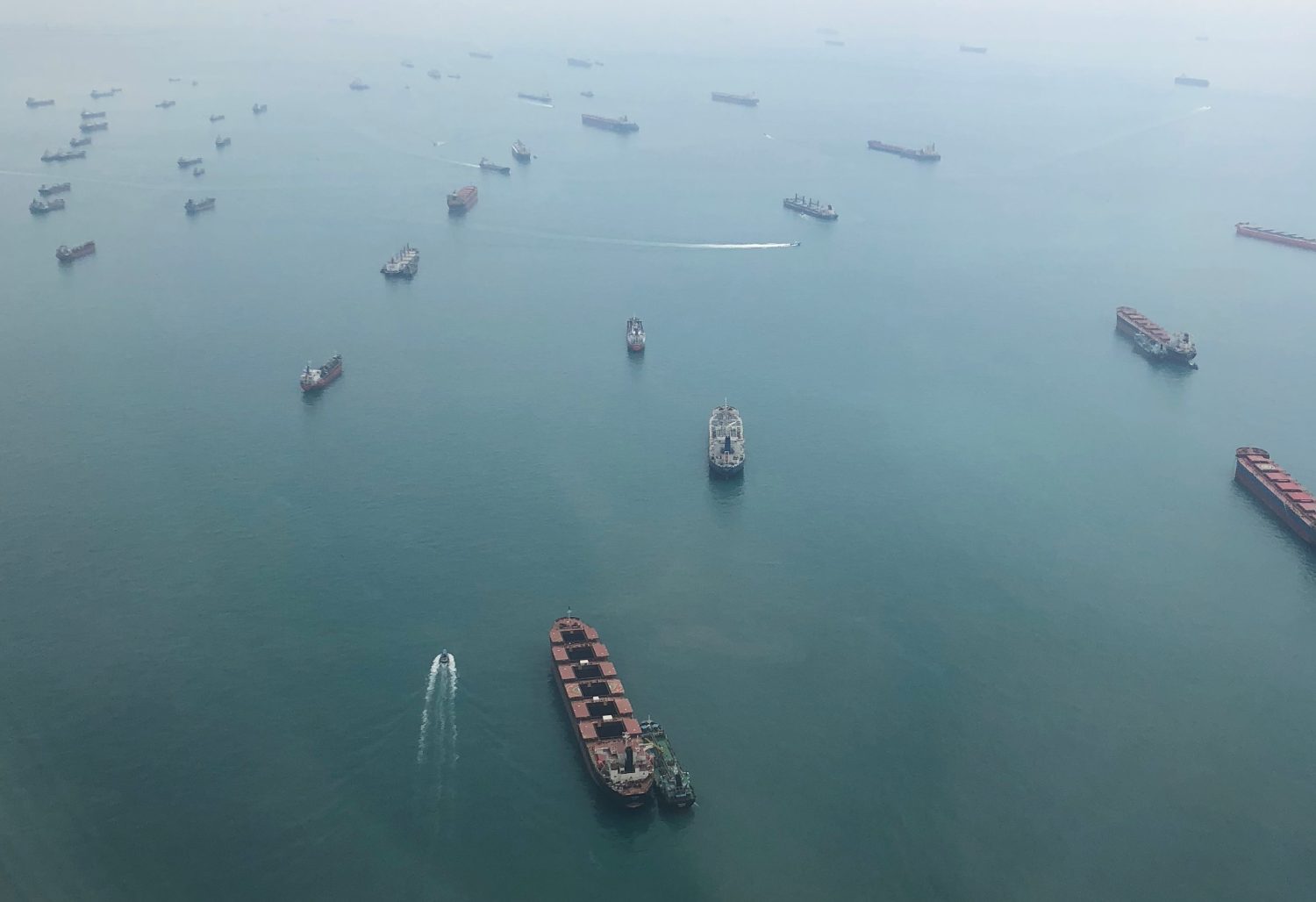 IMAGE: WIKIMEDIA COMMONS
Singapore’s maritime borders are basically hard mode
Singapore is small. Our neighbours are close. The shipping lanes are busy. And there is a huge amount of international maritime traffic squeezing by us.
So, drawing maritime boundaries here isn’t as simple as taking a ruler, measuring 12 nautical miles from the coast and saying, “Okay, done. Next!”
Where maritime zones overlap, countries need to agree on boundaries. Sometimes, they don’t. (Just ask Pedra Branca.)
At sea, a small geographical feature – like an island or a rocky outcrop – can have consequences far beyond its physical size. And the rules governing those waters matter because ships aren’t just wandering around randomly.
The ships need rules too
The Straits of Malacca and Singapore are a major international maritime route between the Indian Ocean and the Pacific.
Under UNCLOS, straits used for international navigation have a specific legal regime known as “transit passage”. Ships and aircraft enjoy the right of transit passage through such straits, subject to the convention’s rules.
In August 2026, Indonesia, Malaysia and Singapore reaffirmed their shared commitment to keeping the Straits of Malacca and Singapore free, open and safe for international shipping, explicitly referencing UNCLOS and the right of transit passage.
This is the dry-sounding machinery that makes an astonishingly un-dry amount of our daily lives.
If international shipping is going to work, everyone needs to know the rules. And those rules need to exist beyond a PDF sitting somewhere on a government website.
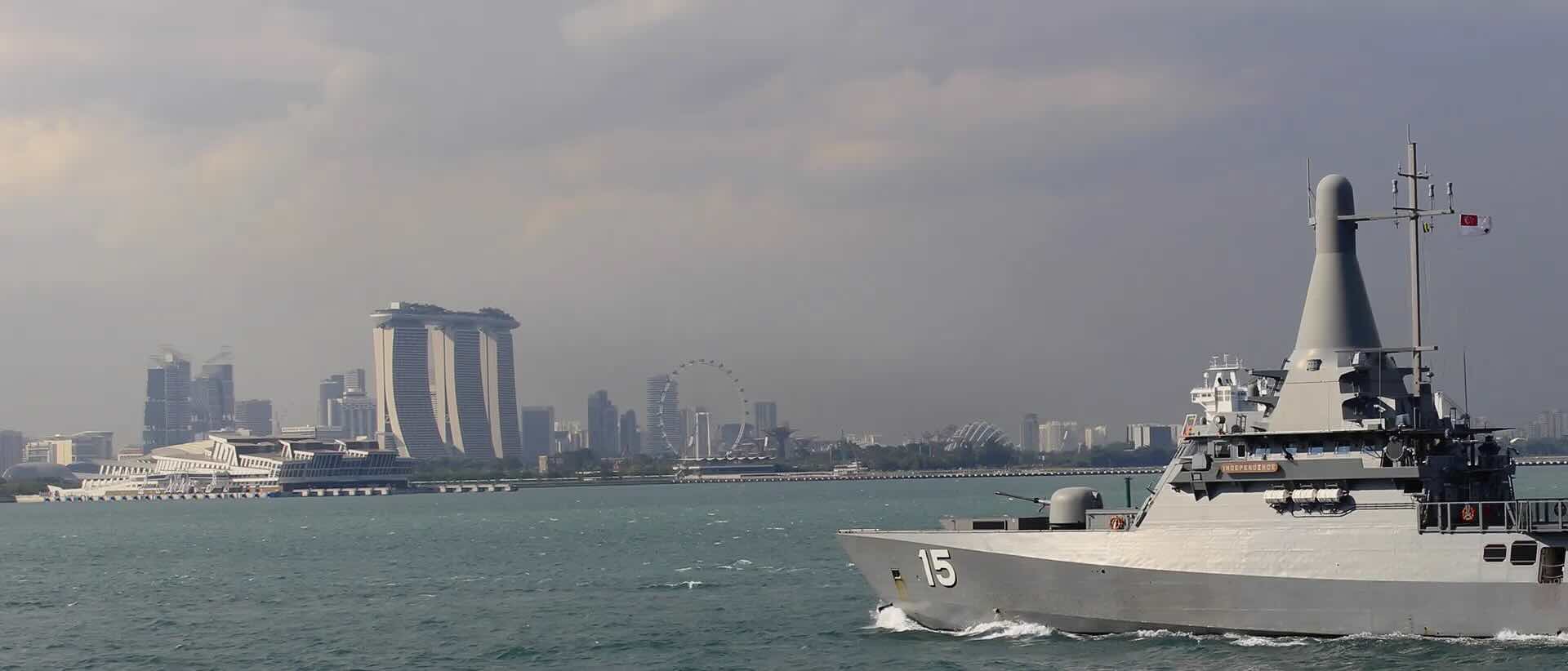 IMAGE: NAVY.GOV.SG
Someone has to keep an eye on all this
The Republic of Singapore Navy (RSN) is responsible for Singapore's seaward defence and for protecting the country’s vital sea lines of communication. The RSN also works with other agencies and international partners on maritime security.
Obviously, the RSN isn’t delivering our Chagee. But Singapore’s dependence on the sea means maritime security is part of the infrastructure behind ordinary life.
When that infrastructure is working properly, most of us don’t notice it, which is exactly what infrastructure tends to do.
Nobody wakes up thinking about electricity grids. We just complain when the Wi-Fi dies. Nobody thinks about maritime security while opening a delivery app. We just wonder why our parcel is late.
That's why World Maritime Day (24 Sep 2026) is a pretty good excuse to talk about something most of us never consider.
This year’s theme is “From Policy to Practice: Powering Maritime Excellence” (which, honestly, sounds like the sort of phrase that could take up a three-hour meeting and still leave everyone wondering what the outcome was).
But strip away the conference-speak and the idea is pretty straightforward: international rules only really matter when they're translated into laws, enforcement, technology, training and the everyday work that keeps maritime activity safe and functional. That’s precisely the focus of the International Maritime Organization’s theme.
UNCLOS is part of that rulebook. So are the arrangements between neighbouring countries as well as the people operating ships and ports, monitoring waters, maintaining navigational systems and keeping sea lanes secure.
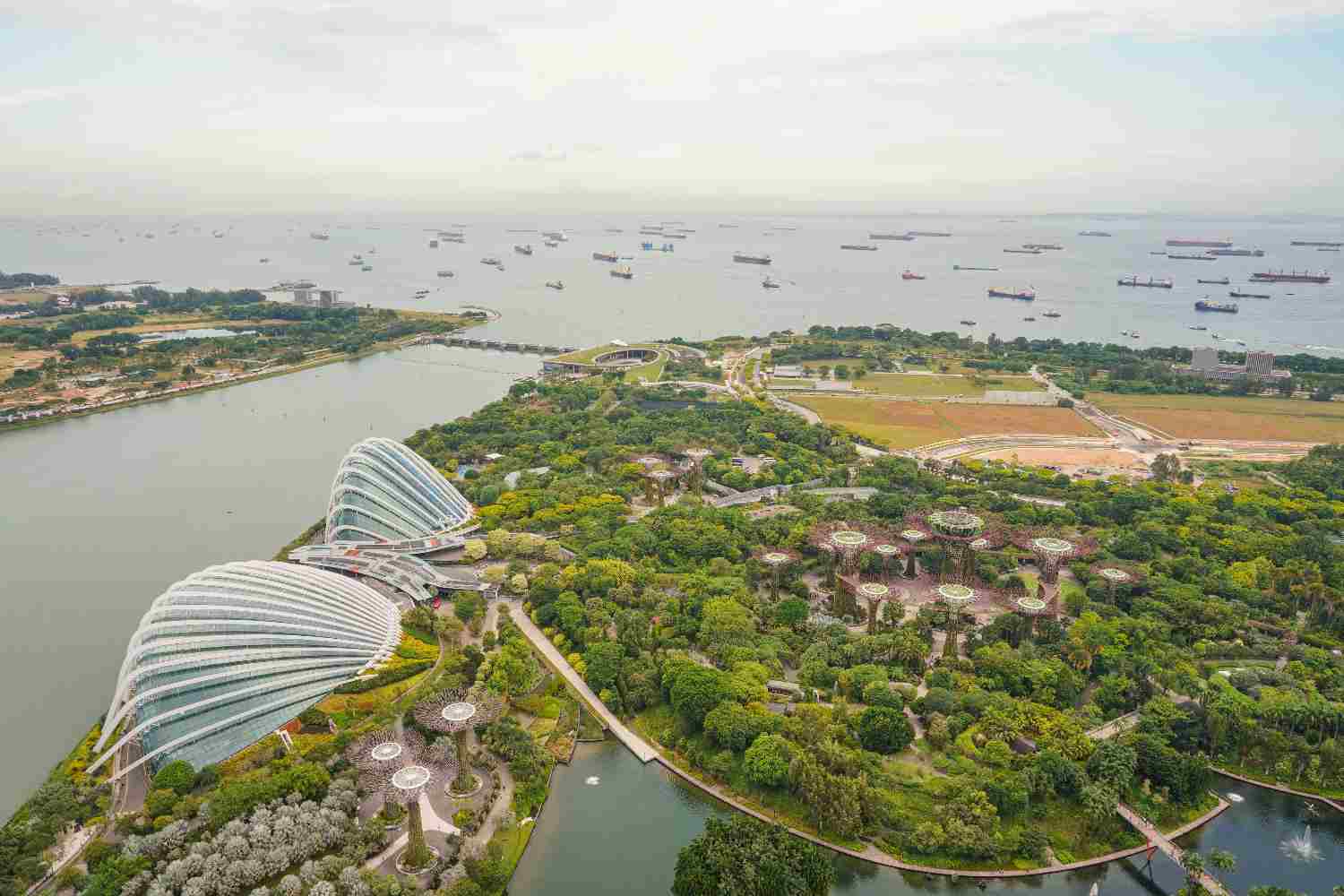 IMAGE: UNSPLASH
We don’t live beside the sea – we live off it
Singapore is a city-state. A financial centre. A foodie destination. A shopping haven. A place where most things are so convenient that we only really notice them when they’re suddenly not.
But we’re also an island sitting at a major crossroads of global maritime trade.
That brings us back to the whale. The Omura’s whale was found in waters that are simultaneously a busy thoroughfare for some of the world’s biggest ships and a habitat for marine life that most of us never see. Scientists found injuries consistent with a ship strike. They're now studying the preserved specimen to learn more about a species that remains poorly understood.
It’s a strange juxtaposition: the same sea that brings us our tea leaves, phones and clothes is also a highway, a border, a workplace, and a habitat.
Most days, we don’t think about any of that. We just get our shopping haul, our food and our Chagee.
Then, occasionally, a Chagee X The Little Prince Lime Cheese Matcha Latte turns up. Or a 10.6m whale does.
For the latest updates on Wonderwall.sg, be sure to follow us on TikTok, Telegram, Instagram, and Facebook. If you have a story idea for us, email us at [email protected].