


This National Monument Once Housed Almost All Of Singapore’s Colonial Government – Now It’s ACM
A recent revisit to the Asian Civilisations Museum (ACM) made me realise I’d always thought of it as that grand museum by the Singapore River with lots of really old things inside. Turns out, I’d been paying attention to the wrong thing.
The former Empress Place Building is a National Monument, which once housed almost the entire colonial government under one roof – from the Treasury and Public Works Department to the Medical Department and police administration.
Once I learnt that, I started looking at ACM a little differently.
Instead of speedwalking past the architecture to get to the exhibits, I found myself staring at windows, columns and old rooms wondering what they were originally used for; which, admittedly, made me feel slightly guilty for ignoring the actual building all these years.
Overview
- Official name: Former Empress Place Building, now Asian Civilisations Museum
- Address: 1 Empress Place, Singapore 179555
- Built: 1864–1867
- Original purpose: Courthouse
- Former uses: Government offices, government departments, Empress Place Museum
- Current use: ACM
- Year gazetted as a National Monument: 1992
- Nearest MRT station: Raffles Place
- Admission: Permanent galleries are free for Singapore Citizens and Permanent Residents; charges apply for some exhibitions
- Opening hours: 10am to 7pm daily; 10am to 9pm on Fridays
Why the Asian Civilisations Museum is worth a visit
Even before you enter the museum, there’s plenty of history staring back at you.
The Former Empress Place Building has stood beside the Singapore River since the 1860s, when this area was at the centre of colonial Singapore’s administrative and commercial life. And while the museum exhibits are obviously the main event, on this visit, I kept getting distracted by the building itself.
The moment you know that government officials once worked in these rooms, the grand facade starts making more sense. It wasn’t designed to be subtle. This was an important government building, and it very much wanted you to know that.
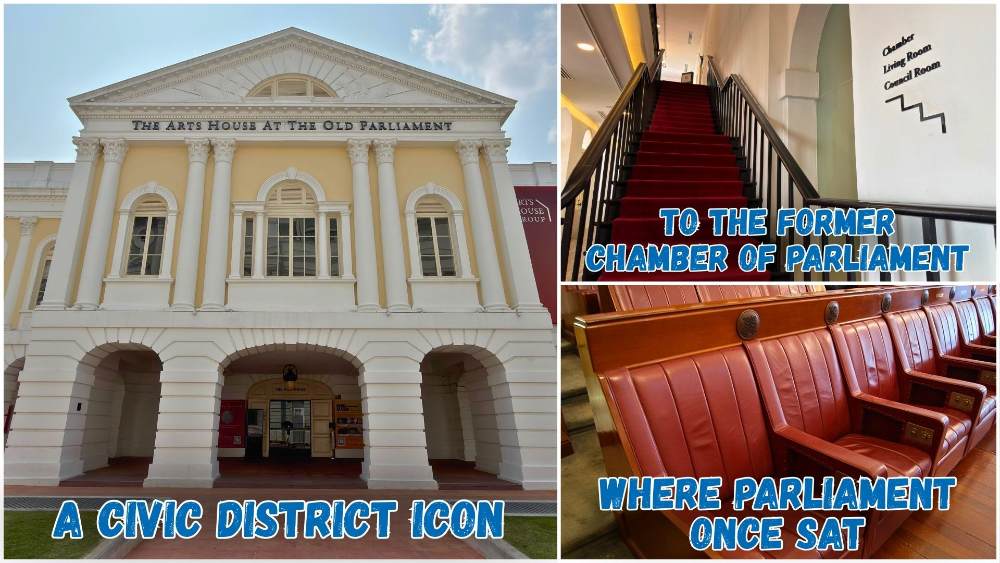
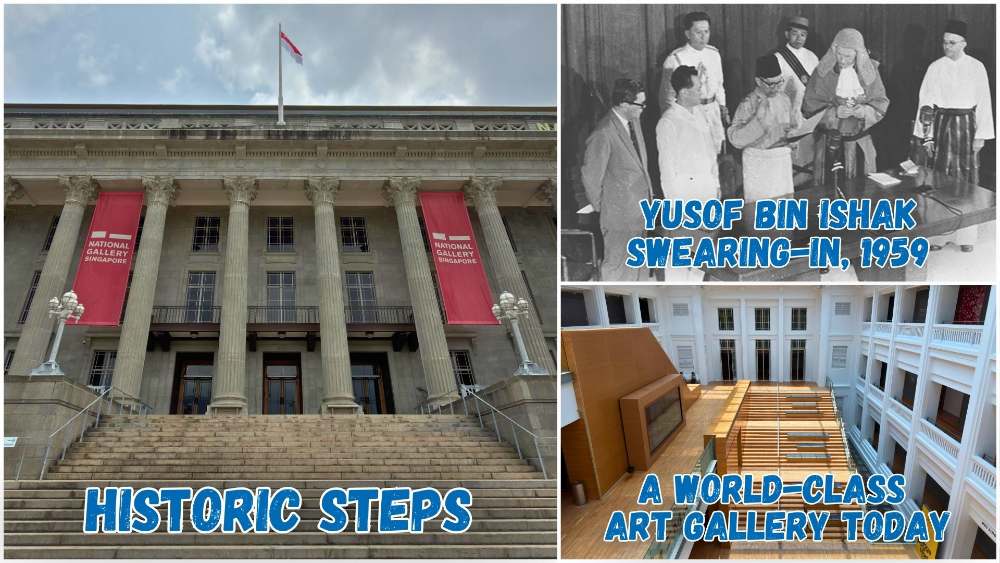
Today, you can walk through the same building while exploring Asian art, trade, faith and design, then step outside and find yourself surrounded by some of the Civic District’s other National Monuments, including The Arts House and Victoria Theatre and Concert Hall.
It's basically history-maxxing within walking distance.
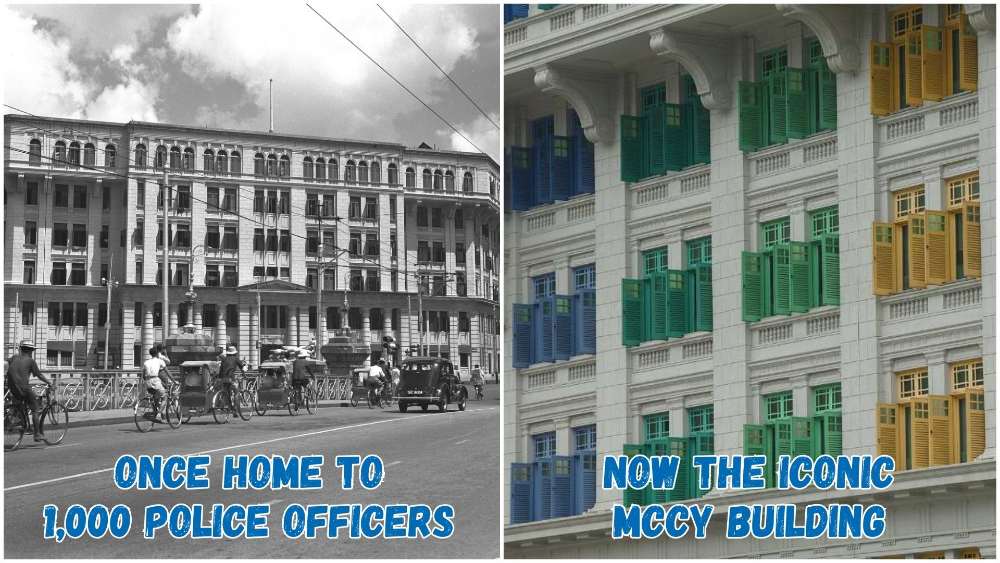
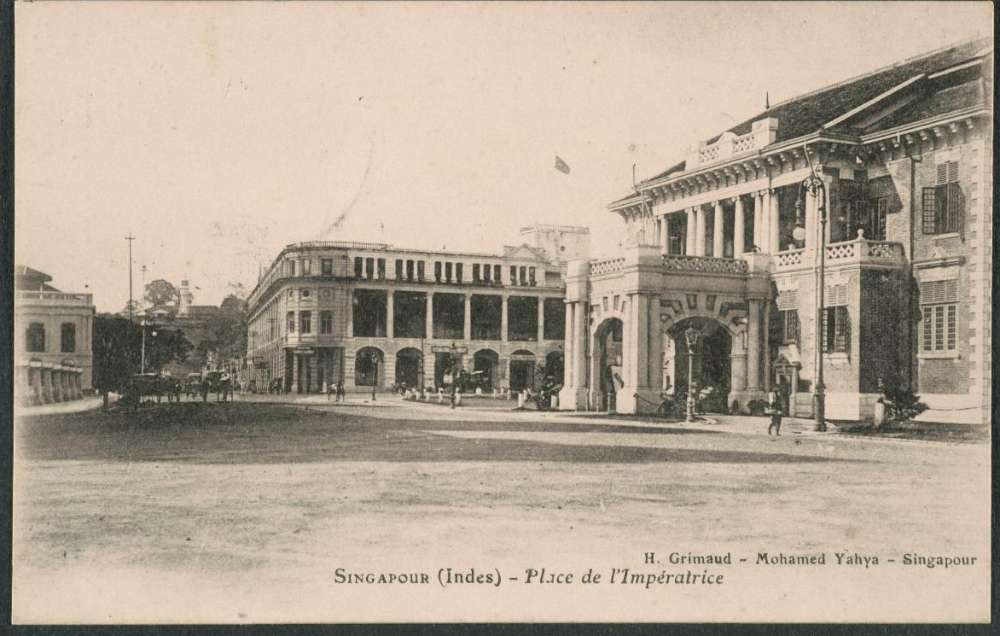 When the former Empress Place Building was first constructed in 1867, it was built with the intention of being a courthouse, and its first occupant was the Government Secretariat in 1865. | IMAGE: COLLECTION OF NATIONAL MUSEUM OF SINGAPORE
Before it was ACM, it was Singapore’s government HQ
Construction on the building began in 1864 under Colonial Engineer Major John F. A. McNair, who was also involved in the designs of other familiar Singapore landmarks such as the Istana and St Andrew’s Cathedral.
The project had actually been approved years earlier, but construction was delayed as funds were diverted towards military spending.
Although the building was initially intended to serve as a courthouse, that plan changed. Once completed in 1867, government departments moved over from Maxwell’s House (today's The Arts House at the Old Parliament); and there were a lot of them.
The Secretariat, Treasury and Stamp Office, Public Works and Medical Departments, the Colonial Engineer’s office, and the Inspector General of Police were among the agencies operating here. With so much government business happening under one roof, people simply called it the Government Offices.
Very functional, but zero points for creativity.
So where did the name “Empress Place” come from?
The royal-sounding name came much later. In 1907, the public space beside the building was named Empress Place in memory of Queen Victoria, who had died six years earlier.
Over time, the Government Offices became better known as the Empress Place Building; and the area outside had its own front-row seat to Singapore history.
During the push for self-government after World War II, Empress Place became a site for political activity. In 1956, Singapore’s first Chief Minister David Marshall delivered a fiery speech here calling for “Merdeka”, or independence.
From registering births and deaths to displaying museum artefacts
Even after Singapore gained independence in 1965, the building continued serving the public.
At various points, our own grandparents might have come here for decidedly less glamorous reasons than viewing priceless artefacts: the Citizenship Registry, Immigration Department, and Registry of Births and Deaths were once based inside.
In the late 1980s, government offices vacated the Empress Place Building when it was designated for restoration and conservation. Following a 14-month renovation, it reopened on 7 Apr 1989 as the Empress Place Museum, with its inaugural exhibition showcasing Qing dynasty furniture and artefacts. However, the museum struggled to attract sufficient visitors and ceased operations in 1995 after six years.
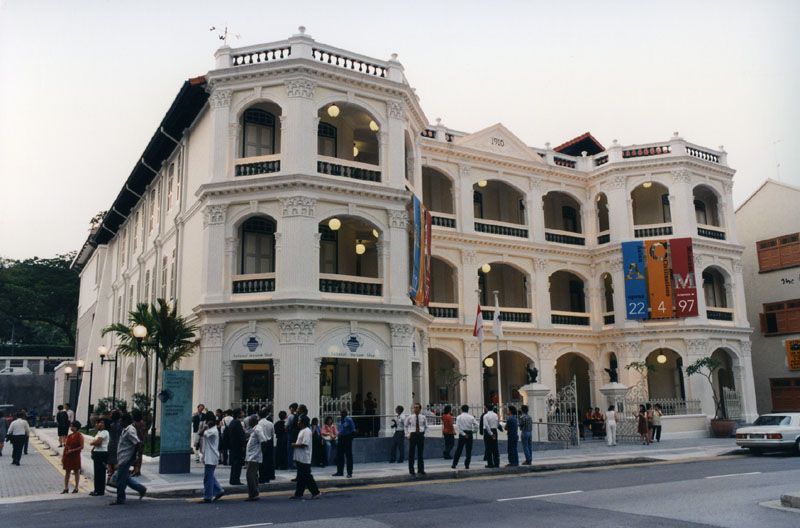
ACM's first opening at Armenian Street in 1997. | IMAGE COURTESY OF ASIAN CIVILISATIONS MUSEUM
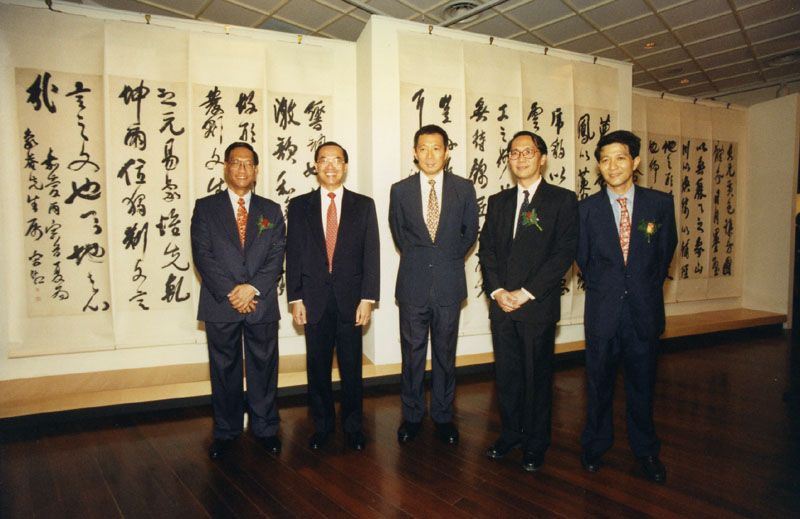
The opening in 1997 was graced by Mr Lee Hsien Loong (middle), who was then the Deputy Prime Minister of Singapore. | IMAGE COURTESY OF ASIAN CIVILISATIONS MUSEUM
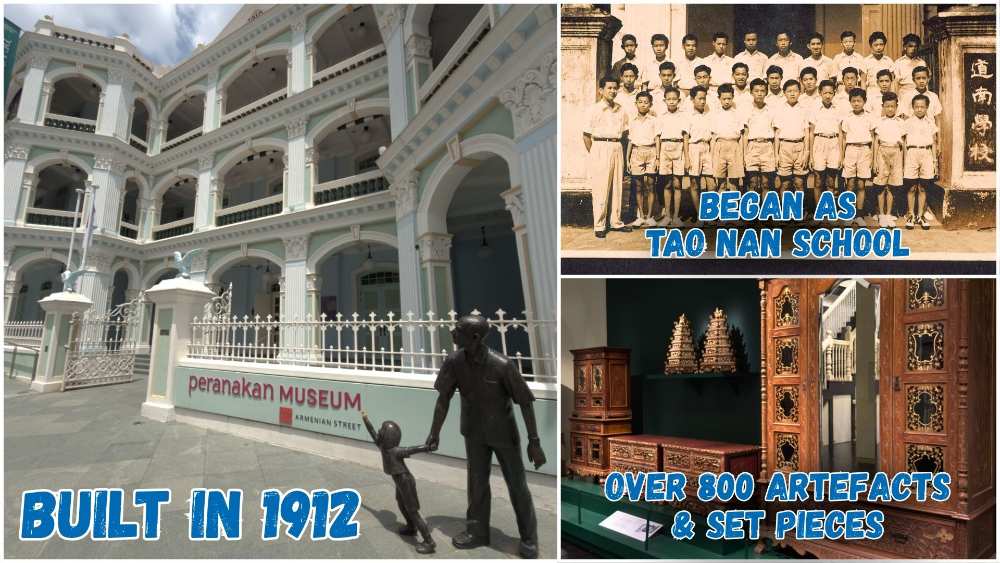
The Asian Civilisations Museum, meanwhile, had its own origin story elsewhere. ACM first opened in 1997 at the Former Tao Nan School on Armenian Street, which is the Peranakan Museum today.
In 1998, the Public Works Department commenced restoration and expansion works, leading to the Empress Place Building's reopening as the second wing of the ACM on 1 Mar 2003. The museum's first wing was originally housed at the Armenian Street location, though it was later closed in 2005, leaving Empress Place as ACM’s home today.
What to look out for when you visit ACM
This was the point during my visit when I deliberately tried to stop looking only inside the display cases, which was easier said than done because some of the objects are beautifully intricate.
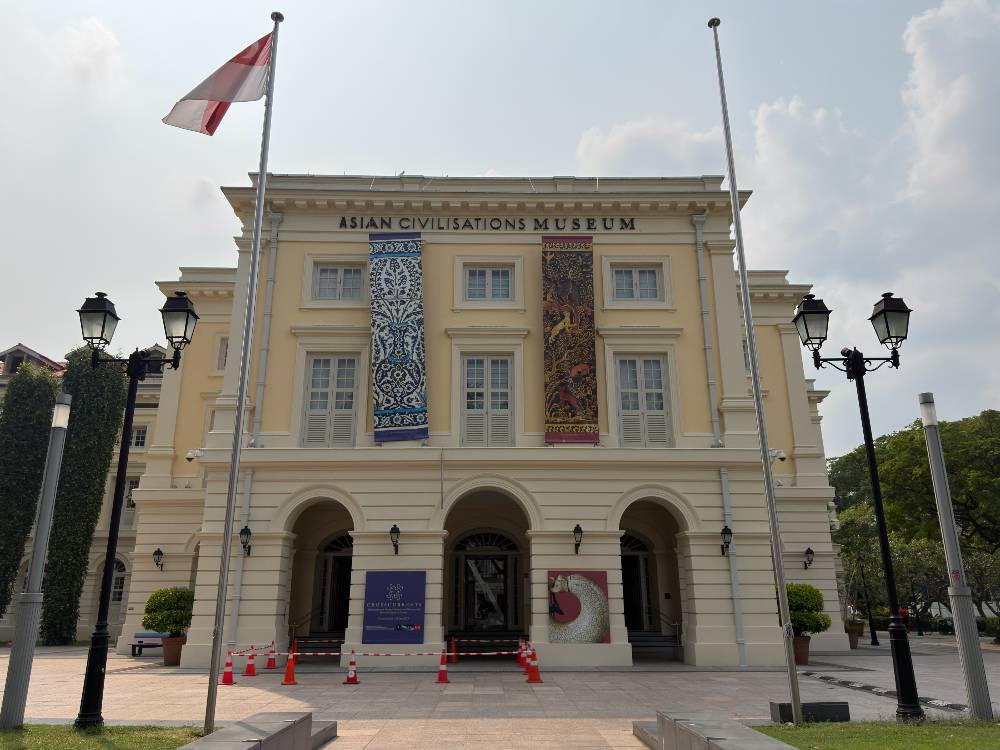 IMAGE: NG KAI
The grand Neoclassical facade
If I had to pick a favourite, the facade's symmetry, columns, arches and pale exterior are my kind of old building eye candy, especially with the modern CBD skyline looming behind.
It's grand without being too ornate. And now that I know what the building used to be, the look feels appropriate: if almost the entire colonial government worked here, of course they weren’t going to house themselves in something low-key.
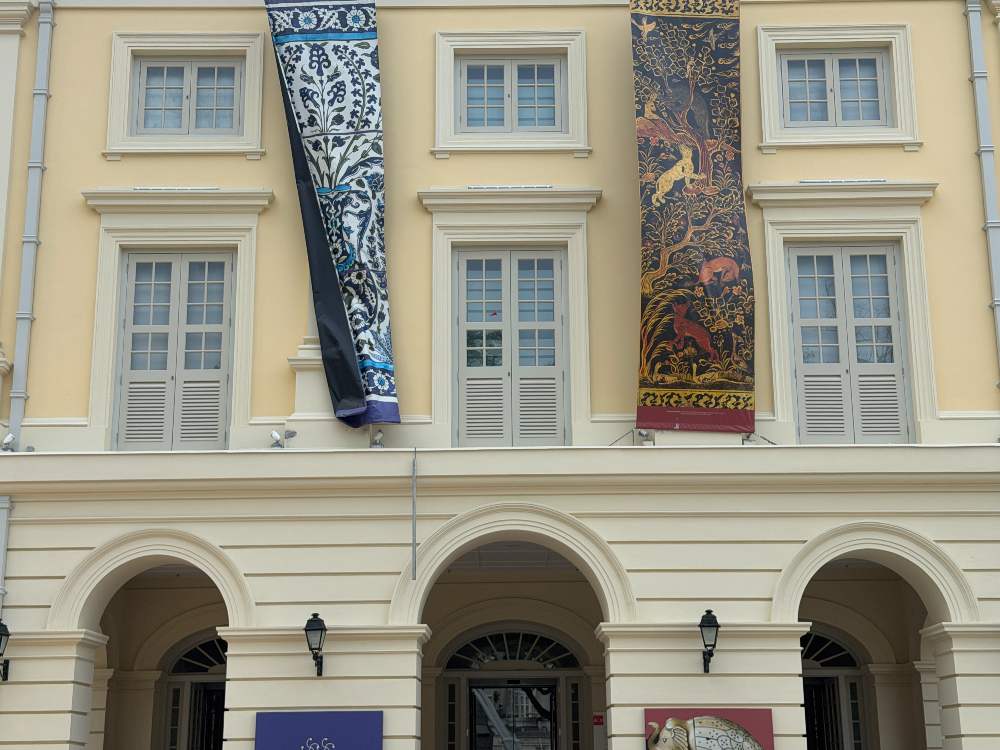 IMAGE: NG KAI
The French windows
Before air-conditioning, the numerous French windows helped ventilate the rooms and make Singapore’s tropical weather slightly more bearable for everyone working inside.
NGL, on first look, I just thought, "pretty old windows". But now I know it was functional architecture at play.
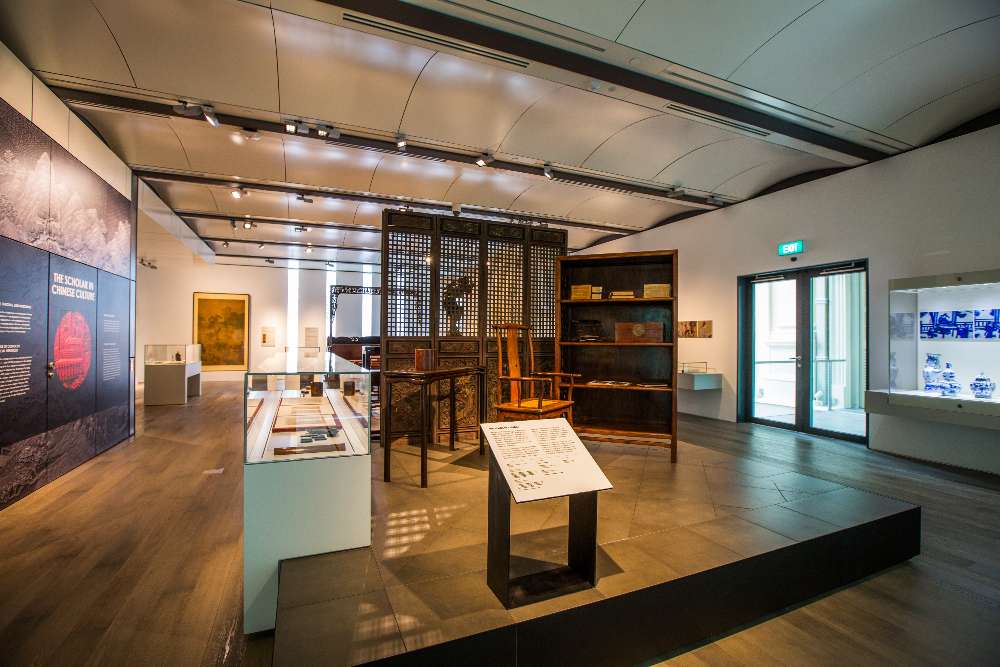 Scholars Gallery at the Kwek Hong Png Wing. | IMAGE COURTESY OF ASIAN CIVILISATIONS MUSEUM
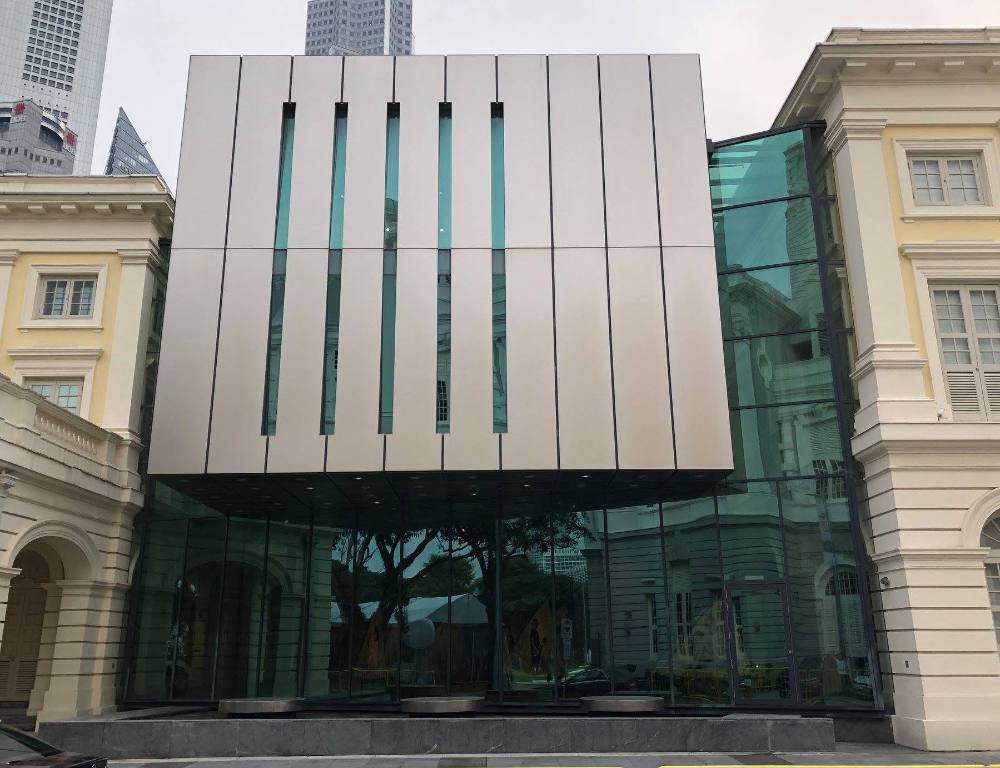 IMAGE: FACEBOOK/@ACM (ASIAN CIVILISATIONS MUSEUM)
The Kwek Hong Png Wing
Not everything here is more than 150 years old. Opened as part of ACM’s major 2015 revamp, the Kwek Hong Png Wing is a three-storey contemporary extension that appears almost like a modern box floating beside the historic building.
On paper, sticking something this modern beside a 19th-century National Monument sounds like it could go wrong.
In person? I actually like it; the contrast brings together the old and new in a very aesthetic way.
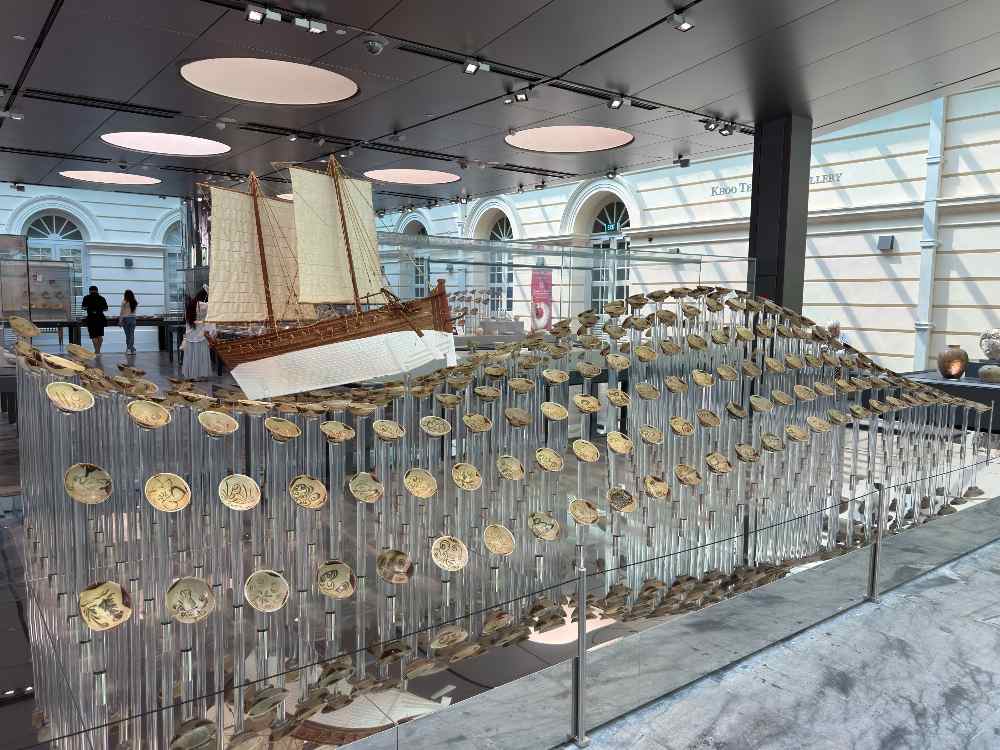
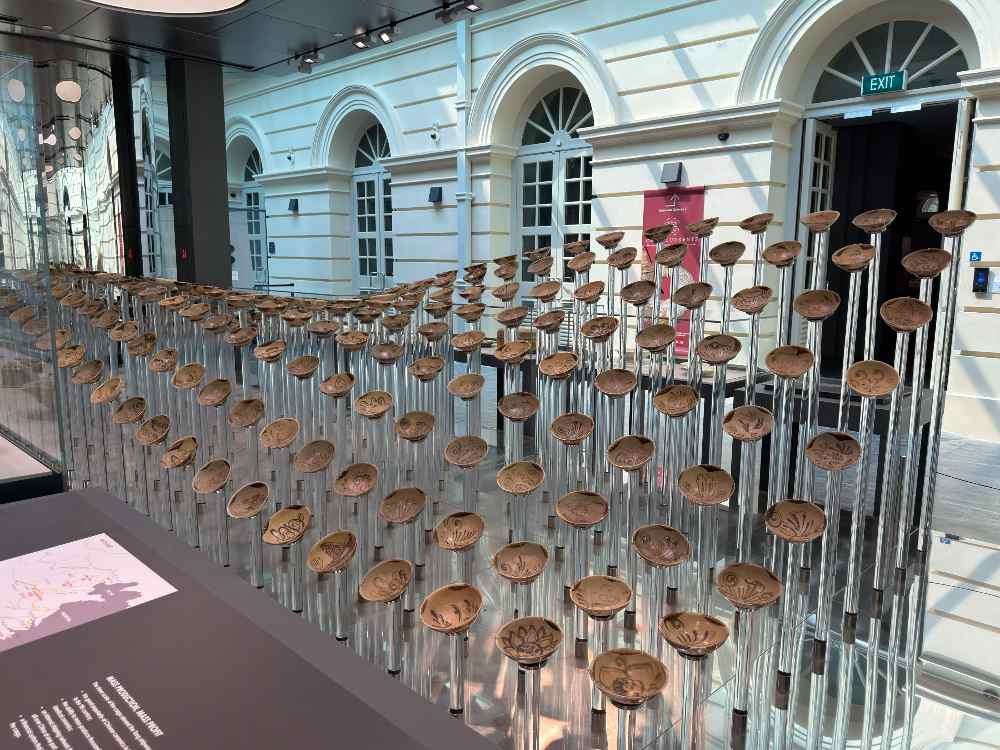 Inside the Riverfront Wing. | IMAGES: NG KAI
The Riverfront Wing
Facing the Singapore River is another modern addition: the Riverfront Wing, with its distinctive titanium entrance.
This was where ACM’s location started making much more sense to me. You’re inside a museum about Asian trade, migration and cultural exchange, then you walk outside and there’s the river around which Singapore grew as a trading port. Very on-theme.
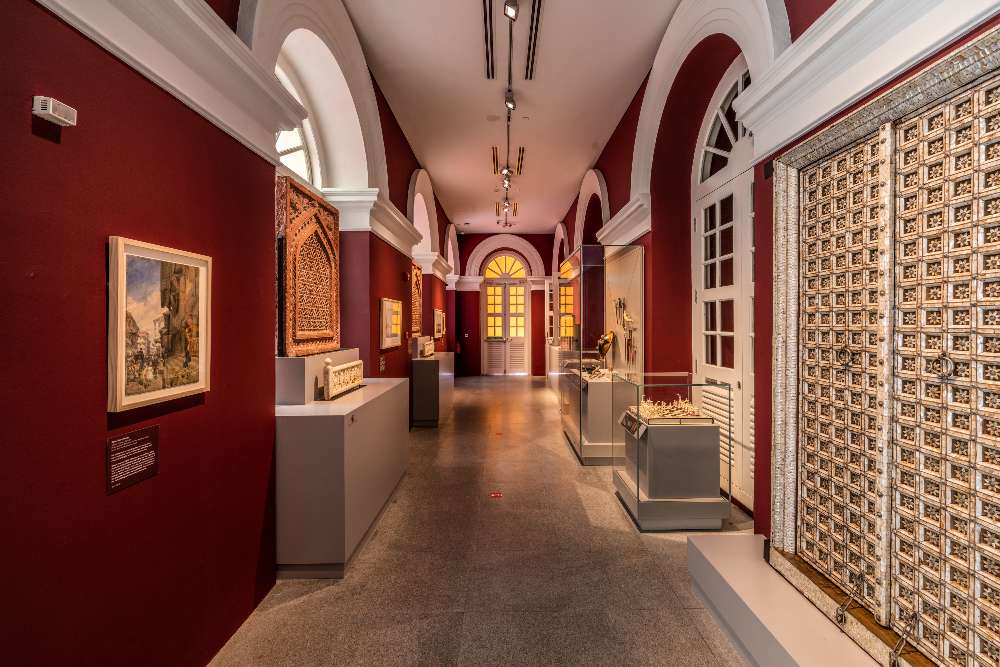 Court and Company Gallery.
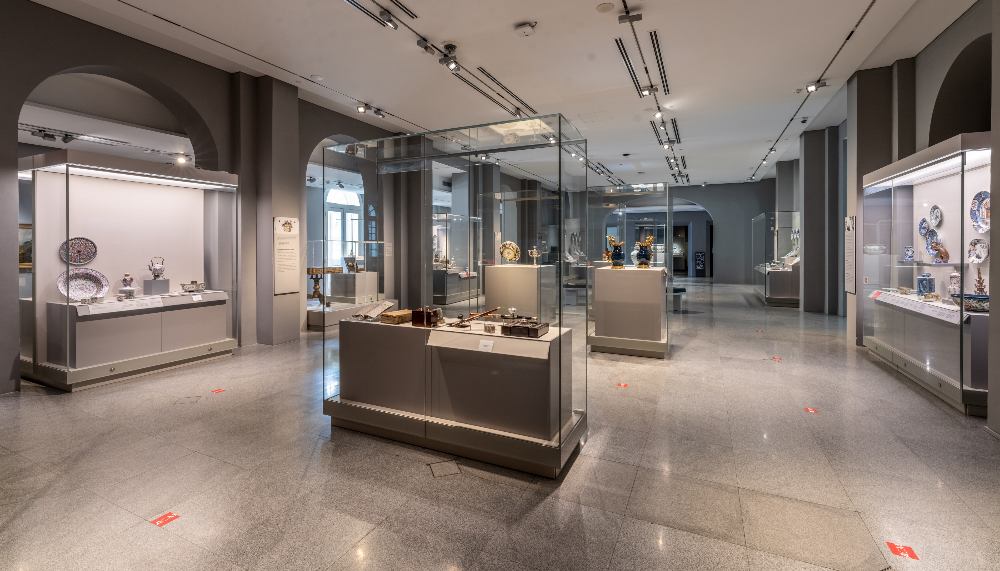 Maritime Trade Gallery.
Galleries you can walk through
ACM's permanent galleries are organised around broad themes including Maritime Trade, Faith and Belief, and Materials and Design, allowing you to see how objects, ideas and artistic traditions travelled across borders rather than treating each civilisation in isolation.
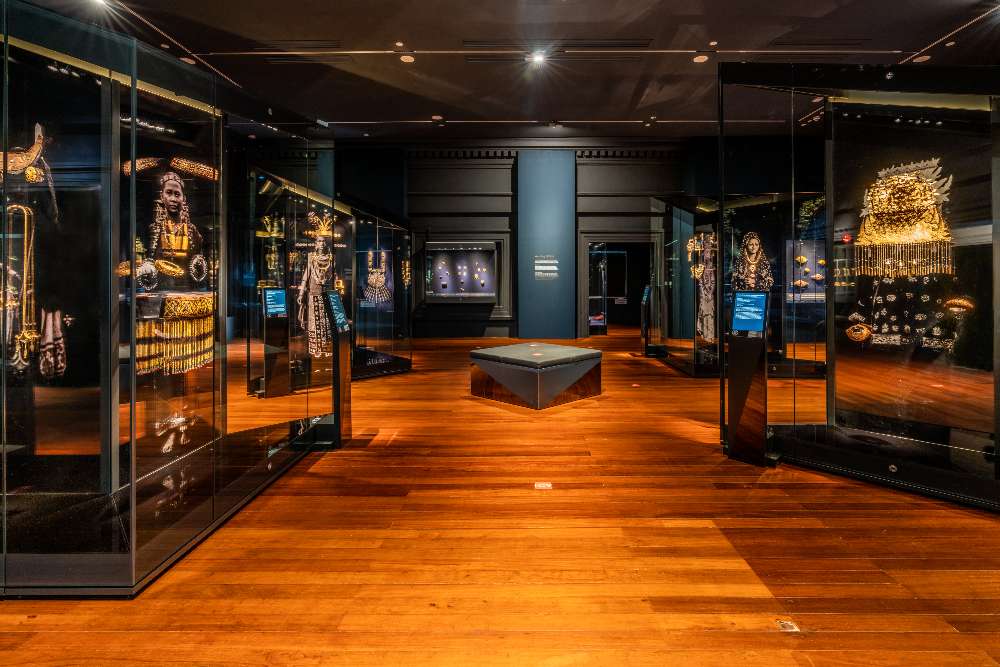 Jewellery Gallery. | IMAGES COURTESY OF ASIAN CIVILISATIONS MUSEUM
The Jewellery Gallery was the space I lingered in longest. Maybe it was the dark setting making everything sparkle more dramatically, but some of the pieces are so detailed that you instinctively lean closer – and then remember there's glass between you and several extremely valuable objects.
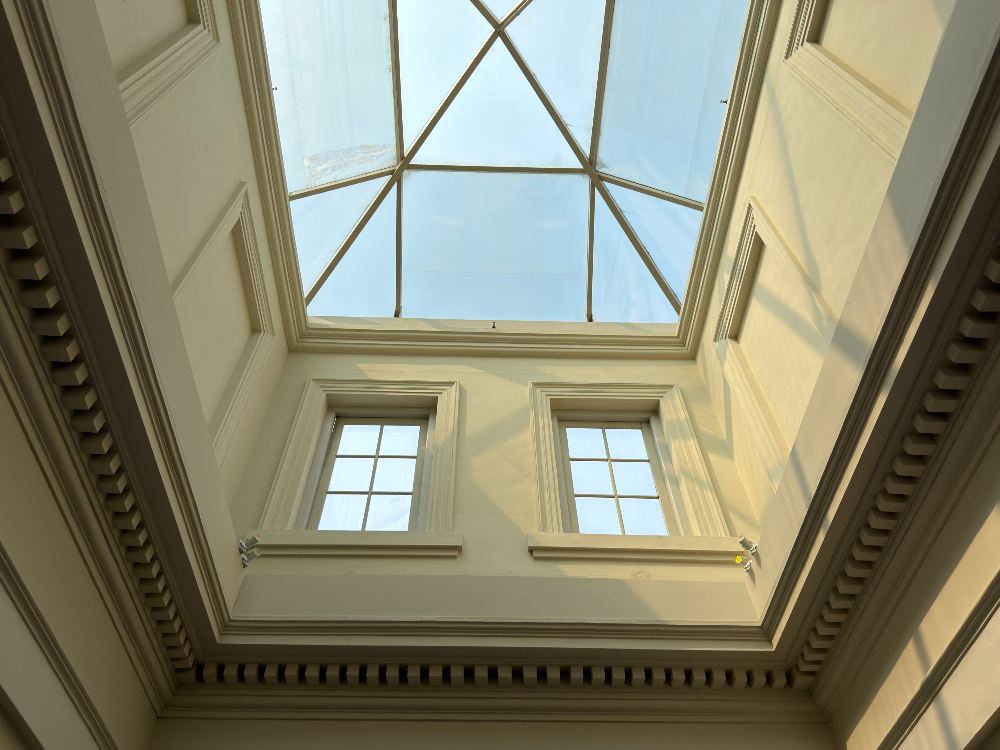
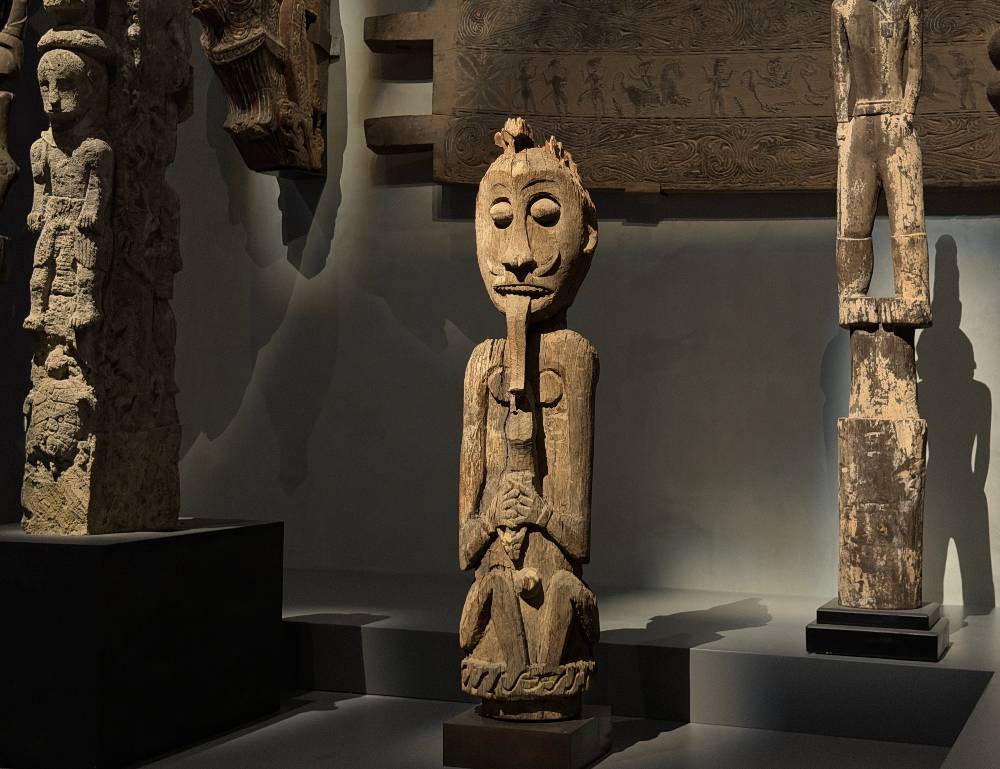
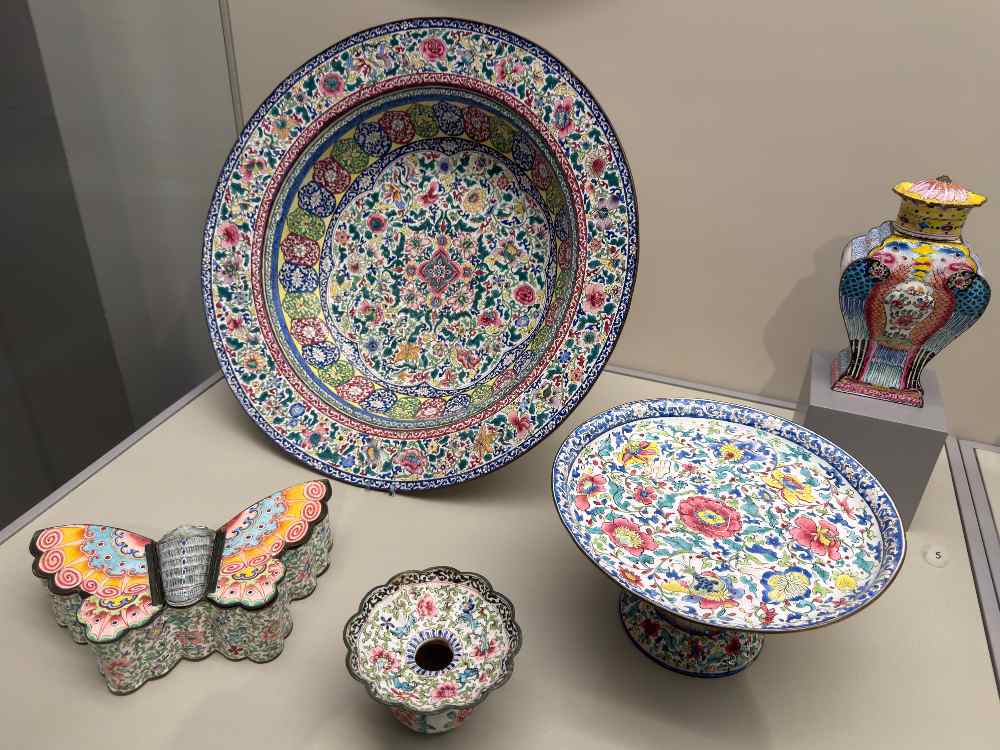 IMAGES: NG KAI
What I also enjoyed was how different the spaces feel from one another. One moment you’re admiring the light pouring in from above; next, you’re staring down centuries-old wooden figures, then getting completely distracted by some seriously colourful porcelain.
There’s enough visual variety that it doesn’t feel like one endless corridor of “old stuff”.
What's on at ACM now – and what's coming next
Crosscurrents: Masterpieces of Mughal, Safavid, and Ottoman Art from the Musée du Louvre is running until 24 Jan 2027. The exhibition brings 100 masterpieces from the Louvre’s Islamic art collection to Singapore, placing them alongside works from ACM to show how trade, migration and artistic exchange connected the Mughal, Safavid and Ottoman worlds with Southeast Asia.
From 25 Sep 2026, ACM is going even further back in time with Sacred Caves: Dunhuang, Buddhism, and the Silk Road.
Presented with the Dunhuang Academy, the exhibition explores the Mogao Caves – a UNESCO World Heritage Site carved into cliffs near the Gobi Desert over more than a thousand years. Expect life-size recreations of cave interiors alongside paintings, sculptures, manuscripts and textiles, bringing the art and stories of Dunhuang to Southeast Asia for the first time.
Even if you’re like me and think, “I’ve already been to ACM”, there’s always a good reason to go back.
Just remember to look at the walls and windows because they've got a story to tell, too.
Wait, what makes something a National Monument?
In Singapore, National Monuments are buildings, structures or sites recognised for their national significance and value to our built heritage. They are gazetted by the Preservation of Sites and Monuments, a division of the National Heritage Board, which is why the title is reserved for places that carry especially important historical, architectural, social or cultural meaning.
As of 2026, Singapore has 77 National Monuments. Some are obvious landmarks, like the Padang, St Andrew’s Cathedral and Fort Siloso. Others are places you may have walked past without a second thought, which is exactly why this series exists.
One National Monument at a time, we’re here to uncover the stories hiding in plain sight.
For the latest updates on Wonderwall.sg, be sure to follow us on TikTok, Telegram, Instagram, and Facebook. If you have a story idea for us, email us at [email protected].