
Almost 200 Years Old, This National Monument Could Be Singapore's Oldest Surviving Building
The Arts House at the Old Parliament is not just an arts venue in the Civic District, this National Monument in Singapore was once the island’s first official courthouse, and, later, Parliament House. In fact, it is very likely one of the oldest surviving buildings in the country.
You may have walked past it on the way to National Gallery Singapore (made up of the Former City Hall and Former Supreme Court), Victoria Theatre and Concert Hall, Asian Civilisations Museum, or the Singapore River. But sitting quietly at 1 Old Parliament Lane is a building that has been part of almost every version of Singapore: colonial settlement, courthouse, government office, Legislative Assembly, Parliament House, and now, a home for the arts.
Not bad for a building that was originally meant to be someone’s private mansion.
Overview
- Official name: Former Parliament House and Annex Building, now The Arts House at the Old Parliament
- Address: 1 Old Parliament Lane, Singapore 179429
- Built: 1826–1827 for the main building; 1839 for the annex
- Original purpose: Designed as a private residence
- Former uses: Courthouse, government offices, Legislative Assembly House, Parliament House
- Current use: Multi-disciplinary arts venue
- Year gazetted as a National Monument: 1992
- Nearest MRT stations: City Hall or Raffles Place
- Admission: Entry to the building is generally free, with selected ticketed programmes and events
- Opening hours: 10am to 9pm daily
Why The Arts House at the Old Parliament is worth a visit
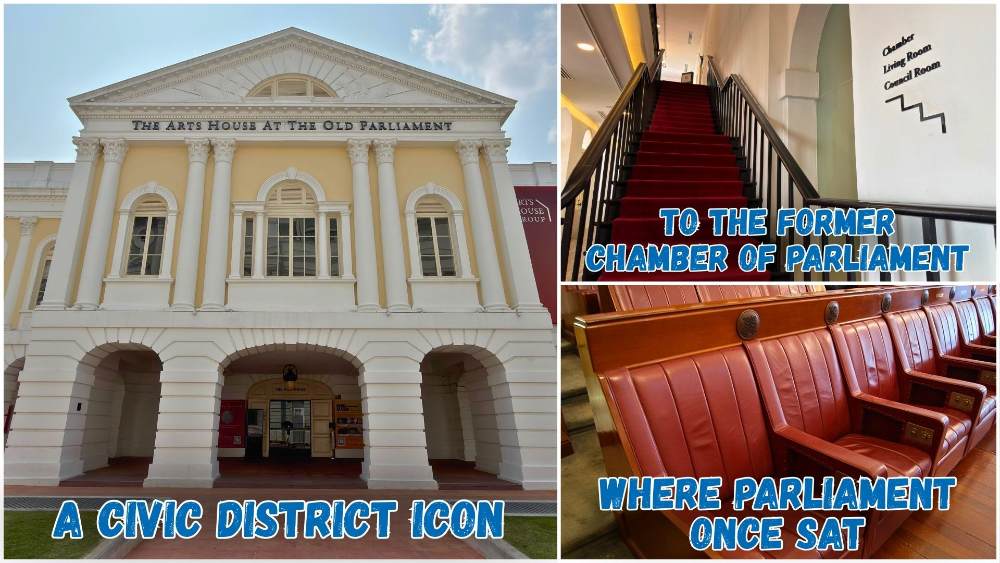
At first glance, The Arts House at the Old Parliament just looks like a handsome colonial-era building in the Civic District.
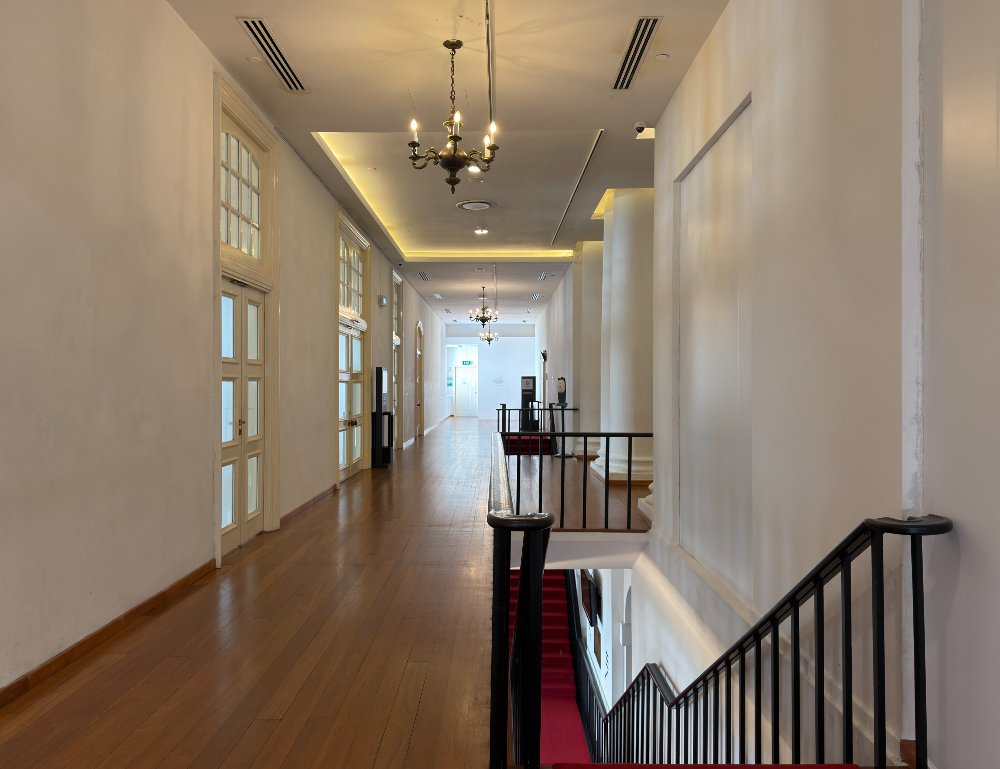 IMAGE: NG KAI
But step inside to learn more about its fascinating history, such as how it was where early court proceedings were held in colonial Singapore, and where political debates took place as Singapore moved towards self-government and independence. Today, it hosts exhibitions, performances, talks, screenings, festivals and literary programmes.
Before it was The Arts House at the Old Parliament, it was meant to be a private residence
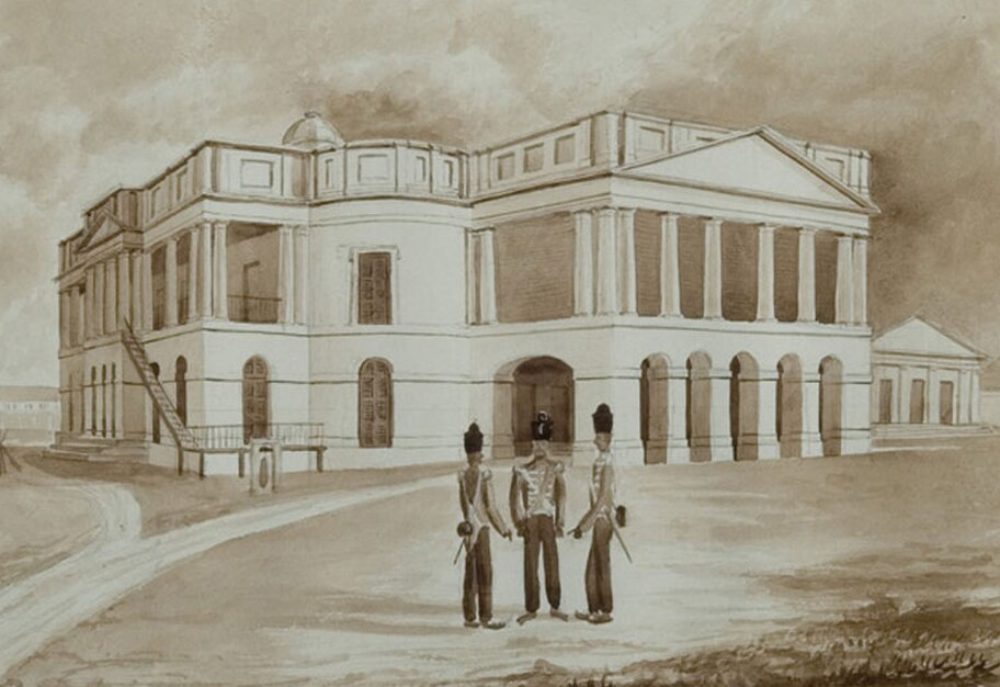 A sketch by John Turnbull Thomson of the original building in 1846, then known as the Public Offices of the Settlement. | IMAGE: WIKIMEDIA COMMONS/@OTAGO UNIVERSITY RESEARCH HERITAGE
The building was originally designed by George D. Coleman (who also designed the Armenian Church and Caldwell House) for John Argyle Maxwell, a Scottish merchant based in Java; but Maxwell never actually lived in it.
The issue? The site had been set aside for public and administrative use under Sir Stamford Raffles’ town planning. So instead of becoming a private mansion, Maxwell’s House – as it was then known – was leased to the colonial government.
So the house became a courthouse and government office, setting it on a path that would keep it in public use for nearly two centuries.
It became Singapore's first official courthouse
While Maxwell’s House was not the first place in Singapore where legal proceedings were ever held, it is often regarded as Singapore’s first official courthouse.
From 1828, the building was used for court functions and government offices. A single-storey annex was added in 1839 to provide more space for the court, although the arrangement was not always ideal; and at one point, noise from the nearby boatyard reportedly made the location difficult for court proceedings.
Still, for much of the 19th and early 20th centuries, the building remained closely tied to Singapore’s legal and administrative life. The main building continued serving court-related functions until 1939, when the Supreme Court moved into a newer building nearby.
From courtroom to Parliament House
 IMAGES: WIKIMEDIA COMMONS/@SMUCONLAW
After World War II, the building entered another major chapter. In the 1950s, it was renovated for Singapore’s Legislative Assembly, a key body during the country’s move towards self-government.
Then, after Singapore became independent in 1965, the building was renamed Parliament House; and for more than three decades, this was where Singapore’s Parliament sat. Laws were debated here, and speeches were made here. Decisions that shaped the country were discussed within these walls.
When the new Parliament House at 1 Parliament Place opened in 1999, the old building became known as Old Parliament House; but its story did not end there. On 26 Mar 2004, it reopened as The Arts House at the Old Parliament, giving the National Monument a new life as a space for the arts.
What to look out for when you visit
The Arts House at the Old Parrliament has been altered many times over the years, so what you see today is not exactly what Coleman first designed in the 1820s. Still, there are several details worth noticing.
The Chamber
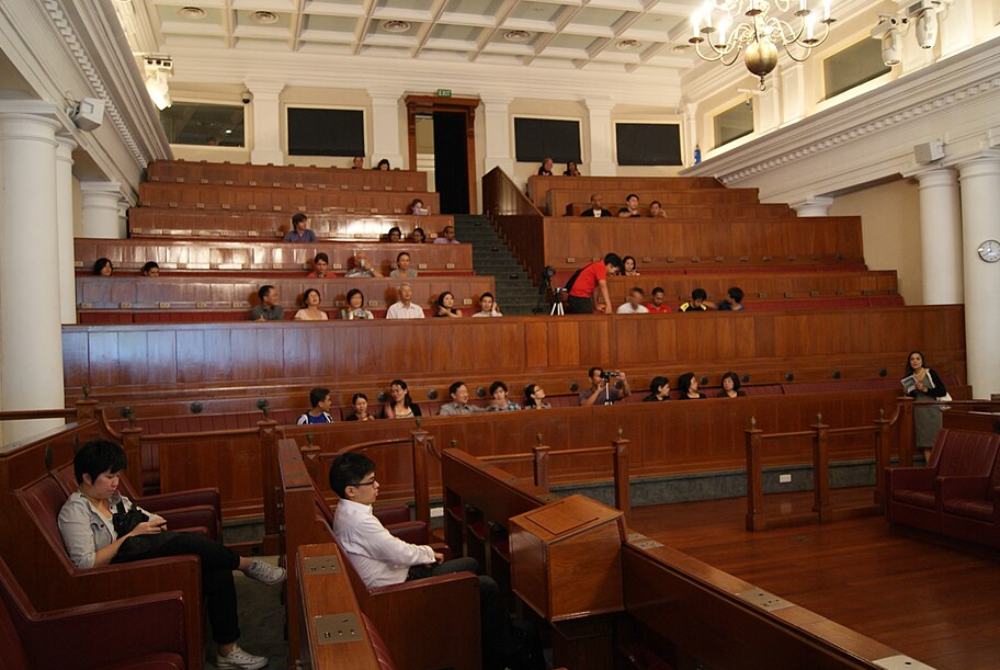
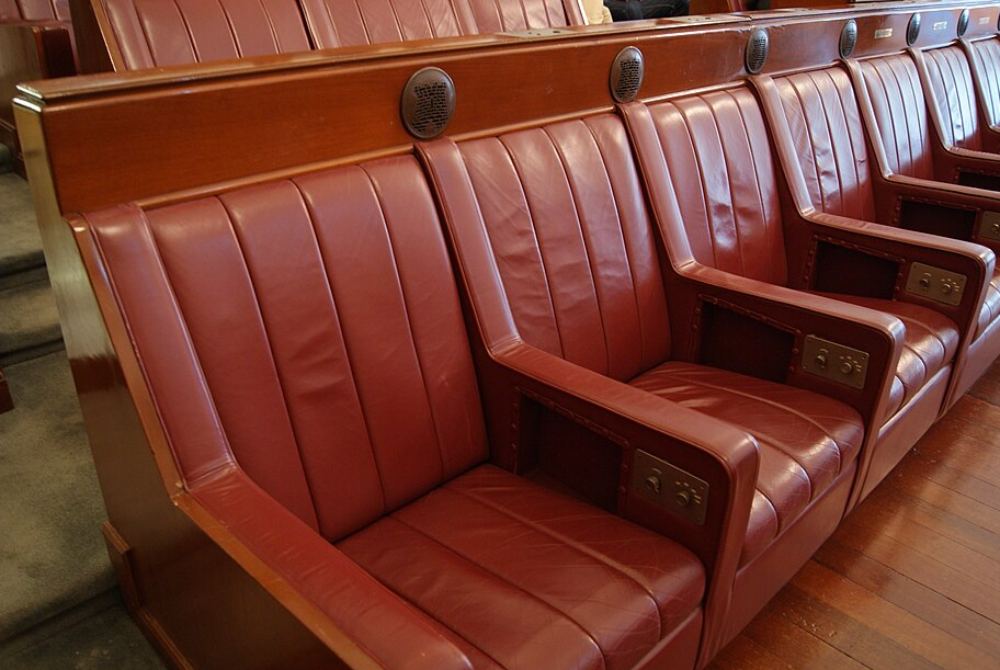
The former parliamentary chamber still carries traces of its political past, including retained parliamentary seats. Today, the space can be used for performances, screenings, talks and events.
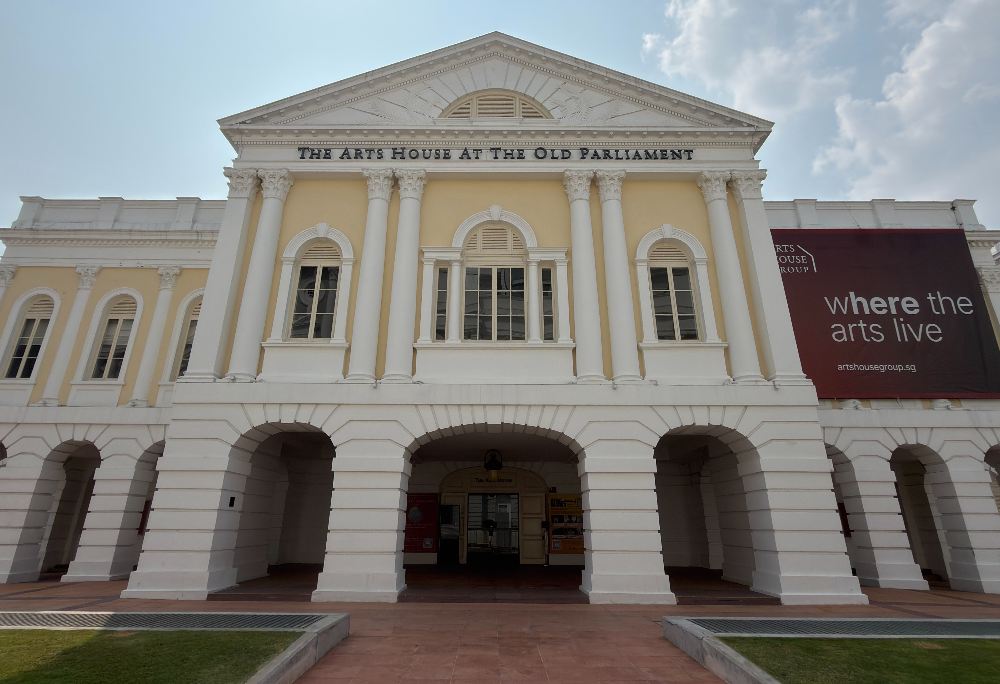 IMAGE: NG KAI
The façade
The building’s current look is largely Neoclassical, with triangular pediments (the upper part of the front of a building) and decorative pilasters (rectangular columns) giving it the formal feel of a civic landmark.
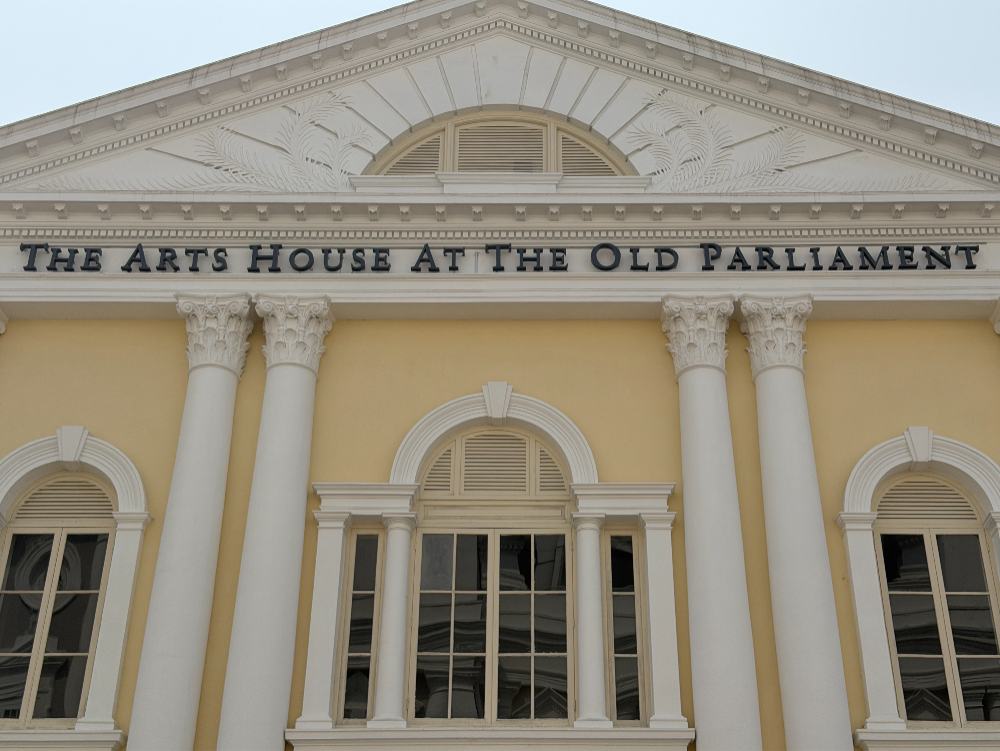 IMAGE: NG KAI
The Palladian window
One of the remaining hints of Coleman’s earlier design is the Palladian-style window on the front façade, a large central arched opening flanked by two smaller rectangular sections.
The loggias (partially open galleries) and windows
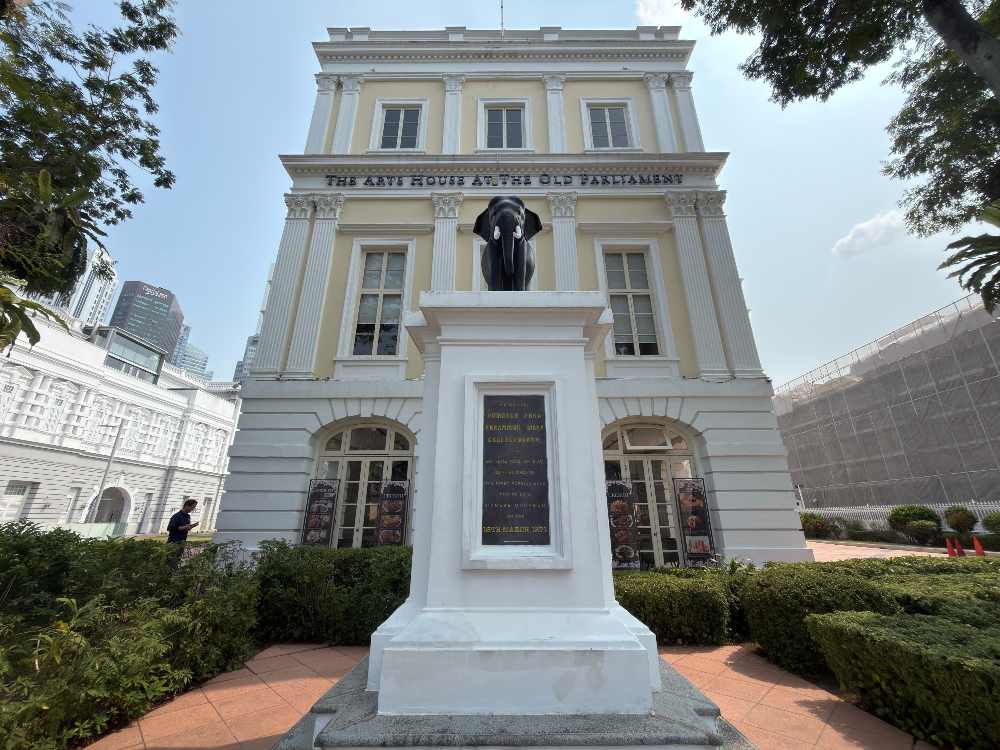
Before air-conditioning became common, the building relied on design features like shaded loggias and many windows to help keep the interior cooler in Singapore’s heat.
 IMAGES: NG KAI
The bronze elephant statue
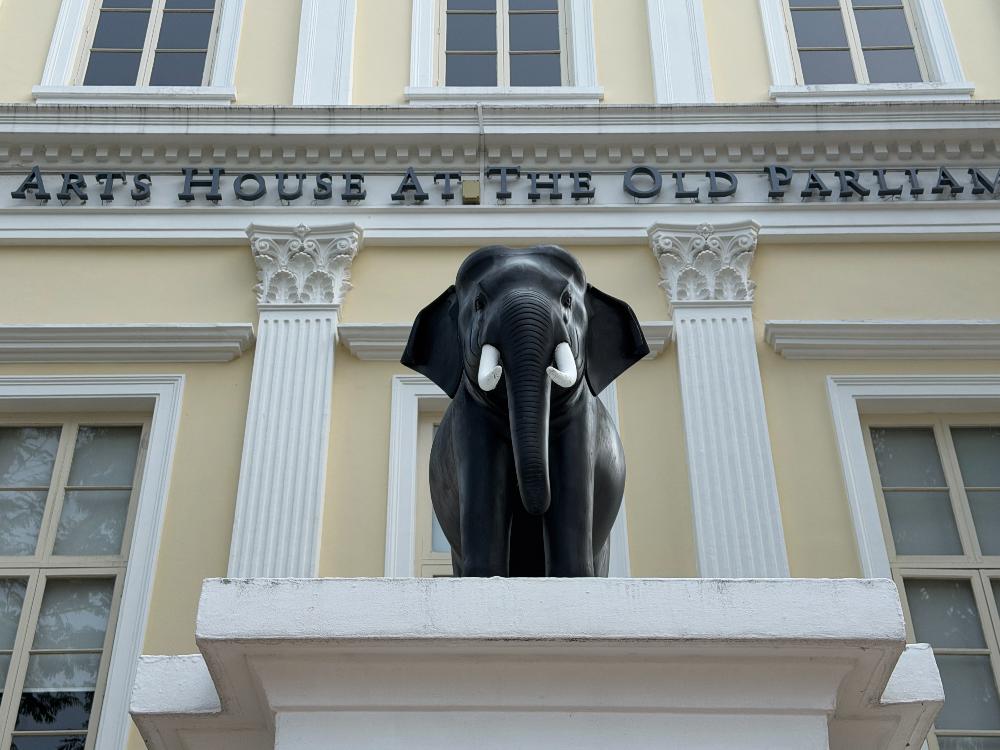
Outside the building, look out for the bronze elephant statue. It was a historic gift from Thailand's King Chulalongkorn (Rama V) that commemorates the first foreign land ever visited by a reigning Siamese monarch.
The Arts House at the Old Parliament today
Today, The Arts House at the Old Parliament is a multi-disciplinary arts venue, with a strong focus on literary arts. Depending on when you visit, you might find exhibitions, talks, performances, film screenings, festivals or other cultural programmes taking place inside.
It has even briefly returned to parliamentary use before. In 2020, The Arts House at the Old Parliament was used as one of the venues for the opening of Singapore’s 14th Parliament, as part of safe distancing arrangements during the COVID-19 period.
Wait, what makes something a National Monument?
In Singapore, National Monuments are buildings, structures or sites recognised for their national significance and value to our built heritage. They are gazetted by the Preservation of Sites and Monuments, a division of the National Heritage Board, which is why the title is reserved for places that carry especially important historical, architectural, social or cultural meaning.
As of 2026, Singapore has 77 National Monuments. Some are obvious landmarks, like the Padang, St Andrew’s Cathedral and Fort Siloso. Others are places you may have walked past without a second thought, which is exactly why this series exists.
One National Monument at a time, we’re here to uncover the stories hiding in plain sight.
For the latest updates on Wonderwall.sg, be sure to follow us on TikTok, Telegram, Instagram, and Facebook. If you have a story idea for us, email us at [email protected].