



I Love Wine So Much, I Planned A Tuscany Trip Around It
If there is one thing I love as much as my holidays, it's a glass of wine.
In fact, I love it so much that I even had part of my home remodelled just to fit a wine fridge and display in my living room. Safe to say, opening a bottle after a long week has become one of my favourite little rituals.
So when my husband and I decided to visit Italy for our annual getaway, I knew I had to set aside a few days for a Tuscany wine trip. As one of Italy's best-known wine regions, and the home of Chianti Classico and Brunello di Montalcino, it's a certified wine haven for aficionados like myself.
I wanted to sip Chianti surrounded by the very vineyards it came from and hear the stories from the winemakers themselves. Most importantly, I wanted to see the terroir for myself and understand why two bottles of wine made from the same grapes but from different producers can taste so different. In other words, I wanted to geek out on wine.
Over three and a half days, we rented a car from Florence, explored Chianti and Val d'Orcia, stayed in agriturismos and visited two very different wineries.
As it turns out, Tuscany lives up to its reputation completely. It’s a place you can slowly explore, one glass at a time.
Here's everything I learnt about how to plan a Tuscany wine trip, from renting a car and choosing where to stay, to visiting wineries and bringing bottles from Italy back to Singapore.
First things first: Rent a car in Tuscany

IMAGE: GWEN TAY
Yes, it may be possible to go on an organised wine tour from Florence, but you’re at the mercy of their strict timetable. While I did consider it, in the end I opted to rent a car from Florence instead. Many vineyards are located deep in the countryside, and you'll miss out on the freedom of exploring at your own pace, and not to mention, curate your own little bucket list of wineries to check out!
We picked up our rental car in Florence from SIXT before driving into the Chianti region. Oh boy, that was a blunder on our end. Suffice to say, don’t carry a huge luggage bag with you unless you want the rental company to upsell you a bigger car.
Over the next 3 ½ days, we covered Chianti, Siena, San Gimignano, Val d'Orcia, Pienza, Bagno Vignoni and Montalcino before returning the car in Florence and continuing our journey to Cinque Terre by train.
The drives themselves became one of my favourite parts of the trip.
Every corner revealed another postcard-worthy view. My camera was constantly on standby, angled outside the window while my husband drove. By the way, you’ll want to apply for an International Driver’s Permit from the Automobile Association of Singapore. It takes around 10 days for it to be delivered to your doorstep, so apply early.
If you're wondering how long to spend in Tuscany, I'd recommend at least 3 days if wine is one of your priorities and you don’t want to spend your holiday in a whirlwind. After all, it’s not easy to reach the Tuscan region. Go out and touch grass!
Stay in a Tuscan agriturismo. Trust me.
One of the best decisions we made wasn't choosing our wineries. It was choosing where to sleep.
For our Tuscany leg of the trip, we split our stay between two agriturismos - essentially farm stays that let you experience the Tuscan countryside in its full glory.
Our first accommodation was Rietine24 in Chianti. IMAGE: GWEN TAY
The property overlooked endless rows of vineyards and olive trees. The place looked like it retained the charm of the early 1900s but comes equipped with modern amenities. We enjoyed home cooked breakfast every morning in a rustic setting before we set off for the day. At one point, I was looking up the cost of buying a cottage like this in Tuscany for retirement.
Later in the trip, we moved to Casa M Tuscany in Val d'Orcia.

IMAGE: GWEN TAY
Compared to Chianti, this area felt even more peaceful. Our room looked out over rolling hills that changed colour depending on the time of day, and the on-site restaurant made dinner incredibly convenient after long days on the road. We still dream about the unforgettable truffle fries made by the in-house Scottish chef!
If you're visiting Tuscany, staying in an agriturismo is something you should splurge on, in my humble opinion.
Choose your Tuscany base according to your favourite wine

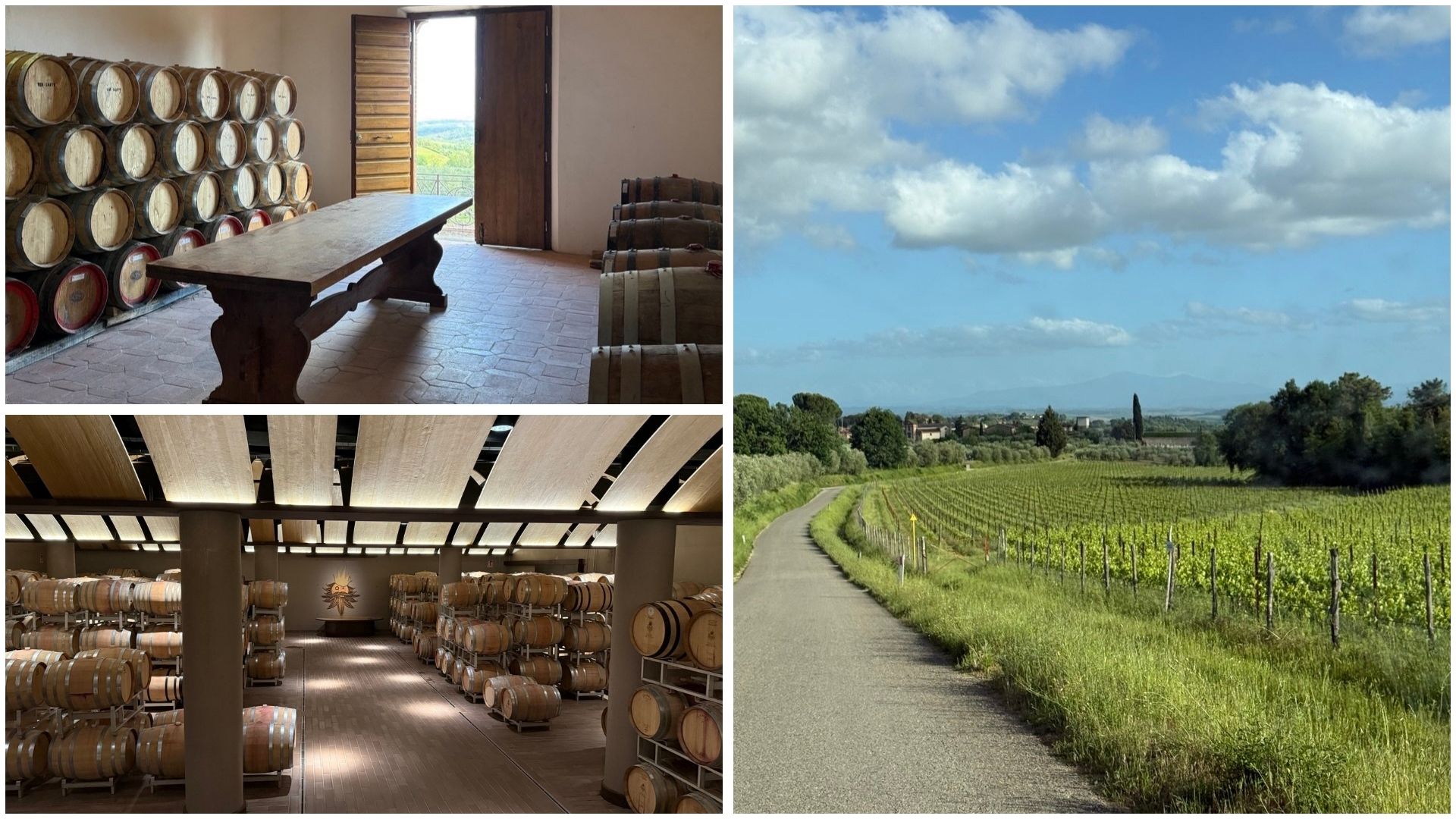
I was awed by the production areas in Vallepicciola (more on that later) | IMAGE: GWEN TAY
One thing I only truly appreciated after planning this trip is that Tuscany isn't a giant, singular wine region. Different areas specialise in different grape varietals.
If you're a fan of Chianti Classico, then staying around Greve in Chianti, Radda in Chianti or Castellina in Chianti makes perfect sense. This region is known for Sangiovese-based wines that are known for its crispy acidity and cherry-forward flavours, and are often more accessible than its other counterparts.
If you're someone who prefers Brunello di Montalcino, then consider basing yourself around Val d'Orcia or Montalcino instead.
Brunello is also made from Sangiovese, but it's typically richer, fuller-bodied and aged much longer, making it a favourite among collectors.
Then there's Montepulciano, famous for Vino Nobile di Montepulciano.
If your itinerary allows, it's worth spending a day there too.
We decided to split our accommodation between Chianti and Val d'Orcia so we could experience different parts of Tuscany without spending hours driving every day.
My favourite wineries: Cantalici L'Antica Fornace Di Ridolfo

IMAGE: GWEN TAY
This was our very first tasting in Tuscany, so naturally I was excited.
The winery in Chianti felt intimate and welcoming rather than overly commercial. We were seated in a glasshouse overlooking the vineyard.
Instead of simply pouring wines one after another, the staff patiently explained how each bottle reflected the land, the grapes and the winemaking philosophy.
As someone who enjoys drinking wine but definitely isn't an expert, I appreciated that they never made me feel intimidated.
My favourite wineries: Vallepicciola

IMAGE: GWEN TAY
If Cantalici felt cosy, Vallepicciola oozed grandeur.
The estate was beautiful, with modern facilities surrounded by endless vineyards. We joined a guided winery tour before the tasting, which turned out to be one of my favourite experiences of the entire trip.
Walking through the production areas gave me a much deeper appreciation for everything that happens before a bottle reaches the shelf.
The tasting afterwards was even more enjoyable because I actually understood what went into making each wine. I also made sure to leave with some keepsakes (read on to find out).
Can you ship wine back to Singapore?

IMAGE: GWEN TAY
Yes. Many wineries offer international shipping, including to Singapore.
The exact shipping cost depends on how many bottles you're buying, but most wineries can prepare a quotation on the spot.
The important thing to know is that you'll also need to pay Singapore duties and GST when the shipment arrives.
Singapore charges alcohol duty based on the alcohol content and volume of the wine, and GST is calculated on the total cost, including the wine itself, shipping charges and applicable duties. You’ll probably have to calculate the total cost per bottle on the spot to assess if it’s worth it before swiping your credit card on that bottle you love.
If you're only buying one or two bottles, carrying them home in your checked luggage using wine protectors is probably more economical. Check our Singapore Customs website for the exact duty-free alcohol allowance before committing to your purchase.
For the latest updates on Wonderwall.sg, be sure to follow us on TikTok, Telegram, Instagram, and Facebook. If you have a story idea for us, email us at [email protected].